


Ceylon Spice Garden
Whole Coriander Seeds - Digestive, Blood Sugar & Flavour
Whole Coriander Seeds - Digestive, Blood Sugar & Flavour
Couldn't load pickup availability
Product Details & Specifications
Net Weight: Available in 50g, 100g, 200g, 450g, 900g premium whole coriander seeds
Form: Available as whole dried seeds or freshly ground coriander powder — premium grade
Serving Size: 1/2 to 1 teaspoon (1–2g) whole seeds or ground per dish
Yield: Approximately 80–120 servings per 100g
Shelf Life: 36 months whole seeds sealed, 24 months ground powder
Aroma Profile: Warm, citrusy, slightly floral, mildly sweet with subtle earthy and woody undertones — one of the most versatile and universally loved spice aromas in the world, bridging the gap between sweet and savoury with effortless elegance
Storage: Store in cool, dry place in airtight container away from direct sunlight, heat, and moisture. Whole seeds retain potency significantly longer than ground — grind fresh as needed for maximum flavour and therapeutic benefit.
Nutritional & Active Compound Information (Per 100g Dry Seeds)
| Component | Amount | Health Benefits |
|---|---|---|
| Linalool (Primary Essential Oil) | 60–80% of essential oil | Calming, anti-anxiety, antimicrobial, anti-inflammatory, skin soothing, digestive relief |
| Alpha-Pinene | 3–8% of essential oil | Anti-inflammatory, bronchodilatory, antimicrobial, cognitive enhancement |
| Gamma-Terpinene | 2–8% of essential oil | Antioxidant, antimicrobial, anti-inflammatory, skin protection |
| Geraniol | 1–5% of essential oil | Antimicrobial, antifungal, antioxidant, insect repellent, skin health |
| Total Essential Oil | 0.4–1.2% | Antimicrobial, antifungal, digestive stimulant, anti-inflammatory, carminative |
| Quercetin | 1–3% | Anti-inflammatory, immune boost, antihistamine, cardiovascular support |
| Kaempferol | 0.5–2% | Antioxidant, anticancer, anti-inflammatory, neuroprotective |
| Rutin | 0.3–1% | Capillary strengthening, anti-inflammatory, blood pressure support, antioxidant |
| Tocopherols (Vitamin E) | 1–3% | Antioxidant, skin protection, cardiovascular health, immune support |
| Total Polyphenols | 8–16% | Cellular protection, anti-aging, disease prevention, antioxidant |
| Petroselinic Acid | 60–80% of fixed oil | Skin health, anti-inflammatory, antimicrobial, unique fatty acid profile |
| Fixed Oil (Fatty Acids) | 17–28% | Skin health, hormone balance, anti-inflammatory, cardiovascular support |
| Vitamin C | 21mg | Immune support, collagen production, antioxidant, skin health |
| Vitamin K | 310 mcg | Bone health, blood clotting, cardiovascular protection |
| Vitamin A | 0 IU (seeds) — present in leaf | Eye health, immune function (primarily in coriander leaf/cilantro) |
| Vitamin B1 (Thiamine) | 0.24mg | Energy metabolism, nerve function, cardiac health |
| Vitamin B2 (Riboflavin) | 0.29mg | Energy production, cell repair, antioxidant function |
| Vitamin B3 (Niacin) | 2.13mg | Energy metabolism, DNA repair, skin health, cholesterol management |
| Iron | 16.32mg | Blood building, energy production, immune function, oxygen transport |
| Calcium | 709mg | Bone health, nerve function, muscle contraction, blood clotting |
| Magnesium | 330mg | Muscle relaxation, nerve health, energy, sleep, bone strength |
| Potassium | 1267mg | Heart health, blood pressure regulation, electrolyte balance |
| Manganese | 1.9mg | Bone health, metabolism, antioxidant enzyme function |
| Zinc | 4.7mg | Immune function, wound healing, metabolism, taste and smell |
| Copper | 0.6mg | Iron absorption, nerve function, collagen production, immune health |
| Phosphorus | 409mg | Bone strength, energy metabolism, DNA and cell repair |
| Dietary Fibre | 41.9g | Digestive health, cholesterol reduction, blood sugar regulation, gut microbiome |
Why Ceylon Spice Garden Coriander Seeds Are Superior
Our Coriander Seeds vs Regular Commercial Coriander Seeds — Key Differences
| Factor | Ceylon Spice Garden Coriander Seeds | Regular Commercial Coriander Seeds |
|---|---|---|
| Essential Oil Content | 0.4–1.2% (Premium aromatic grade) | 0.1–0.3% (Depleted, old stock) |
| Linalool Purity | 60–80% of essential oil (Superior) | 40–60% (Lower purity, degraded) |
| Aroma Strength | Intensely warm, citrusy, floral, complex | Faint, dusty, flat, cardboard-like |
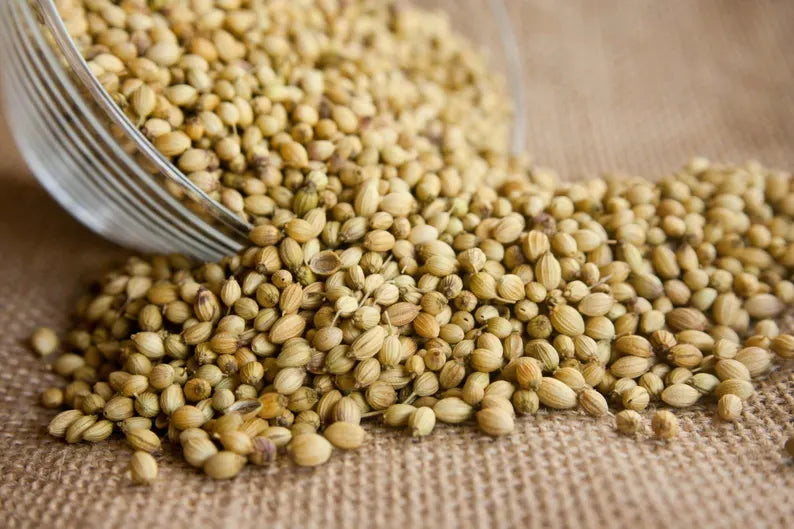
| Seed Appearance | Round, uniform, golden-beige, plump seeds | Variable, shrivelled, pale, mixed sizes |
| Harvest Timing | Harvested at full maturity — peak oil content | Mixed timing, immature seeds included |
| Drying Method | Natural sun-drying at optimal temperature | Industrial high-heat forced drying — oil loss |
| Seed Integrity | Whole, complete, unbroken seeds | Often cracked, broken, mixed with debris |
| Origin | Single-origin Sri Lankan cultivation | Blended (India, Morocco, Egypt, Bulgaria — unknown ratios) |
| Species | Coriandrum sativum — authenticated | Often unverified variety or mixed species |
| Toasting Response | Immediate fragrant release — citrus, floral notes bloom | Little to no response — oils already evaporated |
| Additives | 100% pure — no anti-caking agents, no fumigants | May contain fumigants, mineral oil coating |
| Freshness | Packed within 90 days of harvest | Often 12–24 months old before packing |
| Colour | Golden-beige, warm, consistent | Pale, grey-beige, inconsistent |
| Price | Premium single-origin quality | Budget commodity blend |
Comparison with Other Ground Spices:
Coriander Seed Advantages:
- vs Cumin Seeds: Sweeter, more citrusy and floral — coriander bridges sweet and savoury beautifully while cumin is deeper and earthier; together they form the most important spice pairing in world cuisine
- vs Fennel Seeds: More complex and versatile across cuisines — coriander works in South Asian, Middle Eastern, European, and Latin American dishes with equal ease
- vs Caraway Seeds: More universally appealing flavour — coriander lacks the slightly medicinal edge of caraway, making it appropriate across a broader range of dishes and cuisines
- vs Ground Coriander Powder: Whole seeds retain essential oils for up to 3x longer — toast and grind fresh for dramatically superior flavour and therapeutic potency
- vs Coriander Leaf (Cilantro): Completely different flavour profile — the seed tastes nothing like the leaf. Seeds are warm, citrusy, and universally loved; the leaf is fresh, bright, and divisive
Health & Wellness Benefits
Blood Sugar Management & Anti-Diabetic Action
Coriander seeds are one of the most clinically validated spices for blood sugar management. Multiple animal and human studies confirm that coriander seed extracts and regular dietary consumption significantly reduce fasting blood glucose, improve insulin sensitivity, and enhance glucose uptake by cells. The mechanism involves stimulation of insulin secretion from pancreatic beta cells, activation of insulin receptor signalling pathways, and inhibition of alpha-glucosidase — slowing carbohydrate digestion and reducing post-meal glucose spikes. Linalool and polyphenols provide additional anti-diabetic support. Traditional Ayurvedic and Sri Lankan medicine has used coriander seeds specifically for diabetes management for centuries — a use now robustly validated by modern clinical research.
Exceptional Digestive Health & Carminative Action
Coriander seeds are one of the world's most extensively used and clinically validated digestive remedies. The term "carminative" — meaning gas-relieving — was practically invented for coriander. Linalool and other essential oils relax intestinal smooth muscle, relieving cramping, bloating, and trapped gas with remarkable speed and effectiveness. Stimulate bile production and digestive enzyme secretion, improving fat and protein digestion. Antimicrobial compounds suppress pathogenic gut bacteria including H. pylori. Anti-inflammatory polyphenols soothe intestinal irritation and inflammation. Roasted coriander seed tea is the most commonly used post-meal digestive remedy across Sri Lanka, India, and the broader South Asian region — a tradition with 3,000 years of validation behind it.
Powerful Antioxidant Protection
Coriander seeds provide exceptional antioxidant protection through a diverse and synergistic array of compounds. Quercetin, kaempferol, rutin, tocopherols, and essential oil compounds work together to neutralise free radicals throughout the body, protect cells and DNA from oxidative damage, reduce chronic disease risk, support healthy aging at the cellular level, and preserve mitochondrial function. The unique petroselinic acid in coriander's fixed oil provides additional lipid-phase antioxidant protection. Regular use of coriander seeds in daily cooking provides consistent, meaningful antioxidant contribution to overall dietary intake.
Cholesterol & Cardiovascular Health
Coriander seeds demonstrate significant cholesterol-lowering activity through multiple validated mechanisms. Clinical research shows coriander seed consumption meaningfully reduces total cholesterol, LDL cholesterol, and triglycerides while simultaneously increasing beneficial HDL cholesterol. The fixed oil's petroselinic acid profile supports healthy lipid metabolism. Rutin and quercetin strengthen capillary walls and improve vascular integrity. Anti-inflammatory polyphenols reduce arterial wall inflammation. Potassium (1267mg per 100g) supports blood pressure regulation. The combined cardiovascular protective effects of regular coriander seed consumption are clinically significant and well-documented.
Anxiety Relief & Calming Effects
Linalool — comprising 60–80% of coriander's essential oil — is one of the most extensively researched natural anxiolytic compounds available. Research demonstrates that linalool binds to GABA-A receptors in the brain, producing genuine anxiolytic effects through the same fundamental pathway as pharmaceutical benzodiazepines. Reduces anxiety behaviours, lowers cortisol levels, slows heart rate, and promotes relaxation without cognitive impairment or dependency risk. Multiple studies show that dietary linalool intake and coriander seed tea consumption produce measurable anxiety reduction and calming effects. This makes coriander one of the few common cooking spices with genuine, pharmacologically understood anti-anxiety properties.
Anti-Inflammatory Effects
Coriander seeds contain a comprehensive array of anti-inflammatory compounds working through multiple pathways. Linalool and terpene compounds inhibit COX inflammatory enzymes. Quercetin and kaempferol suppress NF-kB inflammatory signalling. Rutin reduces inflammatory cytokine production. Tocopherols provide lipid-phase anti-inflammatory protection. Together they reduce systemic inflammation throughout the body, provide relief from arthritis and joint pain, soothe inflammatory digestive conditions, reduce skin inflammation, and support management of chronic inflammatory conditions through consistent daily culinary use. The anti-inflammatory action of coriander seeds complements turmeric and ginger beautifully in traditional Ayurvedic combinations.
Antimicrobial & Food Preservation
Coriander's essential oils — particularly linalool and geraniol — demonstrate significant antimicrobial activity against both Gram-positive and Gram-negative bacteria, multiple fungal pathogens, and food-borne pathogens. Effective against Salmonella, Listeria, E. coli, Staphylococcus aureus, and Candida species. This explains coriander's long traditional use as a natural food preservative — ground coriander was added to meat preparations across ancient cultures to prevent spoilage before refrigeration. The antimicrobial action supports gut health by suppressing pathogenic bacteria while preserving beneficial flora, making coriander a genuinely supportive addition to every meal.
Skin Health & Heavy Metal Detoxification
Coriander seeds contain unique chelating compounds that bind to heavy metals — particularly lead, mercury, and aluminium — facilitating their removal from body tissues. This heavy metal chelation property has been studied specifically in the context of environmental heavy metal exposure. Petroselinic acid and tocopherols in the fixed oil support skin cell health, reduce inflammation, and protect against oxidative skin damage. Antimicrobial linalool and geraniol protect skin from bacterial and fungal infections. Anti-inflammatory compounds reduce skin redness and irritation. Regular dietary consumption provides systemic skin-supporting benefits through multiple complementary mechanisms.
Bone Health & Mineral Support
Dried coriander seeds provide a meaningful bone-support mineral profile — 709mg calcium, 330mg magnesium, 1.9mg manganese, 4.7mg zinc, and 310 mcg vitamin K per 100g. This combination of bone-building minerals with vitamin K (essential for osteocalcin activation and calcium binding into bone matrix) provides comprehensive bone mineralisation support. Magnesium (330mg per 100g) is particularly notable — magnesium deficiency is directly linked to reduced bone density, and coriander seeds are one of the better culinary spice sources of this critical mineral. Regular culinary use of coriander seeds contributes meaningfully to daily bone-protective nutrient intake.
Immune System Support
Coriander seeds provide multi-layered immune system support. Antimicrobial essential oils provide direct protection against common pathogens. Quercetin acts as both an immune modulator and natural antihistamine — reducing both infectious and allergic immune responses. Vitamin C supports white blood cell production and function. Linalool reduces excessive inflammatory immune responses that damage tissues. Zinc (4.7mg per 100g) supports immune cell development and function. The combined immune-supporting profile makes coriander seeds a valuable daily addition to cooking for year-round immune resilience.
Urinary Tract Health & Diuretic Support
Coriander seeds have been used across Ayurvedic and traditional Sri Lankan medicine for urinary tract health for thousands of years. Natural diuretic properties support increased urine production and flow, reducing urinary tract infection risk. Antimicrobial compounds provide protection against urinary pathogens. Anti-inflammatory effects soothe urinary tract irritation and inflammation. Traditional preparation of coriander seed water — soaking seeds overnight in water and drinking in the morning — is a widely used Ayurvedic remedy for urinary tract infections, kidney health, and general urinary wellness, now supported by modern understanding of coriander's antimicrobial and anti-inflammatory mechanisms.
Neurological Protection & Memory Support
Emerging research on coriander's neuroprotective properties is particularly promising. Linalool demonstrates significant neuroprotective activity — protecting neurons from oxidative damage, reducing neuroinflammation, and showing potential in models of Alzheimer's disease and Parkinson's disease. Animal studies show linalool improves memory performance and protects against cognitive decline induced by toxins and oxidative stress. Quercetin and kaempferol provide additional neuroprotective antioxidant effects. While human clinical trials are ongoing, the mechanistic evidence for coriander's brain-protective effects through regular dietary consumption is compelling and scientifically credible.
Menstrual Health & Women's Wellness
Coriander seeds have a long traditional use in Ayurvedic and Sri Lankan medicine for women's menstrual health. Phytoestrogenic compounds in coriander seeds support hormonal balance and may help regulate irregular menstrual cycles. Antispasmodic properties relieve menstrual cramping through smooth muscle relaxation. Anti-inflammatory compounds reduce associated pelvic inflammation. The iron content (16.32mg per 100g) supports replenishment of iron lost during menstruation. Linalool's calming effects reduce PMS-associated anxiety and mood disturbances. Coriander seed tea is a traditional remedy across South Asia and the Middle East specifically for menstrual support.
Thyroid Health Support
Coriander seeds contain micronutrients and bioactive compounds that support healthy thyroid function. Selenium, copper, and iron are essential cofactors in thyroid hormone synthesis and metabolism. Anti-inflammatory compounds reduce thyroid inflammation associated with autoimmune thyroid conditions. The phytoestrogen profile may help modulate thyroid hormone receptor sensitivity. Traditional Ayurvedic medicine uses coriander seeds specifically as part of thyroid wellness protocols, and modern nutritional research supports the role of coriander's micronutrient profile in comprehensive thyroid health maintenance.
Why Choose Our Premium Quality?
Authenticity Guarantee:
- 100% Pure Coriandrum sativum — Verified authentic coriander species, no substitutes or adulterants
- Single-Origin Sri Lankan Cultivation — Optimal tropical climate for essential oil and linalool development
- Harvested at Full Seed Maturity — Maximum linalool and essential oil concentration
- Third-Party Tested — Verified essential oil content, linalool percentage, and polyphenol levels
- No anti-caking agents, fumigants, mineral oil coating, or fillers — 100% pure coriander seeds
- Natural Sun-Drying — Preserving volatile linalool and all active aromatic compounds
Quality Specifications:
- Species: Coriandrum sativum — authenticated sweet coriander, optimal flavour and health profile
- Form: Round, whole dried seeds — complete, unbroken, uniform size
- Essential Oil: 0.4–1.2% — premium culinary and therapeutic grade
- Linalool: 60–80% of essential oil — superior calming and antimicrobial compound
- Colour: Warm golden-beige — uniform, plump, well-dried
- Aroma: Warm, citrusy, floral — immediately apparent on crushing a seed
- Texture: Firm, round seeds — not shrivelled, not cracked, not dusty
- Toasting Response: Immediate bloom of citrus-floral fragrance — indicator of high essential oil content
Heritage Source:
- Ancient Spice Legacy — Coriander found in ancient Egyptian tombs, Sanskrit texts, and the Bible — one of humanity's oldest cultivated spices
- Sri Lankan Culinary Foundation — Coriander seeds form the backbone of authentic Sri Lankan curry powder — indispensable to the island's culinary identity
- Ayurvedic Essential — One of the most prescribed spices in Ayurvedic medicine for digestion, blood sugar, and women's health
- Silk Road Spice — Traded along ancient spice routes from Sri Lanka to Europe for over 3,000 years
- Fair Trade Practices — Ensuring fair wages and safe conditions for all farm workers
Traditional & Cultural Significance
Coriander Heritage:
- 7,000+ Year History — Among the oldest cultivated spices — coriander seeds found in Egyptian tombs dating to 1550 BCE
- Biblical Spice — Referenced in the Bible (Exodus 16:31) as a comparison for manna — reflecting its ancient significance
- Sanskrit Documentation — Among the first spices documented in ancient Ayurvedic texts (Charaka Samhita)
- Hippocrates' Prescription — Ancient Greek medicine used coriander as a digestive and anxiety remedy
- Roman Spread — Roman armies carried coriander across Europe, introducing it to previously coriander-free cuisines
Cultural Practices:
- Sri Lankan Curry Soul — The highest proportion of any single spice in authentic Sri Lankan curry powder — the foundational flavour of the island's cuisine
- Ayurvedic Daily Use — Prescribed in traditional Sri Lankan medicine for virtually every digestive, metabolic, and inflammatory condition
- Digestive Tradition — Roasted coriander seeds chewed after meals across South Asia for thousands of years
- Coriander Water — Overnight-soaked coriander seed water drunk first thing in the morning — a widespread Ayurvedic health ritual
- Spice Market Heritage — The most traded spice in ancient Sri Lankan and South Asian spice markets by volume
Modern Recognition:
- Clinical Blood Sugar Research — Human trials confirming significant anti-diabetic effects of regular coriander seed consumption
- Anxiety Research — Linalool's GABA receptor activity extensively studied and validated by neuroscience research
- Heavy Metal Chelation — Research interest in coriander's ability to facilitate heavy metal detoxification
- Global Culinary Essential — The world's most widely used spice by volume in both seed and leaf form
- Curry Powder Foundation — Backbone of curry powders consumed by billions of people daily across South Asia, Southeast Asia, and globally
Preparation & Usage Methods
Perfect Use — Essential Cooking Tips:
- Toast whole seeds before using — dry toast in a pan 1–2 minutes until fragrant; this dramatically intensifies and rounds the flavour by activating volatile compounds
- Grind fresh as needed — pre-ground coriander loses 70% of its essential oil within 6 months; whole seeds store for 3 years
- Crack seeds lightly for texture in dishes where you want mild flavour with textural interest
- Use whole seeds in curries, braises, and pickling; use ground in spice blends, marinades, and baked goods
- Coriander pairs with virtually every spice — it is the great harmoniser that makes other spices work together
- Use generously — coriander is one of the mildest spices and rarely overpowers; most recipes benefit from more than you think
TIP: The single most impactful thing you can do with coriander seeds is toast them before grinding. Place whole seeds in a dry pan over medium heat, stir constantly for 60–90 seconds until the seeds turn slightly golden and release an intensely warm citrus-floral fragrance. This toasting process activates Maillard reactions that dramatically deepen and round the flavour, creating complexity that raw or pre-ground coriander simply cannot achieve. This one step separates good curry from extraordinary curry.
Authentic Sri Lankan Curry Powder (Roasted):
- 4 tbsp coriander seeds (the dominant spice — 40–50% of the blend)
- 2 tbsp cumin seeds
- 1 tbsp black pepper
- 1 tsp fennel seeds
- 1 tsp fenugreek seeds
- 4 dried red chillies
- 1 cinnamon stick, 4 cardamom pods, 4 cloves
- 2 tbsp curry leaves
- Dry roast each spice separately until fragrant, combine and grind
- This is the authentic foundation of Sri Lankan cooking — coriander is the irreplaceable backbone
Coriander Seed Digestive Tea:
- 1 tsp whole coriander seeds (lightly crushed)
- Optional: cumin seeds, fennel seeds (equal parts for CCF tea)
- 250ml freshly boiled water
- Steep covered 8–10 minutes
- Strain and drink warm after meals
- The classic Ayurvedic post-meal digestive tonic — relieves bloating and gas within 20–30 minutes
CCF Tea (Cumin-Coriander-Fennel — Ayurvedic Classic):
- 1 tsp coriander seeds
- 1 tsp cumin seeds
- 1 tsp fennel seeds
- 500ml water
- Bring to boil, simmer 5 minutes, steep 5 minutes covered
- Strain and drink throughout the day
- The most widely used Ayurvedic digestive, anti-inflammatory, and metabolic support tea
- Used for IBS, bloating, blood sugar, anxiety, and urinary health
Coriander Water (Overnight Soak — Ayurvedic Ritual):
- 1 tbsp whole coriander seeds
- 250ml cool filtered water
- Soak overnight (8–12 hours)
- Strain and drink first thing in the morning on empty stomach
- Traditional Ayurvedic remedy for blood sugar, digestion, thyroid health, and urinary health
- Gentler than tea — linalool and polyphenols slowly leach into water at room temperature
Classic Garam Masala:
- 3 tbsp coriander seeds
- 2 tbsp cumin seeds
- 1 tbsp black peppercorns
- 1 tsp cardamom seeds
- Half cinnamon stick
- 4 cloves
- Half tsp nutmeg
- Toast all, grind together to fine powder
- Far superior to any commercial garam masala — coriander provides the aromatic backbone
Middle Eastern Baharat:
- 2 tbsp coriander seeds
- 2 tbsp black pepper
- 1 tbsp cumin seeds
- 1 tbsp paprika
- 1 tsp cinnamon
- Half tsp nutmeg, cloves, cardamom
- Toast and grind — use on lamb, chicken, rice, and grilled meats
Dry Rub for Grilled Meats:
- 2 tsp ground coriander (freshly toasted and ground)
- 1 tsp cumin
- 1 tsp paprika
- Half tsp garlic powder
- Half tsp black pepper
- Quarter tsp cinnamon
- Salt to taste
- Rub onto chicken, lamb, beef, or fish — rest 30 minutes to 24 hours before cooking
Coriander-Crusted Salmon or Fish:
- 1 tbsp whole coriander seeds, lightly toasted
- Coarsely crush in pestle and mortar
- Press onto fish fillet with salt and black pepper
- Pan-fry in olive oil 3–4 minutes each side
- Finish with lemon and fresh herbs
- Coriander's citrusy warmth is a natural partner for fish
Pickling Spice Blend:
- 2 tbsp coriander seeds (essential pickling spice)
- 1 tbsp mustard seeds
- 1 tsp black peppercorns
- 1 tsp dill seeds
- Bay leaves, dried chillies
- Use for pickled cucumbers, onions, vegetables, and brine
- Coriander seeds are one of the most essential and traditional pickling spices globally
Roasted Coriander Seed Snack:
- Dry toast coriander seeds 2 minutes until golden
- Toss with a pinch of salt and optionally chaat masala
- Eat as a post-meal digestive snack
- Traditional South Asian practice — roasted coriander seeds chewed after meals for thousands of years
- Natural breath freshener and digestive aid simultaneously
Culinary Uses Across Cuisines:
- Sri Lankan: Curry powder base (dominant spice), rice dishes, coconut curries, sambols, marinades, Ayurvedic preparations
- Indian: Garam masala, curry powder, dal, chutneys, tandoori marinades, chole, sambar
- Middle Eastern: Baharat, falafel, shawarma, grilled meats, rice pilafs, dukkah
- North African: Ras el hanout, chermoula, tagines, harissa, couscous seasoning
- Mexican: Recado spice blends, mole, adobo, black bean dishes, salsa verde
- European: Pickling spice, Belgian witbier, sausage seasoning, bread spice, game marinades
- Southeast Asian: Thai curry pastes, Malaysian rendang, Indonesian spice blends
Storage & Freshness Guidelines
Optimal Storage Conditions:
- Airtight Container: Glass jar with tight-sealing lid or quality spice tin — linalool evaporates when exposed to air
- Cool Location: Below 20°C — heat accelerates essential oil evaporation from seed structure
- Dark Place: Away from all light — UV and visible light degrade linalool and polyphenols
- Whole Seeds Always: Keep seeds whole until needed — cracking or grinding dramatically accelerates essential oil loss
- Dry Environment: Moisture can cause mould on seeds — keep completely dry
- Refrigeration: Recommended for extended storage — significantly extends linalool potency
Freshness Indicators:
- Excellent: Warm golden-beige colour, immediate citrus-floral fragrance when a seed is crushed, plump and firm
- Good: Pleasant warm aroma on crushing, good colour, strong flavour response when toasted
- Check: Faded aroma on crushing, slightly pale — still usable but reduced potency
- Replace: No aroma even when crushed, pale grey-beige, flat when toasted — linalool fully evaporated
Shelf Life Guidelines:
- Whole Seeds (sealed): 36 months maximum potency when properly stored
- Whole Seeds (opened, airtight): 18–24 months excellent quality
- Ground Coriander (sealed): 12 months maximum potency
- Ground Coriander (opened): 6 months before significant quality decline
- Best Practice: Buy whole seeds, toast and grind fresh as needed — dramatically superior results
- Quality Peak: Most aromatic and potent within first 12 months of harvest
Common Storage Mistakes to Avoid:
- ❌ Buying pre-ground coriander powder — loses 70% of potency within 6 months of grinding
- ❌ Storing on an open spice rack in the kitchen — light and heat destroy linalool
- ❌ Keeping above or beside the stove — steam and heat are the primary quality destroyers
- ❌ Storing in original paper or plastic packaging after opening
- ❌ Cracking seeds for storage rather than using them immediately
- ❌ Buying large quantities of pre-ground coriander — always buy whole seeds
Safety Information & Usage Guidelines
Recommended For:
- Anyone wanting authentic South Asian, Middle Eastern, and global cuisine flavours
- Those managing blood sugar and seeking natural complementary dietary support
- People seeking natural digestive support, bloating relief, and post-meal comfort
- Individuals wanting natural anxiety relief and calming effects through daily cooking
- Those supporting cardiovascular health through cholesterol management in diet
- Women seeking natural menstrual and hormonal support through Ayurvedic dietary practice
- Health-conscious individuals maximising therapeutic value through everyday spice use
Generally Safe For:
- Most healthy adults — exceptional safety record across 7,000+ years of continuous culinary and medicinal use
- Regular daily culinary use — consumed daily by billions of people across South Asia, Southeast Asia, and globally
- Children in culinary food amounts — one of the mildest and most family-friendly spices
- Pregnant women in normal culinary amounts — safe and nutritionally beneficial at food quantities
- Elderly — particularly beneficial for blood sugar management, digestion, and cardiovascular health
- Those with IBS — antispasmodic and anti-inflammatory effects specifically beneficial for gut symptoms
Consult Healthcare Provider If:
- Diabetes medications — coriander seeds clinically reduce blood sugar; starting regular medicinal use may require medication monitoring and potential adjustment
- Pregnant — large medicinal amounts (culinary cooking amounts safe and beneficial; large supplemental doses not recommended due to potential uterine stimulation at very high doses)
- Blood pressure medications — diuretic properties at medicinal doses; culinary amounts generally safe
- Coriander allergy — possible; cross-reactivity with other Apiaceae family plants (carrot, celery, fennel, dill) exists
- Apiaceae family allergy — mugwort-spice syndrome involves cross-reactivity between coriander, carrot, celery, and fennel
Not Recommended For:
- Confirmed Coriandrum sativum or Apiaceae plant family allergy
- Very large supplemental doses during pregnancy without medical guidance
Dosage Guidelines:
- Everyday Cooking: Half to 2 tsp per dish — use generously as coriander is mild and versatile
- Curry Powder Base: 40–50% of total spice blend by volume
- Digestive Tea: 1 tsp per cup after meals — 1–3 cups daily
- CCF Tea: 1 tsp each coriander, cumin, fennel in 500ml — drink throughout day
- Coriander Water: 1 tbsp soaked overnight in 250ml — drink fasting in morning
- Roasted Snack: 1–2 tsp toasted seeds after meals as digestive aid
Important Usage Notes:
- Always toast before grinding — transforms flavour from mild to complex and deeply aromatic
- Buy whole seeds and grind fresh — pre-ground coriander is a fraction of the quality
- Coriander seed and coriander leaf (cilantro) have completely different flavours — the seed is warm and citrusy; the leaf is fresh and bright
- The great spice harmoniser — pairs with virtually every other spice and improves blends
- No MSG, no artificial flavour, no preservatives — pure dried spice only
- Iron and calcium content is significant — consume with vitamin C foods for maximum iron absorption
Organic Certification & Sustainability
Environmental Commitments:
- USDA/EU Organic Available — No synthetic pesticides, herbicides, or chemical fertilisers
- Chemical-Free Cultivation — Traditional farming in Sri Lanka's clean agricultural zones
- Carbon-Conscious Operations — Minimising environmental footprint throughout supply chain
- Fair Trade Practices — Ensuring living wages, dignity, and safe conditions for all workers
- Outstanding Pollinator Plant — Coriander flowers are excellent nectar sources for bees and beneficial insects
- Annual Crop Rotation — Coriander improves soil quality and supports agricultural biodiversity
Sustainability Practices:
- Seed Saving Tradition — Heirloom coriander varieties preserved through traditional seed-saving practices
- Natural Sun-Drying — Traditional drying using zero artificial energy beyond natural sunlight
- Integrated Pest Management — Natural controls and companion planting reducing chemical inputs
- Zero Waste Processing — All organic matter composted and returned to cultivation
- Water Efficient Crop — Coriander's relatively low water requirements reduce agricultural water consumption
- Worker Welfare Programs — Fair housing, education, healthcare, and community development
Ecological Benefits:
- Coriander flowers provide exceptional nectar for bees and hoverflies — important pollinator support
- Natural companion plant — improves growth of neighbouring plants and supports beneficial insect populations
- Annual root system improves soil structure and organic matter content with each cultivation cycle
- Supports Sri Lankan rural farming community livelihoods through high-value spice cultivation
- Preserves traditional spice cultivation knowledge spanning thousands of years in Sri Lanka
- Short, traceable supply chain reduces food miles versus commodity blends from multiple countries
Customer Experiences
"I've been cooking Sri Lankan food for 30 years and I have never found coriander seeds this good outside of Sri Lanka. The fragrance when you toast them fills the whole kitchen — warm, citrusy, almost floral. My curry powder is now genuinely as good as what my mother made. These seeds are the difference." — Priya N., Sri Lankan Heritage Cook
"My fasting blood sugar was creeping up toward pre-diabetic range. I started drinking coriander water every morning — 1 tbsp seeds soaked overnight — and CCF tea with meals. Within 8 weeks my fasting glucose dropped from 6.1 to 5.4 mmol/L. My GP was impressed and I've maintained this simple daily ritual ever since." — David K., Blood Sugar Management
"As an Ayurvedic practitioner I prescribe CCF tea — cumin, coriander, and fennel — to almost every patient as a foundational wellness practice. The digestive, metabolic, and calming benefits are clinically remarkable. Ceylon Spice Garden's coriander seeds have the linalool aroma that tells me immediately the quality is therapeutic grade." — Dr. Meena R., Ayurvedic Practitioner
"The toasting test tells you everything about coriander seed quality. These seeds, the moment they hit a dry pan, release the most extraordinary citrus-floral fragrance — instantly. Commercial seeds I've used before smell of almost nothing. The flavour difference in my food is dramatic and permanent. I'll never buy cheap coriander again." — Marco T., Spice Enthusiast
"I've had IBS for years and been told to avoid spicy food. My Ayurvedic doctor suggested CCF tea after every meal. Three months later my symptoms are 80% improved. Coriander specifically seems to do something remarkable for my gut — the anti-spasm effect is real and I notice it within 20 minutes of drinking the tea." — Sarah L., IBS Management
"I use these in my falafel, shawarma, and Middle Eastern cooking. The difference in flavour from supermarket coriander is extraordinary — toasted and freshly ground, these seeds produce the authentic warm citrus depth that makes Middle Eastern food so distinctive. My restaurant customers consistently comment on the flavour." — Chef Omar H., Middle Eastern Restaurant
Quality Assurance & Testing
Third-Party Laboratory Verification:
- Essential Oil Content — Verified 0.4–1.2% premium aromatic grade
- Linalool Analysis — Confirmed 60–80% of essential oil fraction
- Total Polyphenol Testing — Verified antioxidant compound concentration
- Heavy Metals Testing — Ensuring safety from soil and environmental contamination
- Pesticide Residue Testing — Verifying chemical-free organic cultivation practices
- Microbial Testing — Confirming absence of Salmonella, E. coli, moulds, and yeasts
- Aflatoxin Screening — Critical safety testing for all dried spice products
- Fumigant Residue Testing — Confirming no post-harvest chemical treatment
- Moisture Content — Verified optimal drying level for shelf stability and mould prevention
- Species Authentication — Confirming genuine Coriandrum sativum
- Fixed Oil Profile — Verifying petroselinic acid content and fatty acid composition
Quality Control Process:
- Visual inspection of seeds (colour, size uniformity, roundness, completeness, absence of debris)
- Aroma panel evaluation on crushing (linalool citrus-floral intensity, warmth, freshness)
- Toasting response test — premium seeds release immediate fragrance; flat response indicates depleted oil
- Seed maturity verification — full mature seeds confirmed, no immature or shrivelled seeds
- Origin traceability (specific cultivation region, harvest date, drying batch)
- Moisture content testing — critical for mould prevention and shelf stability
- Freshness maintained from harvest to final delivery through controlled storage
- Batch-to-batch essential oil consistency against certified reference standards
- Customer feedback integration for continuous quality improvement
Frequently Asked Questions
Q: Why do coriander seeds taste so different from coriander leaves (cilantro)?
A: They are completely different flavour experiences despite coming from the same plant. The leaves contain aldehydes (particularly decanal) which produce the fresh, bright, divisive "soapy or citrus" flavour that people either love or find overwhelming. The seeds contain linalool and terpene compounds that produce a warm, mellow, citrusy-floral flavour that is almost universally loved. The seed's flavour is completely lost during the plant's growth into the leaf stage — they are botanically the same plant but culinarily entirely different ingredients. People who dislike coriander leaf often discover they love coriander seeds.
Q: Should I toast coriander seeds before using them?
A: Yes — toasting is transformative and strongly recommended. Dry toast whole seeds in a pan over medium heat for 60–90 seconds, stirring constantly, until they turn slightly golden and release a warm citrus-floral fragrance. This toasting process activates Maillard browning reactions that create dozens of new aromatic compounds, dramatically deepening and rounding the flavour from mild and one-dimensional to complex, warm, and nutty-citrusy. It also makes the seeds easier to grind. The difference between raw ground coriander and freshly toasted and ground coriander is dramatic — professional spice blenders always toast first.
Q: What is CCF tea and why is it so popular in Ayurveda?
A: CCF stands for Cumin, Coriander, and Fennel — the three seeds combined in equal parts as a tea. It is arguably the most widely recommended Ayurvedic daily health drink, prescribed by virtually every Ayurvedic practitioner for digestive health, metabolic balance, and general wellness. Coriander provides antispasmodic, anti-inflammatory, and blood sugar-balancing effects. Cumin provides digestive stimulation and antimicrobial action. Fennel provides antispasmodic and carminative relief. Together they create a synergistic digestive, metabolic, and calming tea that addresses multiple body systems simultaneously. Use 1 tsp of each in 500ml water — bring to boil, simmer 5 minutes, steep 5 minutes covered, strain and drink throughout the day.
Q: How much coriander is in a typical curry powder blend?
A: In authentic Sri Lankan curry powder, coriander seeds form the largest single component — typically 40–50% of the total blend by volume and weight. This dominant proportion reflects coriander's role as the flavour backbone and aromatic foundation of the blend. It provides the warm, rounded base upon which all the other spices build their character. Commercial curry powders often reduce the coriander proportion to cut costs and substitute with cheaper fillers — one of the primary reasons they taste inferior to authentic home-ground blends. When making your own curry powder, be generous with the coriander seeds.
Q: Can coriander seeds really help with anxiety?
A: The pharmacological evidence is genuinely compelling. Linalool — comprising 60–80% of coriander's essential oil — has been shown in multiple studies to bind to GABA-A receptors in the brain, the same receptors targeted by pharmaceutical benzodiazepine anti-anxiety medications. The binding produces genuine anxiolytic (anxiety-reducing) and calming effects. Animal studies consistently show reduced anxiety behaviours, lower cortisol, slower heart rate, and increased GABA activity. Human studies on linalool-containing preparations show measurable anxiety reduction. At culinary doses through regular daily cooking and CCF tea consumption, the linalool absorption provides cumulative calming effects — subtle but real and consistent.
Q: What is the difference between whole coriander seeds and ground coriander?
A: The difference in quality is enormous. Whole coriander seeds seal the essential oils inside the seed's hard outer shell, protecting them from evaporation and oxidation for up to 36 months. Once ground, the dramatically increased surface area allows linalool and other volatile compounds to evaporate rapidly — pre-ground coriander loses approximately 70% of its essential oil content within 6 months even when sealed. For maximum flavour and therapeutic benefit: always buy whole seeds, store them properly, and toast and grind fresh portions as needed in a small spice grinder or pestle and mortar. The effort is minimal and the results are dramatically superior.
Q: What cuisines use coriander seeds most?
A: Coriander seeds are arguably the world's most globally used spice — consumed by more people daily than almost any other spice. Sri Lankan cuisine uses them as the dominant component of curry powder. Indian cuisine uses them in virtually every spice blend. Middle Eastern cuisines use them in falafel, shawarma, baharat, and dukkah. North African cuisines use them in ras el hanout, chermoula, and harissa. Mexican cuisines use them in mole, recados, and spice rubs. Belgian brewing tradition uses them in witbier. European pickling traditions rely on them universally. Southeast Asian curry pastes use them extensively. Their warm, citrusy versatility bridges virtually every culinary tradition.
Q: How do I make coriander water the Ayurvedic way?
A: The traditional method: take 1 tablespoon of whole coriander seeds and place in a glass or ceramic container. Add 250ml of clean cool filtered water. Cover and leave to soak at room temperature for 8–12 hours (overnight is ideal). In the morning, strain the seeds, and drink the water on an empty stomach before breakfast. The overnight soaking slowly extracts linalool, polyphenols, and minerals from the seeds at room temperature — producing a milder, gentler preparation than hot tea that is particularly suited for blood sugar management, urinary health, thyroid support, and daily digestive wellness. It has an extremely mild, subtly sweet and slightly floral taste.
Traditional Spice Blends & Combinations
Essential Spice Blends Featuring Coriander:
- Sri Lankan Curry Powder: coriander + cumin + black pepper + fennel + fenugreek + chilli + cinnamon + cardamom + cloves + curry leaves
- Garam Masala: coriander + cumin + black pepper + cardamom + cinnamon + cloves + nutmeg
- Baharat: coriander + black pepper + cumin + paprika + cinnamon + nutmeg + cloves + cardamom
- Ras el Hanout: coriander + cumin + cinnamon + ginger + turmeric + pepper + cardamom + star anise + paprika
- Dukkah: coriander + cumin + sesame + hazelnuts + black pepper + salt
- Chermoula: coriander + cumin + paprika + turmeric + garlic + lemon + olive oil + fresh herbs
- Pickling Spice: coriander + mustard + black pepper + dill + bay + allspice + cloves
For Digestive Health:
- Coriander + cumin + fennel (CCF tea — the classic Ayurvedic digestive trifecta)
- Coriander + ginger + cardamom + honey (warming digestive and immune tea)
- Coriander + ajwain (carrom) + black salt (traditional Indian post-meal digestive)
For Blood Sugar & Metabolic Health:
- Coriander + cinnamon + fenugreek + ginger (comprehensive blood sugar support tea)
- Coriander + turmeric + black pepper + cumin (daily metabolic wellness cooking blend)
- Coriander + gymnema + bitter melon + lemon (traditional anti-diabetic herbal combination)
For Anxiety & Calm:
- Coriander + chamomile + lemon balm + honey (calming evening tea blend)
- Coriander + fennel + cardamom + warm milk (traditional bedtime calming drink)
- Coriander + ashwagandha + holy basil + ginger (adaptogen and calming tea)
For Women's Health:
- Coriander + fennel + fenugreek (menstrual and hormonal support tea)
- Coriander + raspberry leaf + ginger + honey (menstrual comfort blend)
- Coriander + cumin + ajwain (traditional post-partum digestive and recovery blend)
Legal & Safety Disclaimer
Coriander seeds (Coriandrum sativum) are a traditional culinary and medicinal spice with over 7,000 years of documented safe use in food and traditional medicine. Generally recognised as safe (GRAS) by the FDA for culinary use. This product is not intended to diagnose, treat, cure, or prevent any disease. Statements regarding health benefits are based on traditional use, Ayurvedic medicine, population studies, and scientific research on coriander's active compounds including linalool, quercetin, kaempferol, rutin, and petroselinic acid. Those with diabetes should monitor blood glucose when beginning regular medicinal coriander consumption as clinical evidence shows meaningful blood sugar reduction. Those with Apiaceae family allergies (carrot, celery, fennel, dill) should exercise caution. Pregnant women should use in normal culinary amounts only. Not evaluated by the FDA as a medicine or supplement.
100% Satisfaction Guarantee
We stand behind the exceptional quality of our premium coriander seeds:
✓ Free shipping on orders over $50 ✓ 30-day money-back guarantee — complete satisfaction or full refund ✓ Freshness guarantee — packed within 90 days of harvest for maximum linalool and essential oil potency ✓ Aroma guarantee — immediate citrus-floral fragrance on toasting or full refund ✓ Purity guarantee — no fumigants, anti-caking agents, or mineral oil coating — or full refund ✓ Species guarantee — authenticated Coriandrum sativum, single-origin ✓ Quality guarantee — whole plump mature seeds, verified essential oil content ✓ Secure packaging — sealed, airtight, light-protected to preserve freshness and potency ✓ Fast delivery — ships same business day ✓ Expert support — Spice specialists available 7 days a week
Experience the legendary warmth and healing power of premium Ceylon coriander seeds — the world's oldest and most universally loved spice — combining 7,000 years of culinary mastery and Ayurvedic healing wisdom, exceptional linalool richness, and single-origin Sri Lankan purity to form the aromatic backbone of the world's greatest cuisines and support your health every single day. From Ceylon Spice Garden's carefully harvested fully mature seeds, naturally sun-dried to preserve extraordinary linalool potency, to your kitchen, your mortar, your cup, and your daily wellness ritual — warmly golden, intensely citrusy, and extraordinary in every use.


Featured collection
-
Ceylon Cinnamon Powder C5 Grade - True Cinnamon for All Uses
Vendor:Ceylon Spice GardenRegular price From $10.99 USDRegular price$54.99 USDSale price From $10.99 USDSale -
Premium Ceylon Cinnamon Alba Grade Powder - Ground True Cinnamon
Vendor:Ceylon Spice GardenRegular price From $19.99 USDRegular price$59.99 USDSale price From $19.99 USDSale -
Ceylon Turmeric Powder – Pure Sri Lankan Golden Spice
Vendor:Ceylon Spice GardenRegular price From $8.99 USDRegular price$8.99 USDSale price From $8.99 USD -
Ceylon Cinnamon Sticks C5 Grade – True Cinnamon Quills from Sri Lanka
Vendor:Ceylon Spice GardenRegular price From $10.99 USDRegular price$54.99 USDSale price From $10.99 USDSale


Why Choose Ceylon Spice Garden?
Discover the difference that authentic Ceylon spices can make in your culinary journey
25+ Years of Excellence
With over 25 years of expertise in sourcing and processing authentic Ceylon spices, we bring you the finest quality directly from Sri Lankan gardens.
Premium Quality Guaranteed
Every spice is carefully selected, processed, and packaged to maintain maximum freshness, flavor, and nutritional value. We guarantee the highest standards.
Fast & Reliable Shipping
Our efficient logistics network ensures your spices reach you fresh and on time, with tracking available for all orders worldwide.
100% Authentic Ceylon
Sourced directly from certified organic farms in Sri Lanka, our spices are 100% authentic Ceylon varieties with unmatched flavor profiles.
Let customers speak for us
best company great quality also gave bonus

was great for tea
Sehr zu empfehlen! Ich bin mit der Ware und dem sehr guten Kontakt zum Verkäufer überaus zufrieden. Alle Produkte wurden sorgfältig verpackt und kamen in perfektem Zustand an. Eine schöne Überraschung war das kleine Geschenk – getrocknete Lotusblüten für Tee! Eine tolle Geste, die zeigt, wie professionell hier gearbeitet wird. Ich werde auf jeden Fall wieder hier einkaufen!

Thanks for high-quality products.
I seemed to relax and sleep well after making tea with 1-2 of these flowers and letting them steep for at least 10 minutes. It took a while for the order to be shipped, and then arrived safely after a week or so more, so roughly, allow 3-4 weeks until receipt. Thanks for the great-quality product! I didn’t really want the purple lotus with it, and would have preferred extra blue water lily, but I appreciate the kindness.

I received my order and am very pleased with it, and the added gift that came with. I do apologize about my last 1 star review, I feel foolish about it. Thank you all very much for the Lotus.
Most flavoured greens are either too sweet or taste artificial — soursop is hard to fake and easy to overdo. This blend gets it right. The Ceylon green tea base is clean and slightly grassy, and the soursop comes through as a delicate creamy-fruity aromatic on top. Beautifully done and genuinely refreshing.

Cold brewed overnight and it's incredible. Subtle fruit, smooth green tea finish.
This is my morning cup now. Gentle caffeine, lovely flavour, genuinely good for me.
Even my husband who normally hates herbal tea drinks this one. The green tea base helps.
Soft, smooth, fragrant. A pleasure morning or afternoon.
Brews clean even with a slightly long steep. A forgiving tea, which I appreciate.
Try it cold. I steep a heaped tablespoon in cold filtered water in the fridge overnight, strain in the morning, serve over ice. Genuinely incredible — smooth, slightly sweet from the soursop, never bitter. My summer drink of choice now.
Hint of fruit, smooth green tea body, no bitterness when brewed properly.
I've now experimented with this in roughly every way you can brew tea. Hot at 80°C for two minutes — clean, light, soursop subtle on top. Hot at 90°C for five minutes — bigger soursop note, slightly fuller body, never bitter (this blend is unusually forgiving). Cold brew overnight — my favourite, smooth and faintly sweet. Iced with mint and a slice of lime — incredible summer drink. Multiple cooking methods, all give a different lovely result. The leaf clearly has a lot to give. This is now my permanent green tea.
FAQ
How do I place an order?
Browse our spices, select the quantity, and click “Add to cart.” Once ready, click the cart icon and follow the checkout steps.
What payment methods do you accept?
We accept Visa, MasterCard, American Express, Discover, PayPal, and major international credit cards.
Can I ship internationally?
Yes! We ship worldwide. International shipping costs are calculated at checkout based on destination.
How long will delivery take?
Domestic orders (Sri Lanka) arrive in 3–7 business days. International orders take 7–21 business days, depending on destination and customs.
Do you offer tracking?
Yes. Once your order ships, you’ll receive a tracking number via email.
What is your return policy?
We accept returns within 30 days of delivery for unopened, unused products. Contact us at support@ceylonspicegarden.com to initiate a return.
Are your spices organic and fresh?
Absolutely! All our spices are sourced directly from Sri Lankan farms, carefully processed, and packed to preserve maximum freshness.
How do I contact customer support?
You can reach us via email at support@ceylonspicegarden.com or call +940770261046 (Mon–Fri, 9 am–5 pm GMT+5:30).
Blog posts
View all-

Chamomile Tea for Sleep: Best Time to Drink It ...
Chamomile tea is a naturally caffeine-free herbal tea commonly enjoyed before bed. Learn the best time to drink it, how much to use, and how to brew chamomile for a...
Chamomile Tea for Sleep: Best Time to Drink It ...
Chamomile tea is a naturally caffeine-free herbal tea commonly enjoyed before bed. Learn the best time to drink it, how much to use, and how to brew chamomile for a...
-

Chamomile Tea Benefits, Side Effects, Daily Use...
Chamomile tea is a gentle, caffeine-free herbal tea commonly enjoyed for evening routines. Learn its common benefits, possible side effects, daily use tips, and who should avoid chamomile.
Chamomile Tea Benefits, Side Effects, Daily Use...
Chamomile tea is a gentle, caffeine-free herbal tea commonly enjoyed for evening routines. Learn its common benefits, possible side effects, daily use tips, and who should avoid chamomile.
-

Butterfly Pea Flower Tea Benefits: Color, Antio...
Learn the benefits of Butterfly Pea Flower Tea, why it turns blue or purple, how to brew it hot or iced, and how to pair it with lemon, honey, lemongrass,...
Butterfly Pea Flower Tea Benefits: Color, Antio...
Learn the benefits of Butterfly Pea Flower Tea, why it turns blue or purple, how to brew it hot or iced, and how to pair it with lemon, honey, lemongrass,...


