Is Mexican Cinnamon (Canela) the Same as Ceylon Cinnamon?
If you grew up with Mexican cooking, you already know real cinnamon — you just call it canela. The soft, flaky quill that crumbles into café de olla and arroz con leche is a different spice from the rock-hard "cinnamon" sticks in most US grocery stores. Here's what canela actually is, why Mexico uses it, and how to spot the real thing.
Canela by the numbers
Coumarin ranges documented in published food-chemistry surveys: cassia roughly 700–12,000 mg/kg; true Ceylon from below detection to a few hundred mg/kg. Details in our coumarin guide.
Canela vs US grocery "cinnamon" — side by side
| Canela / Ceylon cinnamon | Typical US "cinnamon" (cassia) | |
|---|---|---|
| Species | Cinnamomum verum ("true cinnamon") | Cinnamomum cassia / burmannii / loureiroi |
| Grown in | Sri Lanka (Ceylon) | China, Indonesia, Vietnam |
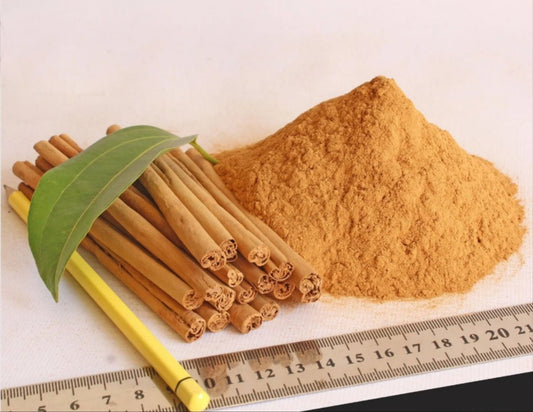
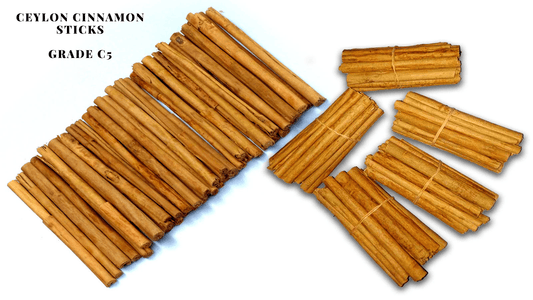
| Look | Light tan; many thin, papery layers rolled like a cigar | Dark reddish-brown; one thick, hard, hollow curl |
| Feel | Brittle — crumbles by hand, easy to grind | Hard — can't break it by hand; snaps like bark |
| Taste | Delicate, sweet, citrusy-floral | Strong, hot, one-note "red candy" spice |
| Coumarin (naturally occurring) | Trace amounts | Substantially higher — a compositional fact worth knowing if you use cinnamon daily (our coumarin guide) |
| Classic uses | Café de olla, horchata, arroz con leche, champurrado, mole, Mexican hot chocolate | Cinnamon rolls, "red hot" candies, commercial baking |
What the lab sees: canela vs cassia in the data
The difference isn't just texture and taste — it shows up in chemistry. These are the compositional markers a lab uses to tell true cinnamon from cassia:
| Marker | True Ceylon / canela | Cassia |
|---|---|---|
| Coumarin | Below detection up to a few hundred mg/kg | Roughly 700–12,000 mg/kg in published surveys |
| Cinnamaldehyde (bark oil) | Typically ~50–65%, alongside eugenol and linalool — a layered aroma | Often 90%+ — the hot, one-note profile |
| Bark structure | Many paper-thin layers (multiple rolled sheets) | Single thick bark layer |
We put our own product through this scrutiny: our most recent Ceylon cinnamon batch was tested by ITI, Sri Lanka's ISO/IEC 17025-accredited national laboratory — species confirmed as Cinnamomum verum, with lead at just 0.2 ppm (the New York action level is 1.0 ppm) and arsenic and mercury not detected. The full certificates are published on our lab testing page.
Why Mexico cooks with true Ceylon cinnamon
Cinnamon reached Mexico in the Spanish colonial era, carried across the Pacific on the Manila galleon trade into Acapulco. Sri Lankan cinnamon became the standard, and it never left the cuisine — today the bulk of Sri Lanka's true-cinnamon harvest is exported to Latin America, with Mexico among its biggest customers. So while most of the US switched to cheaper cassia, Mexican kitchens kept using the original spice.
Even the word tells the story: canela comes from the Latin cannella, "little tube" — the same root as English "cannelloni" — describing exactly the rolled quill shape. In Sri Lanka the spice is kurundu in Sinhala, and the genus name Cinnamomum traces back through Greek kinnámōmon to ancient Phoenician trade. One spice, three thousand years of naming.
That's why canela behaves differently in cooking: it simmers into milk and coffee without turning bitter, grinds easily for horchata, and layers with chocolate instead of shouting over it. (More on the name in why Ceylon cinnamon is called "true cinnamon".)
How to spot real canela in a US store
Real canela looks like a tightly rolled cigar of thin, papery layers. One thick, hard curl = cassia, whatever the label says.
Ceylon crumbles easily between your fingers. If you can't break it by hand, it's cassia.
Trustworthy labels say Cinnamomum verum (or "Ceylon"). Just "cinnamon" almost always means cassia in the US.
We publish third-party lab results verifying species for every batch — see our lab testing & COA page. Full visual guide: how to identify Ceylon cinnamon.
Try it: café de olla
Café de Olla (Mexican spiced coffee)
Ingredients
- 4 cups (1 quart) water
- 1 whole Ceylon cinnamon quill (canela)
- 3–4 tbsp piloncillo or dark brown sugar
- 4 tbsp ground coffee (medium-coarse)
- Optional: 2 cloves, a strip of orange peel
Method
- Simmer the water, canela, piloncillo (and cloves/orange peel if using) for 5 minutes, until the sugar dissolves.
- Turn off the heat, stir in the coffee, cover, and steep 5 minutes.
- Strain through a fine sieve into mugs and serve hot. Traditionally made in a clay pot — any saucepan works.
Horchata de Arroz (rice & canela agua fresca)
Ingredients
- 1 cup long-grain white rice, rinsed
- 1 whole Ceylon cinnamon (canela) quill, broken up
- 4 cups (1 quart) water, plus 1 cup for blending
- ½ cup sugar, or to taste · 1 tsp vanilla
- Optional: ½ cup milk or evaporated milk for a creamier glass
Method
- Soak the rice and crumbled canela in 4 cups of water for at least 4 hours (overnight is better) in the fridge.
- Pour everything — soaking water included — into a blender with 1 extra cup of water and blend on high until as smooth as possible.
- Strain through a fine sieve or cheesecloth into a pitcher, pressing to extract the liquid.
- Stir in the sugar, vanilla and milk (if using). Serve over plenty of ice with a dusting of ground canela.
This is the recipe where soft canela really matters — brittle Ceylon quills blend and strain cleanly, while hard cassia chunks survive the blender and leave a woody grit.
Frequently asked questions
Is Mexican cinnamon the same as Ceylon cinnamon?
Yes. The canela used in Mexican cooking is true Ceylon cinnamon (Cinnamomum verum), grown primarily in Sri Lanka and imported by Mexico in huge quantities. It's the same soft, papery, mild cinnamon we grow and ship.
Why is canela softer than regular cinnamon sticks?
Because it's a different species. Ceylon quills are rolled from many tissue-thin layers of inner bark, so they're brittle and crumble by hand. Cassia — the usual US grocery cinnamon — is one thick piece of bark, which is why it's rock-hard.
Can I substitute cassia for canela in Mexican recipes?
You can, but the result changes: cassia is hotter and more one-dimensional, and long simmering (as in café de olla or arroz con leche) can turn it harsh and slightly bitter. If the recipe says canela, true Ceylon gives you the flavor the dish was built around.
What's the difference in coumarin between canela and cassia?
Coumarin is a naturally occurring compound. True Ceylon cinnamon (canela) contains only trace amounts, while cassia contains substantially more — a compositional difference documented in lab testing. We test every batch and publish the results; see our coumarin guide and lab reports.
Where can I buy real canela (Ceylon cinnamon) in the USA?
Hispanic grocery stores often carry genuine canela in whole quills — use the crumble test to check. Or order our Ceylon cinnamon farm-direct from Sri Lanka: species-verified by a third-party lab, tracked DHL/UPS shipping to all US states, typical delivery 8–12 days. Details on our buy Ceylon cinnamon in the USA page.
Is canela the same as Saigon or Korintje cinnamon?
No — Saigon (Vietnamese) and Korintje (Indonesian) are both types of cassia, not true cinnamon. Canela is Cinnamomum verum. See our Ceylon vs Vietnamese cinnamon comparison.
What does "canela" actually mean?
It's simply the Spanish word for cinnamon, from the Latin cannella — "little tube" — describing the rolled quill shape. In practice, though, canela in Mexican and Latin American cooking has always meant the soft Sri Lankan kind, because that's what the trade routes delivered for four centuries.
How much of the world's true cinnamon comes from Sri Lanka?
By most trade estimates, roughly 85% of genuine Cinnamomum verum is grown in Sri Lanka, with smaller plantings in the Seychelles and Madagascar. That's why "Ceylon" (Sri Lanka's colonial-era name) became shorthand for true cinnamon worldwide.
Can I use ground Ceylon cinnamon instead of a whole canela quill?
For dusting and baking, yes — about ½–¾ teaspoon of ground Ceylon per quill. For simmered drinks like café de olla or arroz con leche, the whole quill is better: it infuses gently and strains out cleanly, whereas powder can make the drink cloudy. See our sticks vs powder guide.
The same canela Mexican kitchens trust
True Ceylon cinnamon quills, farm-direct from Sri Lanka — species-verified by third-party lab testing. Tracked DHL/UPS shipping to the USA, typical delivery 8–12 days.
Shop Ceylon Cinnamon (Canela) →Keep reading: Ceylon vs cassia in depth · how to identify real Ceylon cinnamon · Ceylon cinnamon grades explained · our recipes hub.