


Ceylon Spice Garden
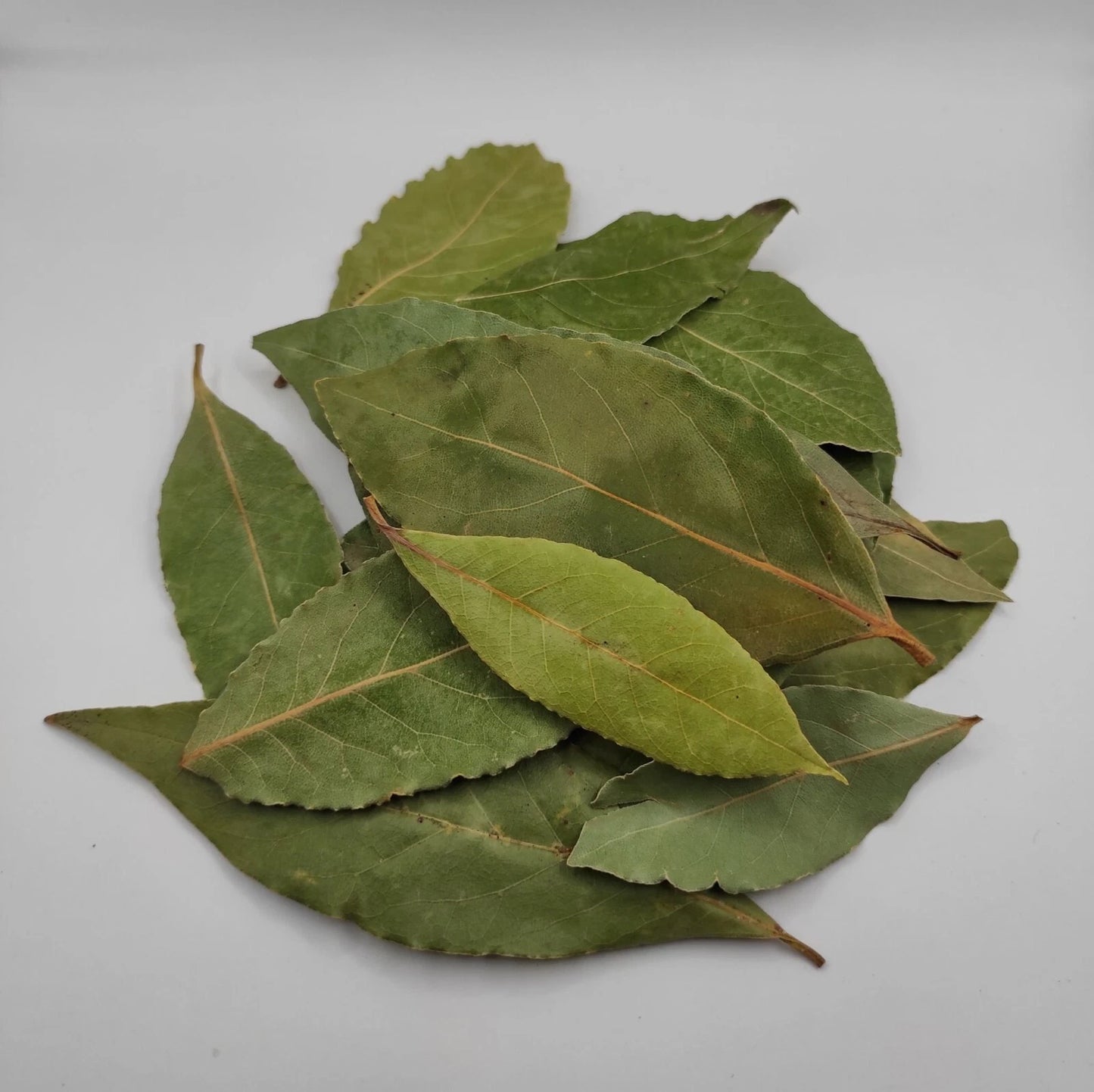
Whole Dried Bay Leaves - Blood Sugar, Digestion & Flavour
Whole Dried Bay Leaves - Blood Sugar, Digestion & Flavour
Couldn't load pickup availability
Product Details & Specifications
Net Weight: Available in 50g, 100g, 200g, 450g, 900g premium whole dried bay leaves
Form: Whole dried bay laurel leaves — premium grade, hand-selected
Serving Size: 1–3 whole leaves per dish (remove before serving)
Yield: Approximately 80–150 leaves per 100g depending on leaf size
Shelf Life: 36 months whole dried leaves sealed, 18 months crushed/crumbled
Aroma Profile: Complex, warm, subtly floral, faintly minty with eucalyptus and clove-like undertones — a sophisticated, deep background fragrance that elevates without announcing itself, the culinary world's most essential supporting herb
Storage: Store in cool, dry place in airtight container away from direct sunlight, heat, and moisture. Whole leaves retain potency significantly longer than crushed forms — always store whole and crumble only when needed.
Nutritional & Active Compound Information (Per 100g Dry Leaves)
| Component | Amount | Health Benefits |
|---|---|---|
| 1,8-Cineole (Eucalyptol) | 30–50% of essential oil | Cognitive enhancement, memory support, respiratory relief, anti-inflammatory, antimicrobial |
| Eugenol | 3–13% of essential oil | Antimicrobial, anti-inflammatory, analgesic, antioxidant, dental health |
| Alpha-Pinene | 8–12% of essential oil | Anti-inflammatory, bronchodilatory, antimicrobial, cognitive enhancement |
| Beta-Pinene | 3–8% of essential oil | Antimicrobial, anti-inflammatory, antifungal, mood support |
| Sabinene | 5–12% of essential oil | Antioxidant, antimicrobial, anti-inflammatory, digestive support |
| Linalool | 3–8% of essential oil | Calming, anti-anxiety, antimicrobial, anti-inflammatory, skin soothing |
| Total Essential Oil | 1–3% | Antimicrobial, antifungal, antiviral, digestive stimulant, respiratory support |
| Rosmarinic Acid | 1.5–3% | Powerful antioxidant, anti-inflammatory, antiviral, neuroprotective |
| Quercetin | 1–2.5% | Anti-inflammatory, immune boost, antihistamine, cardiovascular support |
| Kaempferol | 0.5–2% | Antioxidant, anticancer, anti-inflammatory, neuroprotective |
| Catechins | 1–3% | Antioxidant, cardiovascular protection, anti-inflammatory, metabolic support |
| Parthenolide | 0.2–0.5% | Migraine prevention, anti-inflammatory, anticancer, fever reduction |
| Costunolide | 0.1–0.3% | Anticancer, anti-inflammatory, antifungal, digestive support |
| Ursolic Acid | 1–2.5% | Anticancer, anti-inflammatory, muscle protection, liver health |
| Oleanolic Acid | 0.5–1.5% | Anti-inflammatory, liver protection, antiviral, anticancer |
| Total Polyphenols | 10–18% | Cellular protection, anti-aging, disease prevention, antioxidant |
| Vitamin A | 6185 IU | Eye health, immune function, skin regeneration, cellular growth |
| Vitamin C | 46.5mg | Immune support, collagen production, antioxidant, skin health |
| Vitamin B6 | 1.74mg | Brain health, neurotransmitter synthesis, immune function, mood regulation |
| Folic Acid (B9) | 180 mcg | Cell division, DNA synthesis, pregnancy health, cardiovascular support |
| Iron | 43mg | Blood building, energy production, immune function, oxygen transport |
| Calcium | 834mg | Bone health, nerve function, muscle contraction, blood clotting |
| Magnesium | 120mg | Muscle relaxation, nerve health, energy, sleep, bone strength |
| Potassium | 529mg | Heart health, blood pressure regulation, electrolyte balance |
| Manganese | 8.2mg | Bone health, metabolism, antioxidant enzyme function |
| Zinc | 3.7mg | Immune function, wound healing, metabolism, taste and smell |
| Copper | 0.4mg | Iron absorption, nerve function, collagen production, immune health |
| Selenium | 0.03mg | Antioxidant, thyroid function, immune support, DNA protection |
Why Ceylon Spice Garden Dried Bay Leaves Are Superior
Our Dried Bay Leaves vs Regular Commercial Dried Bay Leaves — Key Differences
| Factor | Ceylon Spice Garden Dried Bay Leaves | Regular Commercial Dried Bay Leaves |
|---|---|---|
| Essential Oil Content | 1–3% (Premium aromatic grade) | 0.2–0.5% (Depleted, old stock) |
| 1,8-Cineole | 30–50% of essential oil (Superior) | 10–25% (Degraded) |
| Leaf Appearance | Whole, intact, deep olive-green, supple | Brittle, broken, pale grey-green, dusty |
| Aroma Strength | Rich, warm, complex, deeply fragrant | Faint, dusty, flat — almost odourless |
| Species | Laurus nobilis — authentic Mediterranean bay laurel | Often Cinnamomum tamala (Indian bay/tejpatta) — different species, different flavour |
| Leaf Integrity | Whole complete leaves — no breakage, no dust | Often broken, fragmented, mixed with stem debris |
| Harvest Method | Hand-selected mature leaves at peak oil content | Machine harvested, mixed maturity stages |
| Drying Method | Gentle low-heat air drying (<40°C) | Industrial high-heat drying — volatile oil loss |
| Colour | Deep olive-green — freshness indicator | Pale yellow-green or grey — age and heat damage |
| Origin | Single-origin, traceable supply | Blended (Turkey, India, Egypt — unknown ratios) |
| Additives | 100% pure — no fumigants, no preservatives | May contain post-harvest fumigants |
| Freshness | Packed within 90 days of harvest | Often 12–24 months old before packing |
| Size Uniformity | Consistent, well-sized whole leaves | Highly variable, mixed sizes and grades |
| Price | Premium single-origin quality | Budget commodity blend |
Important Species Note — True Bay Laurel vs Indian Bay Leaf:
There are two very different herbs commonly called "bay leaves" that are frequently confused or substituted:
- Laurus nobilis (True Bay Laurel / Mediterranean Bay) — What we supply. The authentic culinary bay leaf used in European, Middle Eastern, and Sri Lankan cooking. Oval leaves, complex warm eucalyptus-clove aroma, the bay leaf of French bouquet garni, Italian ragù, and Ayurvedic medicine.
- Cinnamomum tamala (Indian Bay Leaf / Tejpatta) — A completely different species from the cinnamon family with 3 prominent veins and a cinnamon-clove aroma. Used specifically in North Indian and Mughal cuisine. Often incorrectly sold as "bay leaves" particularly in South Asian markets.
Our bay leaves are 100% authenticated Laurus nobilis — the true Mediterranean bay laurel with superior essential oil content and the complex aromatic profile appropriate for the full breadth of world cuisine applications.
Health & Wellness Benefits
Blood Sugar Management & Diabetes Support
Bay leaf is one of the most clinically validated herbs for blood sugar management — a fact supported by multiple human clinical trials. A landmark study published in the Journal of Clinical Biochemistry and Nutrition found that consuming 1–3g of bay leaf daily significantly reduced fasting blood glucose (by 21–26%), total cholesterol (by 21–24%), LDL cholesterol (by 26–32%), and triglycerides (by 34%), while increasing HDL cholesterol — with all improvements being statistically significant. The active mechanisms involve improved insulin receptor function, enhanced glucose uptake by cells, and reduced post-meal glucose spikes. Bay leaf's polyphenols, particularly catechins and quercetin, act synergistically on multiple metabolic pathways. This is one of the strongest clinical evidence profiles among all culinary herbs for a specific health indication.
Digestive Health & Relief
Bay leaf has been used as a digestive tonic across Mediterranean, Middle Eastern, and Ayurvedic traditions for thousands of years — and modern science validates every traditional claim. The essential oils stimulate the secretion of gastric juice, bile, and digestive enzymes, promoting efficient digestion of proteins and fats. Eugenol's antispasmodic properties relax intestinal smooth muscle, relieving cramping, bloating, and gas. Antimicrobial compounds suppress pathogenic gut bacteria including H. pylori, a primary cause of gastric ulcers. Parthenolide and costunolide reduce intestinal inflammation. The traditional practice of adding bay leaves to heavy dishes like stews, beans, and braised meats is not merely flavour enhancement — it is genuine digestive facilitation that makes complex dishes easier to digest.
Powerful Antioxidant Protection
Bay leaves provide exceptional antioxidant protection through a diverse array of polyphenols and essential oil compounds. Rosmarinic acid, quercetin, kaempferol, catechins, and cineole work synergistically to neutralise free radicals throughout the body, protect cells and DNA from oxidative damage, reduce chronic disease risk, slow cellular aging, and preserve mitochondrial function. The unique combination of water-soluble polyphenols (released into broths and sauces) and fat-soluble terpenes (released into oil-based dishes) means bay leaves deliver antioxidant protection through both aqueous and lipid-based cooking methods — making them uniquely effective across the full range of culinary applications.
Cardiovascular Health
The clinical evidence for bay leaf's cardiovascular benefits is among the strongest of any culinary herb. The same landmark clinical trials that demonstrated blood sugar reduction showed simultaneous significant reductions in total cholesterol (21–24%), LDL cholesterol (26–32%), and triglycerides (34%), with increases in beneficial HDL cholesterol. Rutin and quercetin strengthen capillary walls and improve vascular integrity. Anti-inflammatory compounds reduce arterial wall inflammation linked to atherosclerosis development. Folic acid (180 mcg/100g) reduces homocysteine levels linked to cardiovascular disease. Potassium supports healthy blood pressure regulation. Together these evidence-based mechanisms make bay leaf one of the most comprehensively cardiovascular-protective herbs in regular culinary use.
Anti-Inflammatory Effects
Bay leaf contains a particularly impressive array of anti-inflammatory compounds working through multiple simultaneous pathways. Parthenolide — a sesquiterpene lactone most associated with feverfew — inhibits NF-kB inflammatory signalling, one of the master regulators of inflammation throughout the body. Eugenol inhibits COX-2 inflammatory enzymes. Cineole reduces inflammatory cytokine production. Rosmarinic acid suppresses TNF-alpha and IL-1beta. Ursolic and oleanolic acids provide additional anti-inflammatory support. The combined effect reduces systemic inflammation, provides relief from arthritis and joint pain, soothes inflammatory digestive conditions, and helps manage chronic inflammatory disease through consistent dietary use.
Antimicrobial & Antifungal Properties
Bay leaf essential oils — cineole, eugenol, alpha-pinene, and linalool — demonstrate broad-spectrum antimicrobial activity against bacteria, fungi, and viruses. Effective against Staphylococcus aureus, Escherichia coli, Bacillus cereus, Aspergillus moulds, and multiple Candida species. Bay leaf extracts show particularly strong activity against food-borne pathogens — explaining the traditional practice of adding bay leaves to stocks, preserves, and grain stores. Antiviral activity against respiratory pathogens provides additional immune protection. Regular culinary use provides consistent natural antimicrobial support through every dish prepared.
Respiratory Health Support
1,8-Cineole (eucalyptol), the dominant compound in bay leaf's essential oil at 30–50%, is one of the most clinically validated natural bronchodilators and expectorants. Relaxes bronchial smooth muscle to open airways, thins and loosens mucus secretions, reduces bronchial inflammation, and provides direct antimicrobial protection against respiratory pathogens. Alpha-pinene provides additional bronchodilatory action. Bay leaf steam inhalation — boiling several leaves and inhaling the steam — is a traditional remedy across Mediterranean and Ayurvedic medicine for chest congestion, sinusitis, bronchitis, and respiratory infections, with the cineole mechanism providing genuine pharmacological justification for this ancient practice.
Migraine Prevention & Pain Relief
Parthenolide in bay leaves is the same compound responsible for feverfew's well-documented migraine prevention properties. Clinical research on parthenolide demonstrates inhibition of platelet aggregation (a key mechanism in migraine onset), reduction of inflammatory prostaglandins that trigger vascular headaches, and suppression of the trigeminal nerve sensitisation associated with migraine. Eugenol provides direct analgesic effects on pain receptors, comparable to mild pharmaceutical analgesics. Cineole reduces neuroinflammation associated with headache. Regular consumption of bay leaf in cooking may contribute to reduced migraine frequency and severity for susceptible individuals.
Anxiety Relief & Sleep Support
Linalool in bay leaf binds to GABA-A receptors in the brain — the same receptors targeted by benzodiazepine anti-anxiety medications and alcohol — producing genuine anxiolytic (anxiety-reducing) and mild sedative effects. Research shows linalool reduces anxiety behaviours, lowers cortisol levels, slows heart rate, and promotes relaxation without cognitive impairment. Cineole provides additional calming cognitive effects. The traditional practice of bay leaf tea before sleep is pharmacologically justified by these linalool mechanisms. Combined with a warm beverage ritual, bay leaf tea provides one of the gentler natural anxiety and sleep support options available through culinary use.
Kidney Health & Diuretic Support
Bay leaf has a long history of use across traditional medicine systems for urinary tract health and kidney stone prevention. Diuretic properties support increased urine flow, reducing urinary tract infection risk and supporting kidney stone passage. Antioxidant polyphenols protect kidney cells from oxidative damage. Anti-inflammatory compounds reduce urinary tract inflammation. Traditional Ayurvedic practice uses bay leaf tea specifically for kidney stone prevention and urinary health maintenance. Regular dietary use supports overall kidney function through the combined diuretic, antimicrobial, and anti-inflammatory mechanisms.
Wound Healing & Skin Health
Bay leaf's combination of eugenol, cineole, and antimicrobial essential oils creates excellent conditions for wound healing and skin health. Eugenol accelerates wound closure through enhanced collagen synthesis and cell proliferation. Antimicrobial properties protect wounds from bacterial infection. Anti-inflammatory compounds reduce wound inflammation and swelling. Linalool soothes skin irritation. Vitamin A (6185 IU per 100g) supports skin cell renewal and repair. Traditional topical application of bay leaf tea as a wound wash and skin tonic is supported by these combined mechanisms — and dietary consumption provides systemic skin-supporting benefits.
Hair Health & Dandruff Control
Bay leaf tea rinse is a traditional hair treatment used across Mediterranean, Middle Eastern, and South Asian cultures for centuries. Antimicrobial and antifungal essential oils effectively suppress Malassezia furfur — the yeast responsible for dandruff and seborrhoeic dermatitis. Eugenol improves scalp circulation, supporting hair follicle health. Anti-inflammatory compounds soothe scalp irritation and reduce flaking. Cineole improves micro-circulation to the scalp. The traditional method — steeping several bay leaves in water and using as a post-shampoo hair rinse — provides these benefits directly to the scalp and hair.
Bone Health & Mineral Density
Dried bay leaves provide a meaningful bone-support mineral profile — 834mg calcium, 120mg magnesium, 8.2mg manganese, and 3.7mg zinc per 100g. Vitamin A supports osteoblast (bone-building cell) differentiation and activity. Folic acid supports collagen matrix formation in bone tissue. Anti-inflammatory compounds reduce the inflammatory bone resorption associated with arthritis. While bay leaves are used in smaller quantities than other herbs, their concentrated mineral profile means that regular culinary use contributes meaningful bone-protective nutrition with every broth, braise, and slow-cooked dish prepared.
Insect Repellent Properties
One of bay leaf's most unique and practically valuable properties is its effectiveness as a natural insect repellent — particularly against pantry moths, weevils, silverfish, and cockroaches. The cineole and other monoterpenes in bay leaf essential oil are highly aversive to grain-eating insects and pantry pests. The traditional practice of placing dried bay leaves in flour, rice, pasta, and grain containers to prevent weevil infestation is empirically validated and practically effective. Unlike chemical pesticide strips, bay leaves are completely food-safe, flavour-neutral in storage (not touching food), and continuously active as long as the leaf retains essential oil.
Why Choose Our Premium Quality?
Authenticity Guarantee:
- 100% Pure Laurus nobilis — Authenticated true Mediterranean bay laurel, not Indian bay (Cinnamomum tamala) substitute
- Single-Origin Traceable Supply — Known cultivation source with complete traceability from farm to pack
- Hand-Selected Mature Leaves — Selected at peak essential oil concentration for maximum aroma and therapeutic benefit
- Third-Party Tested — Verified essential oil content, cineole percentage, eugenol levels, and species authentication
- No fumigants, preservatives, or coatings — 100% natural pure dried bay leaves only
- Gentle Low-Heat Drying — Preserving volatile cineole, eugenol, linalool, and all active aromatic compounds
Quality Specifications:
- Species: Laurus nobilis — authenticated true Mediterranean bay laurel
- Form: Complete whole leaves — single oval shape, prominent central vein, smooth edges
- Essential Oil: 1–3% — premium aromatic and therapeutic grade
- Cineole: 30–50% of essential oil — superior cognitive and respiratory compound
- Colour: Deep olive-green — freshness and proper processing indicator
- Aroma: Rich, warm, complex, eucalyptus-floral — characteristic of genuine Laurus nobilis
- Texture: Supple, intact whole leaves — not brittle, broken, or dusty
- Size: Consistent, well-sized leaves — hand-selected for uniformity
Heritage Source:
- Ancient Herb Legacy — Bay laurel revered in ancient Greek and Roman civilisation for 3,000+ years
- Symbol of Victory — The laurel wreath of ancient Greece and Rome — Apollo's sacred plant
- Culinary Royalty — The word "baccalaureate" derives from laurel berries — reflecting bay's association with achievement
- Sri Lankan Culinary Integration — True bay laurel used in Sri Lankan Ayurvedic cooking and medicinal preparations
- Fair Trade Practices — Ensuring fair wages and safe conditions for all farm workers
Traditional & Cultural Significance
Bay Leaf Heritage:
- 3,000+ Year History — Sacred to Apollo in ancient Greece, used to crown Olympic victors, poets, and emperors
- Laurel Wreath Symbol — The universal symbol of achievement and victory in Western civilisation derives from Laurus nobilis
- Oracle of Delphi — Ancient Greek priestesses burned bay leaves and inhaled the smoke for prophetic visions
- Roman Imperial Symbol — Roman emperors wore laurel crowns — the word "laureate" and "baccalaureate" trace to bay laurel
- Medieval Apothecary Essential — One of the most prescribed herbs in European medicine throughout the Middle Ages
Cultural Practices:
- Bouquet Garni Foundation — Bay leaf the essential, non-negotiable component of the classic French herb bundle
- Mediterranean Stock Base — No authentic Mediterranean stock, braise, or slow-cooked dish is made without bay leaf
- Pantry Protector — Dried bay leaves placed in grain and flour containers across European households for centuries
- Ayurvedic Digestive — Used throughout South Asian traditional medicine for digestion, circulation, and fever
- Symbol of Achievement — "Resting on one's laurels" — the bay laurel is embedded in Western language and culture
Modern Recognition:
- Clinical Blood Sugar Research — Human clinical trials confirming bay leaf's significant anti-diabetic effects widely cited
- Natural Pest Control — Bay leaf's effectiveness against pantry insects validated and recommended by food storage experts
- Chef's Essential — Professional chefs globally consider bay leaf the single most important background herb
- Ayurvedic Revival — Growing Western recognition of bay leaf's traditional Ayurvedic applications
- Mediterranean Diet Essential — Core component of the world's most research-validated healthy diet pattern
Preparation & Usage Methods
Perfect Use — Essential Cooking Tips:
- Always add whole leaves — never crush bay leaves into dishes as the texture is unpleasant and the flavour becomes bitter and overwhelming
- Add early in cooking — bay leaves need time to slowly release their essential oils into the surrounding liquid; minimum 20 minutes, best with 1+ hours
- Always remove before serving — bay leaves are not meant to be eaten; the leaf itself is tough and the concentrated essential oils unpleasant when chewed
- Gently crease or fold leaf before adding to help release essential oils more readily
- Use 1–2 leaves for everyday dishes, 2–3 for large pots and long braises — more leaves longer in a dish can become medicinal-tasting
- Bay leaves work best in liquid-based cooking — stocks, soups, stews, braises, rice dishes, and sauces
IMPORTANT: Bay leaves are one of the rare herbs where the whole form is absolutely non-negotiable. Ground or crushed bay leaf releases essential oils too rapidly and intensely, creating a harsh, medicinal, camphor-like bitterness in dishes. Always use whole leaves, add early, and remove before serving. The flavour contribution of a whole bay leaf slowly infusing into a braise for 2 hours is extraordinarily complex and completely different from ground bay leaf — deep, warm, subtly floral, and irreplaceable.
Classic French Stock (Fond):
- 2–3 whole bay leaves (the non-negotiable foundation)
- Fresh thyme sprigs, parsley stalks
- Peppercorns, onion, carrot, celery
- Chicken carcasses or beef bones
- Cold water to cover
- Simmer 3–4 hours (chicken) or 6–8 hours (beef)
- No authentic professional stock is made without bay leaf — it provides the irreplaceable depth
Classic Bouquet Garni:
- 2 whole bay leaves (essential — the defining herb)
- Fresh or dried thyme sprigs
- Parsley stalks
- Optional: rosemary, black peppercorns, celery
- Tie in muslin cloth or tie together with kitchen string
- Add to stocks, soups, stews, braises, and sauces — remove before serving
- The fundamental French culinary herb bundle — bay is its soul
Sri Lankan Rice & Curry Base:
- 2 whole bay leaves
- 2 cardamom pods, 2 cloves, 1 cinnamon stick
- Bloom in coconut oil with onion and garlic
- Add rice or curry base ingredients
- Bay leaf integrates beautifully with Sri Lankan whole spices
- Essential in authentic Sri Lankan rice, biryani, and aromatic curry bases
Italian Ragù & Bolognese:
- 2 whole bay leaves added with the tomatoes
- Soffritto base (onion, carrot, celery)
- Minced beef and/or pork
- Red wine, milk, crushed tomatoes
- Simmer 2–3 hours minimum
- Remove bay leaves before serving
- Bay leaf provides the deep background complexity that distinguishes authentic ragù from simple meat sauce
Bay Leaf Blood Sugar & Wellness Tea:
- 2–3 whole dried bay leaves
- 500ml freshly boiled water
- Optional: cinnamon stick, ginger slice, lemon
- Steep covered 10–15 minutes
- Strain and drink warm
- For blood sugar management, digestive support, anxiety relief, or respiratory comfort
- Drink 1–2 cups daily — the clinical studies used 1–3g of bay leaf daily
Classic Béchamel & White Sauces:
- Infuse 1 bay leaf in warm milk for 10 minutes before making béchamel
- Remove bay leaf before adding milk to roux
- The infused milk produces béchamel with extraordinary depth versus plain milk
- Use the same technique for custards, rice pudding, and cream-based soups
- One of the most impactful techniques in classical French cooking
Slow-Cooked Beans & Legumes:
- 2 whole bay leaves per 500g dried beans
- Add from the start of cooking
- Works with lentils, chickpeas, black beans, cannellini, borlotti
- Bay leaf reduces flatulence from beans (traditional wisdom backed by digestive enzyme stimulation)
- Remove before serving
- The single most important addition to any bean or legume dish
Pickling & Preserves:
- 1–2 bay leaves per jar of pickles
- Essential in classic gherkins, pickled onions, and mixed vegetable pickles
- Add to brine for olives, preserved lemons, and pickled fish
- Bay leaf's antimicrobial properties contribute to food preservation
- Provides distinctive flavour depth that distinguishes artisan pickles
Rice Pilaf & Biryani:
- 1–2 whole bay leaves bloomed in ghee or oil with other whole spices
- Add rice, stock, and protein
- Essential in authentic biryani alongside cardamom, cloves, and cinnamon
- Provides the warm depth that distinguishes layered aromatic rice dishes
- Remove before serving or push to edges when plating
Natural Pantry Pest Control:
- Place 1–2 whole dried bay leaves inside flour, rice, pasta, oats, and grain containers
- Place in cupboard corners and pantry shelves
- Replace every 3–4 months as essential oils naturally evaporate
- Effectively repels pantry moths, weevils, silverfish, and grain beetles
- 100% food-safe, chemical-free, fragrance-neutral in food
Culinary Uses Across Cuisines:
- French: Bouquet garni, all stocks and broths, braises, béchamel, ragù, bouillabaisse, cassoulet
- Italian: Ragù, ossobuco, bean dishes, risotto, pickles, tomato sauces, braises
- Sri Lankan: Rice dishes, biryani, aromatic curries, coconut-based stews, Ayurvedic preparations
- Indian: Biryani, dal, korma, all spiced rice dishes — true bay laurel or Indian bay depending on regional tradition
- Greek: Stews, marinades, pickles, grilled meat seasonings, soups
- Middle Eastern: Rice pilafs, slow-cooked meats, lentil dishes, spiced broths
- Caribbean: Stewed meats, rice and peas, fish brines, spiced braised dishes
- British: Stocks, béchamel, braised meats, pickles, bread sauce, pot roast
Storage & Freshness Guidelines
Optimal Storage Conditions:
- Airtight Container: Glass jar with tight-sealing lid or quality tin — cineole and eugenol evaporate rapidly when exposed to air
- Cool Location: Below 20°C — heat accelerates essential oil evaporation from the leaf structure
- Dark Place: Away from all direct and indirect light — UV degrades cineole and polyphenols
- Whole Always: Keep leaves completely whole — every break in the leaf surface accelerates essential oil loss dramatically
- Dry Environment: Moisture causes mould on leaves — keep completely dry
- Refrigeration: Strongly recommended after opening — extends essential oil potency and green colour significantly
Freshness Indicators:
- Excellent: Deep olive-green, supple whole leaves, rich warm complex aroma immediately on opening the container
- Good: Warm herbal aroma present, green colour largely intact, flavour contribution in cooking still meaningful
- Check: Noticeably faded aroma, yellowing of leaves — still usable but flavour contribution much reduced
- Replace: Little or no aroma, pale yellow or grey leaves, no flavour in cooking — essential oils fully evaporated
Shelf Life Guidelines:
- Whole Leaves (sealed): 36 months maximum potency when properly stored
- Whole Leaves (opened, airtight): 18–24 months excellent quality
- Crushed/Crumbled: 12 months sealed, 6 months opened before significant quality decline
- Best Practice: Always store whole, crumble only immediately before use if needed
- Quality Peak: Most aromatic and therapeutically potent within first 12 months of harvest
- Production Date: Clearly marked on all packaging
Common Storage Mistakes to Avoid:
- ❌ Breaking or crumbling leaves for storage — dramatically accelerates essential oil loss
- ❌ Storing in a transparent jar on a light kitchen shelf — light destroys cineole and polyphenols
- ❌ Storing above or beside the stove — heat and steam are the primary quality destroyers
- ❌ Keeping in original paper or plastic packaging after opening
- ❌ Using wet hands or utensils — moisture triggers mould on dried leaves
- ❌ Buying large quantities if turnover is slow — for a herb used in small quantities, freshness matters enormously
Safety Information & Usage Guidelines
Recommended For:
- Anyone wanting authentic depth and complexity in stocks, braises, and slow-cooked dishes
- Those managing blood sugar and seeking natural complementary dietary support
- People wanting natural digestive support especially with bean, legume, and fatty meat dishes
- Those seeking natural pantry pest control without chemicals
- Individuals supporting cardiovascular health through diet
- Those wanting natural anxiety relief and sleep support through herbal tea
- Health-conscious individuals maximising therapeutic value from everyday cooking
Generally Safe For:
- Most healthy adults — exceptional safety record across thousands of years of continuous culinary use
- Regular daily culinary use — used in virtually every Mediterranean and Middle Eastern household daily
- Children in culinary food amounts — the leaf is removed before serving so the herb is appropriate for all ages
- Pregnant women in normal culinary cooking amounts — safe and nutritionally beneficial
- Elderly — particularly beneficial for blood sugar management, cardiovascular health, and digestive support
- Those with diabetes — clinical evidence for blood sugar benefit; monitor glucose when starting regular use
Consult Healthcare Provider If:
- Diabetes medications — bay leaf clinically reduces blood sugar; starting regular medicinal tea use may require medication adjustment
- Pregnant — large medicinal amounts (culinary cooking amounts safe; high-dose bay leaf supplements or concentrated tea not recommended)
- Scheduled for surgery — bay leaf may slow blood clotting; discuss all herbs with surgical team
- Kidney conditions — diuretic properties at medicinal doses; discuss with nephrologist
- Bay laurel allergy — rare but possible; Lauraceae family cross-reactivity exists
Not Recommended For:
- Eating whole bay leaves — always remove before serving; the leaf is not meant to be consumed whole
- Confirmed Lauraceae plant family allergy (very rare)
- Concentrated bay leaf supplements during pregnancy without medical supervision
Dosage Guidelines:
- Culinary Use: 1–3 whole leaves per dish — remove before serving
- Stock & Broths: 2–3 leaves per litre of liquid
- Wellness Tea: 2–3 leaves per 500ml, steeped 10–15 minutes covered — 1–2 cups daily
- Blood Sugar Support: 1–3g daily (approximately 3–6 leaves ground in clinical studies; equivalent through regular tea and cooking)
- Pantry Pest Control: 1–2 leaves per container, replaced every 3–4 months
- Medicinal Maximum: Avoid very concentrated preparations long-term without medical guidance
Important Usage Notes:
- ALWAYS remove whole bay leaves before serving — they are not meant to be eaten
- Never use ground bay leaf in cooking — the concentrated release is bitter and medicinal
- Gently crease leaves before adding to maximise essential oil release
- The longer bay leaves simmer in liquid, the deeper the flavour contribution
- Bay leaves work best in liquid-based dishes — the essential oils are water-soluble and need liquid to distribute
- For blood sugar benefits, regular dietary use through cooking provides sustained exposure to active compounds
Organic Certification & Sustainability
Environmental Commitments:
- USDA/EU Organic Available — No synthetic pesticides, herbicides, or chemical fertilisers
- Chemical-Free Cultivation — Traditional farming in Sri Lanka's clean agricultural environments
- Carbon-Conscious Operations — Minimising environmental footprint throughout the supply chain
- Fair Trade Practices — Ensuring living wages, dignity, and safe conditions for all workers
- Pollinator Support — Bay laurel flowers provide valuable nectar for bees
- Long-Life Perennial Tree — Bay laurel trees live and produce for 50–100+ years — exceptional sustainability
Sustainability Practices:
- Perennial Tree Cultivation — Bay laurel trees harvested for decades without replanting — highly sustainable
- Selective Hand-Harvesting — Individual mature leaves selected, leaving the tree to continue healthy growth
- Solar Drying — Traditional sun and air drying using zero energy beyond natural conditions
- Zero Waste Processing — All organic matter composted and returned to cultivation
- Minimal Water Use — Established bay laurel trees largely rainfall-dependent
- Worker Welfare Programs — Fair housing, education, healthcare, and community development
Ecological Benefits:
- Bay laurel trees provide year-round evergreen canopy — supporting biodiversity, preventing erosion, sequestering carbon
- Long-lived trees lock in soil carbon for decades or centuries of cultivation
- Natural pest-repellent properties reduce chemical pesticide requirements for surrounding crops
- Provides habitat and food for wildlife including birds and beneficial insects
- Supports livelihoods for rural communities through multi-generational perennial tree farming
- Preserves traditional herb cultivation and harvesting knowledge spanning thousands of years
Customer Experiences
"My Type 2 diabetes management changed dramatically when I started drinking 2 cups of bay leaf tea daily alongside my medication. Within 3 months my fasting glucose dropped from 9.2 to 6.8 mmol/L. My GP was so impressed he read the clinical studies himself and now recommends it to other patients. Simple, natural, and genuinely effective." — Thomas R., Diabetes Management
"I had always used whatever dried bay leaves I found at the supermarket — dull, grey, completely odourless. When I opened my first order from Ceylon Spice Garden I genuinely could not believe the difference. The leaves are deep green, supple, and the moment I opened the jar the whole kitchen filled with this warm, complex, eucalyptus-floral fragrance. My stocks and braises have been transformed." — Chef Sophie L., Professional Kitchen
"As a gastroenterologist I recommend bay leaf tea to patients with functional dyspepsia and bloating. The digestive enzyme stimulation from the essential oils is well-evidenced and the patient response is consistently positive. Ceylon Spice Garden's leaves have the aroma that tells me the essential oil content is genuine and therapeutic." — Dr. Rahul K., Gastroenterologist
"I put bay leaves in my flour, rice, and pasta containers after reading about their pest-repellent properties. Not a single weevil or moth in two years of using them — previously I had constant pantry pest problems. Game-changing practical use that I now recommend to everyone." — Helen M., Practical Homekeeper
"I have migraines regularly and since I read about parthenolide in bay leaves I've been drinking bay leaf tea daily. My migraine frequency has genuinely reduced — from 6–8 per month to 2–3. I can't prove causality but the timing was clear and I've maintained the habit. The tea is also genuinely calming and pleasant to drink." — Amanda W., Migraine Management
"Sri Lankan cooking without bay leaves is unimaginable to me — they go into everything. But the quality of what I found here is exceptional — it reminds me of the bay leaves from my grandmother's garden. Deep, fragrant, warm. Nothing like the pale tasteless things in the supermarket." — Chamari P., Sri Lankan Heritage Cook
Quality Assurance & Testing
Third-Party Laboratory Verification:
- Species Authentication — Confirmed Laurus nobilis, not Cinnamomum tamala or other substitute species
- Essential Oil Content — Verified 1–3% premium aromatic grade
- 1,8-Cineole Analysis — Confirmed 30–50% of essential oil fraction
- Eugenol Quantification — Verified secondary active compound concentration
- Rosmarinic Acid Testing — Confirmed polyphenol antioxidant levels
- Heavy Metals Testing — Ensuring safety from soil and environmental contamination
- Pesticide Residue Testing — Verifying chemical-free cultivation practices
- Microbial Testing — Confirming absence of Salmonella, E. coli, moulds, and yeasts
- Aflatoxin Screening — Critical safety testing for dried herb and leaf products
- Fumigant Residue Testing — Confirming no post-harvest chemical treatment
- Moisture Content — Verified optimal drying level for shelf stability
Quality Control Process:
- Visual inspection of whole leaves (colour depth, uniformity, completeness, absence of breakage and debris)
- Aroma panel evaluation (cineole-eugenol intensity, warmth, complexity, freshness, absence of off-notes)
- Leaf maturity verification (mature leaves at peak essential oil concentration selected)
- Species visual authentication (leaf shape, vein pattern, margin consistent with Laurus nobilis)
- Origin traceability (specific cultivation region, harvest date, drying batch)
- Moisture content monitoring — critical for mould prevention and shelf stability
- Freshness maintained from harvest to delivery through controlled storage
- Batch-to-batch consistency against certified essential oil reference standards
- Customer feedback integration for continuous quality improvement
Frequently Asked Questions
Q: Do bay leaves actually add flavour or are they a myth?
A: Bay leaves genuinely add complex flavour — but their contribution is subtle and cumulative rather than bold and immediate. The essential oils (cineole, eugenol, linalool, pinene) slowly dissolve into the cooking liquid over 30–60+ minutes, adding warm, subtly floral, eucalyptus-clove depth that is difficult to identify individually but whose absence is immediately apparent. To verify: make two identical batches of stock or tomato sauce, one with bay leaves and one without. The difference is unmistakable. The myth that bay leaves do nothing usually comes from using old, odourless bay leaves that have lost all essential oil — fresh premium bay leaves with full essential oil content are genuinely impactful.
Q: Why must bay leaves always be removed before serving?
A: Bay leaves are not meant to be eaten — the leaf itself is tough, leathery, and difficult to digest. More importantly, concentrations of essential oils that are pleasant when slowly diffused into a large dish over cooking time are unpleasantly intense and camphor-bitter when a whole leaf is chewed. There is also a minor choking hazard concern with whole leaves — particularly for children and elderly diners — as the rigid leaf can become lodged in the throat. Always add bay leaves at the start of cooking and count them in before cooking so you can account for all of them before serving.
Q: What is the difference between Mediterranean bay leaf and Indian bay leaf?
A: They are fundamentally different plants from different botanical families with completely different aromas and culinary applications. Mediterranean bay laurel (Laurus nobilis) — what we supply — is from the Lauraceae family, has an oval leaf with a single central vein, and has a warm eucalyptus-clove-floral aroma from cineole and eugenol. Indian bay leaf or tejpatta (Cinnamomum tamala) is from the cinnamon family, has an oblong leaf with three prominent parallel veins, and has a distinctly cinnamon-clove aroma. They are not interchangeable — using tejpatta in French or Italian cooking and using Laurus nobilis in authentic biryani both produce wrong results. Knowing which you have is important.
Q: Can bay leaf tea really help with blood sugar?
A: The clinical evidence is genuinely impressive. A human randomised controlled trial published in the Journal of Clinical Biochemistry and Nutrition found that 1–3g of bay leaf daily for 30 days produced statistically significant reductions in fasting blood glucose (21–26%), total cholesterol (21–24%), LDL cholesterol (26–32%), and triglycerides (34%). These are not minor effects — they are comparable to some pharmaceutical interventions. The mechanisms include improved insulin receptor function, catechin-mediated glucose uptake enhancement, and polyphenol-based enzyme inhibition. Bay leaf tea (2–3 leaves steeped 10–15 minutes twice daily) provides approximately the equivalent of the doses used in these trials.
Q: How long should bay leaves cook to release maximum flavour?
A: Bay leaves need time — they are one of the slowest-releasing herbs in cooking. For meaningful flavour contribution: minimum 20 minutes for a quick soup, 45–60 minutes for a pasta sauce, 1–2+ hours for a stew or braise, 3+ hours for stocks and bone broths. The longer they cook, the deeper and more complex the flavour integration — there is no such thing as over-infusing bay leaves in a long braise. Gently creasing or folding the leaf before adding helps speed early oil release. Never add bay leaves in the last 10 minutes of cooking — they simply will not have time to contribute meaningfully.
Q: How many bay leaves should I use?
A: As a general guide: 1 leaf for a small sauce or single-portion dish, 2 leaves for a standard pot serving 4 people, 3 leaves for a large pot or very long braise, 2–3 leaves per litre of stock. Fresh premium bay leaves with high essential oil content are more potent than old depleted commercial leaves — with our premium quality you may find 1–2 leaves is more than sufficient where previously you used 3–4. Over-using bay leaves in a dish with a high essential oil content leaf can produce a camphor-like medicinal note — start conservatively and adjust to your taste preference.
Q: Can I use bay leaves for pest control in my pantry?
A: Yes — this is one of bay leaf's most practically useful properties and it genuinely works. The cineole and other monoterpenes in bay leaf essential oil are highly aversive to grain-eating insects — pantry moths, weevils, grain beetles, and silverfish. Place 1–2 whole dried bay leaves inside flour bags, rice containers, pasta boxes, oat canisters, and any other dry grain or starchy food containers. The essential oils permeate the surrounding air space and deter insects from entering. Replace every 3–4 months as the essential oils gradually evaporate. This is 100% food-safe — the leaves are in the container, not touching the food directly, and at the concentrations involved there is no flavour transfer to the food.
Q: What is the best way to make bay leaf tea?
A: For maximum essential oil and polyphenol extraction: use 2–3 whole dried bay leaves per 500ml of water. Bring water to a full boil, add the leaves, reduce to a simmer, and gently simmer covered for 5 minutes. Then turn off heat and steep covered for a further 10 minutes. The covering is essential — cineole evaporates readily with steam. Strain, add honey and lemon if desired, and drink warm. This method produces a tea with significantly higher active compound concentration than simply steeping in hot water. For blood sugar management, drink 1–2 cups daily with meals. The tea has a warm, subtly eucalyptus-herbal flavour that is pleasant and distinctive.
Traditional Herbal Blends & Combinations
Classic Herb Bundle Recipes:
- Bouquet Garni: bay leaf + thyme + parsley stalks + optional rosemary (bay is the irreplaceable foundation)
- Sachet d'Épices: bay leaf + peppercorns + cloves + thyme + parsley in muslin (French classical cuisine)
- Sri Lankan Whole Spice Base: bay leaf + cardamom + cinnamon + cloves + curry leaves
- Italian Braise Base: bay leaf + rosemary + thyme + sage + garlic + juniper
For Blood Sugar & Metabolic Health:
- Bay leaf + cinnamon + ginger + fenugreek (comprehensive blood sugar support tea)
- Bay leaf + gymnema + turmeric + black pepper (metabolic wellness tea blend)
- Bay leaf + bitter melon + ginger + lemon (traditional blood sugar tonic)
For Digestive Health:
- Bay leaf + fennel + ginger + chamomile (after-meal digestive relief tea)
- Bay leaf + peppermint + licorice root + lemon balm (IBS and bloating support)
- Bay leaf + dandelion + milk thistle + lemon (liver and digestive wellness tea)
For Anxiety & Sleep:
- Bay leaf + chamomile + lavender + lemon balm (calming evening wellness tea)
- Bay leaf + passionflower + valerian + honey (sleep support blend)
- Bay leaf + ashwagandha + lemon balm + ginger (stress adaptogen blend)
For Respiratory Support:
- Bay leaf + thyme + honey + lemon (cough and chest congestion tea)
- Bay leaf + eucalyptus + peppermint (steam inhalation blend)
- Bay leaf + ginger + turmeric + black pepper (warming respiratory tonic)
For Cardiovascular Health:
- Bay leaf + hawthorn + hibiscus + lemon balm (heart wellness tea)
- Bay leaf + garlic + thyme + rosemary (daily heart-healthy cooking herb base)
- Bay leaf + cinnamon + ginger + turmeric (comprehensive cardiovascular and metabolic support)
Legal & Safety Disclaimer
Dried bay leaves (Laurus nobilis) are a traditional culinary and herbal ingredient with thousands of years of documented safe use in food and traditional medicine. Generally recognised as safe (GRAS) by the FDA for culinary use. This product is not intended to diagnose, treat, cure, or prevent any disease. Statements regarding health benefits are based on traditional use, population studies, and peer-reviewed scientific research on bay leaf's active compounds including 1,8-cineole, eugenol, linalool, parthenolide, quercetin, and rosmarinic acid. Those with diabetes should monitor blood glucose when beginning regular bay leaf tea consumption as clinical evidence shows meaningful blood sugar reduction. Pregnant women should use in normal culinary amounts only. Those with Lauraceae family allergies should exercise caution. Always remove bay leaves before serving — not intended for direct consumption. Not evaluated by the FDA as a medicine or supplement.
100% Satisfaction Guarantee
We stand behind the exceptional quality of our premium whole dried bay leaves:
✓ Free shipping on orders over $50 ✓ 30-day money-back guarantee — complete satisfaction or full refund ✓ Species guarantee — authenticated Laurus nobilis, not Indian bay substitute — or full refund ✓ Freshness guarantee — packed within 90 days of harvest for maximum essential oil potency ✓ Purity guarantee — no fumigants, preservatives, or coatings — or full refund ✓ Quality guarantee — whole intact leaves only, deep olive-green, verified essential oil content ✓ Single-origin source — fully traceable cultivation origin ✓ Secure packaging — sealed, airtight, light-protected to preserve aroma and therapeutic compounds ✓ Fast delivery — ships same business day ✓ Expert support — Herb and spice specialists available 7 days a week
Experience the legendary depth and healing power of premium Ceylon dried bay leaves — the ancient herb of victory, wisdom, and culinary mastery — combining 3,000 years of Mediterranean and Ayurvedic heritage, exceptional Laurus nobilis essential oil richness, and authenticated single-origin purity to transform every stock, every braise, every slow-cooked dish, and support your health with every cup. From Ceylon Spice Garden's carefully hand-selected mature leaves, gently air-dried to preserve extraordinary aromatic intensity and therapeutic potency, to your kitchen, your cup, and your pantry — deeply olive-green, richly fragrant, and extraordinary in every single use.


Featured collection
-
Ceylon Cinnamon Powder C5 Grade - True Cinnamon for All Uses
Vendor:Ceylon Spice GardenRegular price From $10.99 USDRegular price$54.99 USDSale price From $10.99 USDSale -
Premium Ceylon Cinnamon Alba Grade Powder - Ground True Cinnamon
Vendor:Ceylon Spice GardenRegular price From $19.99 USDRegular price$59.99 USDSale price From $19.99 USDSale -
Ceylon Turmeric Powder – Pure Sri Lankan Golden Spice
Vendor:Ceylon Spice GardenRegular price From $8.99 USDRegular price$8.99 USDSale price From $8.99 USD -
Ceylon Cinnamon Sticks C5 Grade – True Cinnamon Quills from Sri Lanka
Vendor:Ceylon Spice GardenRegular price From $10.99 USDRegular price$54.99 USDSale price From $10.99 USDSale


Why Choose Ceylon Spice Garden?
Discover the difference that authentic Ceylon spices can make in your culinary journey
25+ Years of Excellence
With over 25 years of expertise in sourcing and processing authentic Ceylon spices, we bring you the finest quality directly from Sri Lankan gardens.
Premium Quality Guaranteed
Every spice is carefully selected, processed, and packaged to maintain maximum freshness, flavor, and nutritional value. We guarantee the highest standards.
Fast & Reliable Shipping
Our efficient logistics network ensures your spices reach you fresh and on time, with tracking available for all orders worldwide.
100% Authentic Ceylon
Sourced directly from certified organic farms in Sri Lanka, our spices are 100% authentic Ceylon varieties with unmatched flavor profiles.
Let customers speak for us
This Ceylon Cinnamon smells and tastes different from other cinnamons I have used in the past. It use it mostly for health purposes. It tastes good with coffee, tea, and in combination with other beverages of your choice. I am glad I found a real Ceylon Cinnamon.

Best I've ever had

Excellent product and customer service. Looking forward to more purchases.

best company great quality also gave bonus

was great for tea
Sehr zu empfehlen! Ich bin mit der Ware und dem sehr guten Kontakt zum Verkäufer überaus zufrieden. Alle Produkte wurden sorgfältig verpackt und kamen in perfektem Zustand an. Eine schöne Überraschung war das kleine Geschenk – getrocknete Lotusblüten für Tee! Eine tolle Geste, die zeigt, wie professionell hier gearbeitet wird. Ich werde auf jeden Fall wieder hier einkaufen!

Thanks for high-quality products.
I seemed to relax and sleep well after making tea with 1-2 of these flowers and letting them steep for at least 10 minutes. It took a while for the order to be shipped, and then arrived safely after a week or so more, so roughly, allow 3-4 weeks until receipt. Thanks for the great-quality product! I didn’t really want the purple lotus with it, and would have preferred extra blue water lily, but I appreciate the kindness.

I received my order and am very pleased with it, and the added gift that came with. I do apologize about my last 1 star review, I feel foolish about it. Thank you all very much for the Lotus.
Most flavoured greens are either too sweet or taste artificial — soursop is hard to fake and easy to overdo. This blend gets it right. The Ceylon green tea base is clean and slightly grassy, and the soursop comes through as a delicate creamy-fruity aromatic on top. Beautifully done and genuinely refreshing.

Cold brewed overnight and it's incredible. Subtle fruit, smooth green tea finish.
This is my morning cup now. Gentle caffeine, lovely flavour, genuinely good for me.
Even my husband who normally hates herbal tea drinks this one. The green tea base helps.
Soft, smooth, fragrant. A pleasure morning or afternoon.
Brews clean even with a slightly long steep. A forgiving tea, which I appreciate.
FAQ
How do I place an order?
Browse our spices, select the quantity, and click “Add to cart.” Once ready, click the cart icon and follow the checkout steps.
What payment methods do you accept?
We accept Visa, MasterCard, American Express, Discover, PayPal, and major international credit cards.
Can I ship internationally?
Yes! We ship worldwide. International shipping costs are calculated at checkout based on destination.
How long will delivery take?
Domestic orders (Sri Lanka) arrive in 3–7 business days. International orders take 7–21 business days, depending on destination and customs.
Do you offer tracking?
Yes. Once your order ships, you’ll receive a tracking number via email.
What is your return policy?
We accept returns within 30 days of delivery for unopened, unused products. Contact us at support@ceylonspicegarden.com to initiate a return.
Are your spices organic and fresh?
Absolutely! All our spices are sourced directly from Sri Lankan farms, carefully processed, and packed to preserve maximum freshness.
How do I contact customer support?
You can reach us via email at support@ceylonspicegarden.com or call +940770261046 (Mon–Fri, 9 am–5 pm GMT+5:30).
Blog posts
View all-

Chamomile Tea for Sleep: Best Time to Drink It ...
Chamomile tea is a naturally caffeine-free herbal tea commonly enjoyed before bed. Learn the best time to drink it, how much to use, and how to brew chamomile for a...
Chamomile Tea for Sleep: Best Time to Drink It ...
Chamomile tea is a naturally caffeine-free herbal tea commonly enjoyed before bed. Learn the best time to drink it, how much to use, and how to brew chamomile for a...
-

Chamomile Tea Benefits, Side Effects, Daily Use...
Chamomile tea is a gentle, caffeine-free herbal tea commonly enjoyed for evening routines. Learn its common benefits, possible side effects, daily use tips, and who should avoid chamomile.
Chamomile Tea Benefits, Side Effects, Daily Use...
Chamomile tea is a gentle, caffeine-free herbal tea commonly enjoyed for evening routines. Learn its common benefits, possible side effects, daily use tips, and who should avoid chamomile.
-

Butterfly Pea Flower Tea Benefits: Color, Antio...
Learn the benefits of Butterfly Pea Flower Tea, why it turns blue or purple, how to brew it hot or iced, and how to pair it with lemon, honey, lemongrass,...
Butterfly Pea Flower Tea Benefits: Color, Antio...
Learn the benefits of Butterfly Pea Flower Tea, why it turns blue or purple, how to brew it hot or iced, and how to pair it with lemon, honey, lemongrass,...


