Ceylon Cinnamon Alba Grade: Lower Coumarin, Higher Cinnamaldehyde — What the Numbers Mean

Ceylon Cinnamon Alba Grade: Lower Coumarin, Higher Cinnamaldehyde — What the Numbers Mean

Ceylon Cinnamon Alba Grade: Lower Coumarin, Higher Cinnamaldehyde — What the Numbers Mean

Most people buying cinnamon for health reasons have heard that Ceylon cinnamon is safer than cassia. Fewer know that within Ceylon cinnamon, there is a grading system — and that the grade determines the exact coumarin and cinnamaldehyde levels in the spice they are taking every day.

Alba is the top grade. This post explains what that means in actual numbers: how much coumarin is in each grade, what cinnamaldehyde concentrations look like across grades, and why those numbers matter if you are using cinnamon daily for blood sugar, inflammation, or general health.

Expert Summary

Alba is the highest grade of Ceylon cinnamon (Cinnamomum verum), defined by quill diameter under 6mm and the finest inner bark layers. It contains approximately 0.004–0.017g of coumarin per kilogram — effectively negligible — compared to 2.1–4.4g/kg in cassia. Its cinnamaldehyde content (55–75% of essential oil) is the highest of all Ceylon grades. Verdict: for anyone using cinnamon daily for health purposes, alba grade offers the safest coumarin profile and the highest active compound concentration available in any commercially sold cinnamon.

1. What Is Alba Grade Ceylon Cinnamon?

Ceylon cinnamon (Cinnamomum verum, also called Cinnamomum zeylanicum) is the only species legally sold as "true cinnamon" in the European Union. It is native to Sri Lanka and produced almost exclusively there. Read more about why Ceylon cinnamon is called true cinnamon.

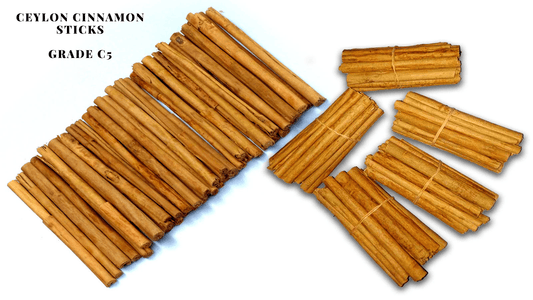
Within Ceylon cinnamon, the Sri Lanka Standards Institution (SLSI) defines a formal grading system based on physical characteristics of the quills — the rolled bark sticks. Alba is the top grade in this system.

Alba quills are made from the innermost, finest layers of cinnamon bark, harvested from young shoots of the cinnamon tree. These layers are thinner, more tightly rolled, more uniform, and — critically — have a different chemical profile than the outer or coarser bark used in lower grades.

<6mm Alba quill diameter — the defining physical measurement
0.01g Approximate coumarin per kg in alba grade
55–75% Cinnamaldehyde as % of essential oil in alba
200x More coumarin in cassia than in alba Ceylon

2. The Ceylon Cinnamon Grading System Explained

The SLSI grades Ceylon cinnamon quills by diameter and quality into the following categories:

Grade Quill Diameter Bark Layers Quality Typical Use
Alba Under 6mm Finest, innermost layers only Highest Premium retail, health supplementation, fine dining
C5 Special 6–11mm Fine inner layers Very high Premium retail, culinary use
C5 11–16mm Inner layers, some variation High — most common retail grade General retail, food industry
M5 16–19mm Mixed bark layers Medium Bulk food manufacturing
H1 19–25mm Outer and mixed layers Standard commercial Industrial food use
Hamburg / Chips Broken / offcuts Mixed, including outer bark Lowest Ceylon grade Extract production, tea, low-end retail

The grading is not arbitrary. The innermost bark layers — used in alba — have a fundamentally different chemical composition than the outer layers. As you move to coarser grades, coumarin content increases slightly and cinnamaldehyde concentration decreases. The differences within Ceylon grades are smaller than the difference between any Ceylon grade and cassia — but they are real and measurable.

3. Coumarin: The Compound You Want Less Of

Coumarin is a naturally occurring compound found in many plants. In cinnamon, it is present in the bark. At high doses, coumarin is hepatotoxic — it causes liver damage. The concern is not theoretical: the European Food Safety Authority (EFSA) set a tolerable daily intake (TDI) of 0.1mg of coumarin per kilogram of body weight after reviewing liver toxicity data.

For a 70kg adult, that is 7mg of coumarin per day as the upper safe limit.

The problem with cassia cinnamon is that it contains enough coumarin that daily use at typical amounts — a teaspoon in oatmeal, a sprinkle on coffee — can approach or exceed this limit. A 2010 study published in Molecular Nutrition and Food Research found that one teaspoon of cassia cinnamon powder (approximately 2.5g) could contain 5–12mg of coumarin — close to or exceeding the TDI for many people.

Ceylon cinnamon is different. The coumarin content is so low that it was effectively undetectable in early studies. Modern sensitive testing has found trace amounts, but they are negligible at any realistic dietary intake.

The practical number: A person consuming 2 teaspoons (5g) of alba grade Ceylon cinnamon daily would ingest approximately 0.05–0.085mg of coumarin — roughly 1% of the EFSA tolerable daily intake for a 70kg adult. The same amount of cassia could deliver 10–22mg — up to 3x over the limit.

4. Cinnamaldehyde: The Compound You Want More Of

Cinnamaldehyde is the primary active compound in cinnamon. It is responsible for:

  • The characteristic cinnamon flavour and aroma
  • Blood sugar regulation (insulin sensitisation)
  • Anti-inflammatory activity
  • Antimicrobial and antifungal properties
  • Antioxidant effects
  • Potential cardiovascular benefits

Cinnamaldehyde is measured as a percentage of the essential oil content of the cinnamon. Higher cinnamaldehyde means more potent flavour and stronger health activity per gram of cinnamon consumed.

Research published in the Journal of Agricultural and Food Chemistry confirmed that cinnamaldehyde is the dominant bioactive compound in Ceylon cinnamon and that it acts as an insulin sensitiser by activating GLUT4 glucose transporter proteins — the mechanism behind cinnamon's blood sugar effects. Read more in our guide to Ceylon cinnamon and diabetes management.

Alba grade has the highest cinnamaldehyde concentration within Ceylon cinnamon — a direct result of the inner bark layers being the most chemically active part of the bark.

5. The Numbers: Alba vs Every Other Grade

Grade Coumarin (g/kg) Cinnamaldehyde (% essential oil) Daily Safety at 2 tsp Best For
Alba 0.004–0.017 55–75% Completely safe Daily health use, supplementation
C5 Special 0.010–0.025 50–70% Safe Premium culinary, daily use
C5 0.015–0.040 45–65% Safe General cooking, daily use
M5 0.030–0.070 40–58% Safe at normal amounts Cooking, bulk use
H1 / Hamburg 0.050–0.120 35–50% Caution at high daily doses Industrial, extract production
Cassia (comparison) 2,100–4,400 55–90% Risk at daily 1+ tsp use Not recommended for daily health use

Note: Coumarin values for Ceylon cinnamon grades are based on EFSA (2008) and Ballin & Sørensen (2014) analyses. Cassia values from German Federal Institute for Risk Assessment (BfR) data. Cinnamaldehyde ranges are approximate across studied samples.

Two things stand out in this data:

  1. All Ceylon grades are safe — even the lowest Ceylon grade (Hamburg/chips) contains 17–44x less coumarin than cassia
  2. Alba maximises both goals simultaneously — lowest coumarin and highest cinnamaldehyde within Ceylon cinnamon

6. Ceylon Alba vs Cassia: Not Even Close

The comparison between Ceylon cinnamon and cassia is covered in detail in our Ceylon vs Cassia health guide. For the specific question of coumarin and cinnamaldehyde, here is the direct comparison:

Ceylon Alba Cassia (Cinnamomum cassia) Cassia (Cinnamomum aromaticum)
Coumarin (g/kg) 0.004–0.017 0.31–6.97 2.1–4.4
Cinnamaldehyde (% EO) 55–75% 55–90% 55–85%
Safe for daily use (1–2 tsp)? Yes Risk of exceeding TDI Risk of exceeding TDI
EU labelling required? No restriction Must declare coumarin content Must declare coumarin content
Texture Thin, papery, crumbles easily Hard, thick, single-layer roll Hard, thick, single-layer roll
Flavour profile Delicate, complex, slightly citrus Harsh, intense, spicy-hot Harsh, intense, spicy-hot

The cinnamaldehyde numbers look similar between cassia and alba Ceylon — and they are, at the essential oil level. The critical difference is coumarin. Cassia's higher cinnamaldehyde does not offset its coumarin risk; it simply means you get more of both the beneficial and the harmful compound simultaneously. Ceylon alba gives you the cinnamaldehyde benefits without the coumarin liability.

Alba grade — the safest coumarin profile and highest cinnamaldehyde concentration in any commercially available cinnamon.

Shop Premium Ceylon Cinnamon Alba →

7. What This Means for Daily Use

If you use cinnamon once a week in baking, the grade is largely irrelevant — no cinnamon type poses a meaningful risk at infrequent use.

If you use cinnamon daily — in oatmeal, smoothies, coffee, or as a supplement — grade matters significantly.

Daily Use Scenario Cassia Risk Ceylon Alba Risk
1/4 tsp in morning coffee (0.6g) 1.3–2.6mg coumarin — 19–37% of TDI for 70kg adult 0.003–0.010mg coumarin — under 0.2% of TDI
1 tsp in oatmeal (2.5g) 5.3–11mg coumarin — 75–157% of TDI 0.010–0.043mg coumarin — under 0.6% of TDI
2 tsp total daily (5g) 10.5–22mg coumarin — 150–314% of TDI 0.020–0.085mg coumarin — under 1.2% of TDI
500mg supplement capsule 1.05–2.2mg coumarin per capsule 0.002–0.009mg coumarin per capsule

For people who use cinnamon specifically to support blood sugar, cholesterol, or blood pressure — see our guides on Ceylon cinnamon for diabetes, cholesterol reduction, and blood pressure — daily doses of 1–3g are commonly studied. At these doses, alba grade eliminates coumarin as a concern entirely while delivering the highest cinnamaldehyde concentration available.

8. How to Identify Authentic Alba Grade

Genuine alba grade Ceylon cinnamon has specific physical characteristics that distinguish it from lower grades and from cassia. See our full guide on how to identify pure Ceylon cinnamon sticks. For alba specifically:

Feature Authentic Ceylon Alba Cassia (often mislabelled)
Quill diameter Under 6mm — pencil-thin 10–20mm — thick single tube
Layers Multiple thin layers visible — like a cigar Single hollow tube, one thick layer
Texture Crumbles easily between fingers, papery Hard, difficult to break, woody
Colour Tan to light brown — pale Dark reddish-brown
Aroma Delicate, complex, slightly sweet and citrus Intense, pungent, one-dimensional heat
Species label Cinnamomum verum or C. zeylanicum Cinnamomum cassia or C. aromaticum
Origin label Sri Lanka China, Vietnam, Indonesia

The single most reliable visual test: break the stick. Ceylon alba crumbles into soft, dusty layers. Cassia snaps like wood or does not break cleanly at all.

9. Health Benefits Linked to Cinnamaldehyde

The health research on cinnamon is almost entirely attributable to cinnamaldehyde — making alba grade the most effective form of cinnamon for health use. The key benefits with supporting evidence:

Benefit Mechanism Evidence Level
Blood sugar regulation Cinnamaldehyde activates GLUT4 glucose transporters; mimics insulin activity Multiple human RCTs — moderate to strong
Anti-inflammatory Inhibits NF-κB pathway; reduces pro-inflammatory cytokines Strong in vitro and animal data; human studies emerging
Antimicrobial Disrupts bacterial cell membranes; inhibits biofilm formation Strong in vitro evidence
Cholesterol reduction Reduces LDL and total cholesterol; mechanism partially via insulin sensitisation Several human trials — moderate evidence
Blood pressure Vasodilatory effect via smooth muscle relaxation Limited human trials; animal data positive
Antioxidant Free radical scavenging; upregulates endogenous antioxidant enzymes Strong in vitro; consistent across studies

For a comprehensive overview of all 12 documented health effects, see our guide: Ceylon cinnamon benefits: 12 science-backed health effects.

10. Safety and Dosage

Medical disclaimer: This article is informational only. If you are managing a medical condition such as diabetes or hypertension, consult your doctor before using cinnamon as a supplement. Cinnamon can affect blood sugar levels and may interact with diabetes medication.

For healthy adults using alba grade Ceylon cinnamon:

  • Dietary use (cooking, beverages): No upper limit of concern — coumarin content is negligible
  • Daily supplementation: 1–3g per day is the range studied in most blood sugar trials; safe for most adults
  • Maximum studied dose: 6g per day in clinical trials — well-tolerated in Ceylon form

Use caution if you:

  • Take blood sugar medication — cinnamon may lower blood sugar further
  • Take blood thinners (warfarin) — cinnamaldehyde has mild anticoagulant properties
  • Are pregnant — avoid supplemental doses; culinary amounts are fine
  • Have a liver condition — consult a doctor even for Ceylon cinnamon at supplement doses

For guidance on whether to use powder or sticks and how to use it in baking, see our dedicated guides.

Premium Ceylon cinnamon alba — sourced directly from Sri Lanka, the only country that produces true Cinnamomum verum at scale.

Shop Ceylon Cinnamon Alba Grade →

Frequently Asked Questions

What is alba grade Ceylon cinnamon?

Alba is the highest grade of Ceylon cinnamon, defined by the Sri Lanka Standards Institution. It consists of the finest inner bark layers rolled into tight quills under 6mm in diameter. It has the lowest coumarin and highest cinnamaldehyde content of all Ceylon cinnamon grades.

How much coumarin is in alba grade Ceylon cinnamon?

Approximately 0.004–0.017g per kilogram — effectively negligible. Cassia contains 2.1–4.4g per kilogram, which is 100–200 times higher. At 2 teaspoons of alba daily, you consume under 1.2% of the EFSA tolerable daily intake for coumarin.

What is cinnamaldehyde and why does it matter?

Cinnamaldehyde is the primary active compound responsible for cinnamon's flavour and health benefits — including blood sugar regulation, anti-inflammatory activity, and antimicrobial properties. Alba grade has the highest cinnamaldehyde concentration of all Ceylon grades, at 55–75% of essential oil content.

What is the difference between alba and C5 grade?

Both are genuine Ceylon cinnamon. Alba is the premium grade — thinner quills (under 6mm vs 11–16mm for C5), finer inner bark, slightly lower coumarin, slightly higher cinnamaldehyde. C5 is the most widely sold commercial grade and is perfectly safe. Alba represents the finest quality within the Ceylon category.

Is Ceylon cinnamon alba safe to take daily?

Yes. The coumarin content is negligible at any realistic daily amount. Daily consumption of 1–6g has been studied in clinical trials without liver concerns. This contrasts sharply with cassia, where daily use at typical amounts can approach or exceed the EFSA tolerable daily intake.

How do I know if my cinnamon is actually alba grade?

Authentic alba has tight, pencil-thin quills under 6mm, multiple papery layers visible in cross-section, a pale tan colour, and crumbles easily. The label should state Cinnamomum verum and origin Sri Lanka. If it is hard, thick, and dark reddish-brown — it is cassia, regardless of what the label says.

Which Ceylon cinnamon grade is best for health benefits?

Alba offers the optimal combination: lowest coumarin and highest cinnamaldehyde. For anyone using cinnamon daily for blood sugar, inflammation, or cardiovascular health, alba grade is the best choice within Ceylon cinnamon.

Can I use too much Ceylon cinnamon alba?

At typical dietary amounts (up to 6g/day), alba grade is safe for most healthy adults. Those on blood sugar medication, blood thinners, or with liver conditions should consult a doctor before supplementing at higher doses.

Back to blog

Leave a comment

FAQ

How do I place an order?

Browse our spices, select the quantity, and click “Add to cart.” Once ready, click the cart icon and follow the checkout steps.

What payment methods do you accept?

We accept Visa, MasterCard, American Express, Discover, PayPal, and major international credit cards.

Can I ship internationally?

Yes! We ship worldwide. International shipping costs are calculated at checkout based on destination.

How long will delivery take?

Domestic orders (Sri Lanka) arrive in 3–7 business days. International orders take 7–21 business days, depending on destination and customs.

Do you offer tracking?

Yes. Once your order ships, you’ll receive a tracking number via email.

What is your return policy?

We accept returns within 14 days of delivery for unopened, unused products. Contact us at support@ceylonspicegarden.com to initiate a return.

Are your spices organic and fresh?

Absolutely! All our spices are sourced directly from Sri Lankan farms, carefully processed, and packed to preserve maximum freshness.

How do I contact customer support?

You can reach us via email at support@ceylonspicegarden.com or call +94 11 123 4567 (Mon–Fri, 9 am–5 pm GMT+5:30).