How to Identify Pure Ceylon Cinnamon Sticks: Complete Guide 2026
How to Identify Real Ceylon Cinnamon Sticks (Visual Guide + 5 Tests)
⚡ TL;DR — The 60-Second Check
- Test #1 (definitive): Break a stick. Ceylon = 7–10 thin papery layers like a rolled cigar. Cassia = 1–2 thick bark layers. This test alone is 100% accurate.
- Test #2: Try to crumble it between your fingers. Ceylon crumbles. Cassia doesn't — you need force to snap it.
- Test #3: Check the color. Ceylon = light tan-brown. Cassia = dark reddish-brown.
- Test #4: Taste a tiny scraping. Ceylon = mild, sweet warmth. Cassia = sharp, spicy burn.
- Test #5: Read the label. Ceylon lists Cinnamomum verum, origin Sri Lanka, grade (Alba/C4/C5), and costs $15+/oz.
- Why this matters: At therapeutic doses (1–6g/day), Cassia delivers 6–15× the safe daily coumarin limit. Verified Ceylon cinnamon is a safety requirement, not a preference. Read our full comparison guide.
Table of Contents
- Why Identification Matters (It's a Safety Issue)
- Ceylon vs Cassia: Side-by-Side Visual Guide
- The 5 Physical Tests
- Understanding Ceylon Cinnamon Grades
- Master Comparison Table
- How to Identify Ceylon Cinnamon Powder
- Common Fakes & How They Trick You
- What the Label Should Say (And Shouldn't)
- Pro Tips: Advanced Verification
- Where to Buy Verified Authentic Sticks
- Frequently Asked Questions
Why Identification Matters (It's a Safety Issue)
This isn't about being a "cinnamon connoisseur." The difference between Ceylon and Cassia cinnamon is a medical safety issue for anyone using cinnamon at therapeutic doses.
The coumarin math: Cassia contains 1–2% coumarin. The European Food Safety Authority's tolerable daily intake is 0.1mg per kg body weight. For a 70kg adult, that's 7mg/day. At a therapeutic dose of 3g Cassia, you consume 30–60mg of coumarin — 4–9× the safe limit. At 6g, you hit 60–120mg — up to 17× the safe limit.
Ceylon cinnamon at the same 6g dose delivers only ~0.24mg coumarin — 29× BELOW the safe limit.
Coumarin accumulates. Daily high-dose Cassia intake has been linked to liver enzyme elevation, hepatotoxicity in susceptible individuals, and potential interactions with blood-thinning medications. This is why species identification isn't optional for health users — it's the difference between a safe supplement and a liver toxin.
Who MUST verify their cinnamon
- Daily supplement users — anyone taking 1–6g daily for blood sugar, cholesterol, or inflammation
- People on blood thinners — coumarin in Cassia has anticoagulant properties and can compound effects
- People with liver conditions — even moderate Cassia doses can stress a compromised liver
- Pregnant women — high coumarin intake is contraindicated during pregnancy
- Parents dosing children — children's lower body weight means the safe coumarin threshold is lower
- Anyone paying premium prices — if you're paying for Ceylon, make sure you're getting Ceylon
Ceylon vs Cassia: Side-by-Side Visual Guide
✅ Real Ceylon Cinnamon
- Color: Light tan to medium brown
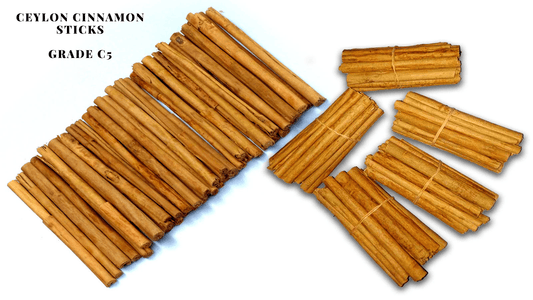
- Layers: 7–10 thin, separable sheets
- Structure: Cigar-like — quills within quills
- Diameter: 2–6mm (Alba) to 16–19mm (C5)
- Texture: Papery, fragile, crumbles easily
- Aroma: Sweet, warm, hints of citrus
- Taste: Mild warmth, no burn
- Weight: Light — feels almost hollow
❌ Cassia (The Fake)
- Color: Dark reddish-brown
- Layers: 1–2 thick, fused layers
- Structure: Single scroll — one piece of bark curled
- Diameter: 8–15mm typically
- Texture: Hard, woody, resists breaking
- Aroma: Strong, sharp, one-dimensional
- Taste: Intense spicy burn
- Weight: Heavy — feels dense and solid
The 5 Physical Tests
Use these in order. Test #1 alone is definitive — the others provide confirmation.
The Layer Test (100% Accurate)
Break a stick and examine the cross-section under good light.
✅ Ceylon: 7–10 thin papery layers visible, like the pages of a rolled-up book. You can separate individual layers with your fingernail. The layers are so thin you can see light through them.
❌ Cassia: 1–2 thick bark layers, fused together. You cannot separate them. The cross-section looks like a solid piece of wood that's been curved.
Why this is definitive: The multi-layer structure of Ceylon cinnamon comes from the way it's hand-processed — skilled peelers separate the thinnest inner bark and layer multiple sheets together. This process is unique to Sri Lankan production and cannot be replicated with Cassia bark.
The Snap Test
Take a stick between your thumb and forefinger and try to break it.
✅ Ceylon: Crumbles instantly under gentle pressure. The thin layers fracture easily, often turning to flakes or powder between your fingers. It feels like breaking dried leaves.
❌ Cassia: Resists breaking. You need real force — sometimes both hands. When it finally snaps, it breaks clean like a twig. If your cinnamon stick feels like wood, it's Cassia.
The Color Test
Examine the sticks under natural light (not fluorescent, which distorts reds).
✅ Ceylon: Light tan to medium brown. Warm, soft color — like sandstone or light caramel. Never reddish. Some natural variation between sticks is normal and actually a good sign (means minimal processing).
❌ Cassia: Dark reddish-brown, sometimes with a distinct red tint. Looks like dark chocolate or dried blood. If the color reminds you of what's in your grocery store spice rack, it's Cassia.
The Taste Test
Scrape a small amount off a stick with a knife and taste it.
✅ Ceylon: Complex, subtly sweet, warm with hints of citrus and floral notes. No "burn." A sophisticated, layered flavor that's gentle on the tongue. This is what real cinnamon should taste like.
❌ Cassia: One-dimensional, spicy "hot cinnamon" burn. The flavor that Big Red gum, Red Hots candy, and most "cinnamon"-flavored products are based on. If it burns, it's Cassia.
The Label Test
Before you even open the package, the label tells you a lot.
✅ Authentic Ceylon label says: "Cinnamomum verum" (not just "cinnamon"), origin "Sri Lanka," specific grade (Alba, C4, C5), and costs $15–40/oz depending on grade and form.
❌ Red flag labels say: "Cinnamon" (no species), "Ceylon-style," "Ceylon blend," "Product of USA/China/Indonesia/Vietnam," or price under $10/oz. If the label doesn't specify the species, it's not Ceylon — no legitimate Ceylon seller would omit this information.
Understanding Ceylon Cinnamon Grades
Not all Ceylon cinnamon sticks are the same quality. Sri Lanka grades cinnamon by quill diameter — thinner quills mean higher quality, more delicate processing, and higher price.
| Grade | Quill Diameter | Visual Appearance | Quality Level |
|---|---|---|---|
| Alba | ≤ 6mm | Ultra-thin, pencil-like, very light color, most layers visible | ⭐⭐⭐⭐⭐ Highest |
| C4 Special | 6–14mm | Thin, elegant, light brown, clear layer structure | ⭐⭐⭐⭐ Very High |
| C4 | 14–16mm | Standard diameter, good layer definition, versatile | ⭐⭐⭐⭐ High |
| C5 | 16–19mm | Wider quills, still multi-layered, slightly less refined | ⭐⭐⭐ Standard |
| C5 Special | 19–22mm | Widest commercial grade, thicker layers | ⭐⭐ Basic |
| Quillings | Broken pieces | Fragments from processing — still authentic Ceylon | Best for grinding |
Which grade to buy?
For health supplementation: Alba grade — thinnest quills, highest concentration of beneficial cinnamaldehyde, lowest coumarin.
For daily cooking & tea: C4 — excellent quality at a better price point. Perfect for cinnamon tea, curries, and golden milk.
For grinding into powder: Quillings or C5 — since you're grinding them anyway, the lower grade provides the same compounds at the best value. Or buy pre-ground organic Ceylon powder.
Master Comparison Table
| Characteristic | Ceylon (C. verum) | Cassia (C. cassia) | How to Test |
|---|---|---|---|
| Layers | 7–10 thin, separable | 1–2 thick, fused | Break and examine cross-section |
| Hardness | Crumbles with finger pressure | Hard, resists breaking | Squeeze between thumb and finger |
| Color | Light tan to medium brown | Dark reddish-brown | Examine under natural light |
| Diameter | 2–19mm (varies by grade) | 8–15mm typically | Measure or compare visually |
| Aroma | Sweet, warm, citrus notes | Strong, sharp, medicinal | Break and smell freshly exposed surface |
| Taste | Mild warmth, subtle sweetness | Intense, spicy burn | Scrape and taste a small amount |
| Weight | Light — almost hollow | Heavy — dense and solid | Hold comparable-sized sticks and compare |
| Surface | Slightly rough, natural variation | Smoother, more uniform | Run your finger along the length |
| Coumarin | 0.004% (trace) | 1–2% (500× more) | Lab test only — request from seller |
| Origin | Sri Lanka (95%+ of production) | China, Indonesia, Vietnam | Check label and certificate of origin |
| Price | $15–40/oz | $2–8/oz | If it's cheap, it's not Ceylon |
How to Identify Ceylon Cinnamon Powder
Powder is harder to verify than sticks because you can't examine the layer structure. Here's what you can check:
| Indicator | Ceylon Powder | Cassia Powder |
|---|---|---|
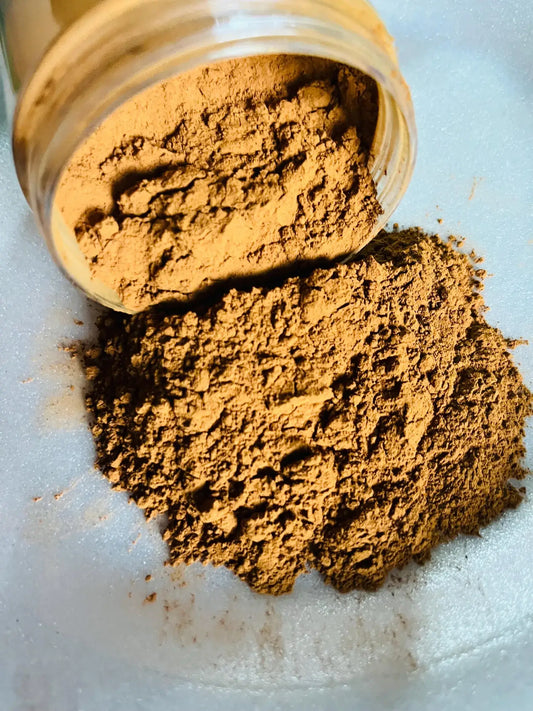
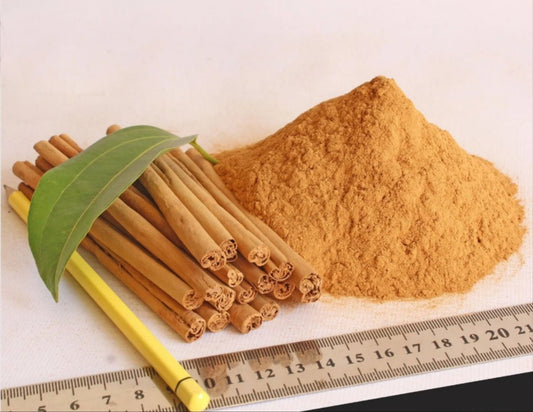
| Color | Light tan-brown, like sandstone | Dark reddish-brown, like brick |
| Texture | Very fine, silky, almost powdery | Slightly coarser, grittier |
| Aroma | Sweet, delicate, complex | Strong, sharp, one-note spicy |
| Taste | Mild, sweet, no afterburn | Spicy, hot, lingers aggressively |
| In water | Dissolves more readily, lighter brew | Settles more, darker color |
Common Fakes & How They Trick You
| Fake Tactic | What They Do | How to Catch It |
|---|---|---|
| Straight substitution | Sell Cassia labeled as "Ceylon cinnamon" | Layer test — Cassia always has 1–2 thick layers, never 7–10 thin |
| Young Cassia trick | Use young, thin Cassia bark that looks similar to Ceylon | Even young Cassia has 1–2 layers, not 7–10. Also check taste — still has the harsh burn |
| Color-treated Cassia | Bleach or lighten dark Cassia to mimic Ceylon's light color | Snap test — treated Cassia is still hard and woody. Check for chemical smell |
| Adulterated blend | Mix a small amount of Ceylon with cheaper Cassia | Inconsistent sticks within the batch — some crumble, some don't. Mixed color tones |
| "Ceylon-style" label | Use deliberately vague marketing language | If it doesn't say Cinnamomum verum and "Sri Lanka," it's not Ceylon |
| Grade fraud | Sell C5 grade as "Premium Alba" at Alba prices | Alba ≤ 6mm diameter. If "Alba" sticks are 15mm+, they're mislabeled C4/C5 |
What the Label Should Say (And Shouldn't)
✅ What an Authentic Ceylon Cinnamon Label Includes
- Species: Cinnamomum verum (also acceptable: Cinnamomum zeylanicum, the older synonym)
- Origin: "Sri Lanka" — not "South Asia," not "Product of USA," not blank
- Grade: Alba, C4 Special, C4, C5, or similar — sellers who know their product specify this
- Organic certification (if claimed) — look for actual USDA Organic logo, not just the word
- Net weight in both metric and imperial
- Company contact information — physical address, not just a PO box
- "Cinnamon" with no species — this is Cassia 99% of the time
- "Ceylon-style" — deliberately vague. Not actually Ceylon.
- "Ceylon blend" — might contain 5% Ceylon and 95% Cassia
- "Vietnamese Ceylon" — nonsensical. Ceylon comes from Sri Lanka only.
- "Premium cinnamon" — meaningless without species and origin
- No origin listed — legitimate Ceylon sellers ALWAYS list Sri Lanka. It's their selling point.
Pro Tips: Advanced Verification
Expert-level identification
- The telescope test: Authentic Ceylon quills are made of multiple bark layers rolled together. In high-grade sticks, you can sometimes see smaller quills nested inside larger ones — like a telescope. Cassia is always a single piece of bark rolled once.
- The light test: Hold a Ceylon quill up to a bright light. You should see light coming through at the thinnest points. Cassia is too thick and opaque for any light to pass.
- The crumble-to-powder test: Rub Ceylon between your palms for 10 seconds. It should produce a fine, sweet-smelling powder. Cassia produces hard fragments and splinters.
- The water infusion test: Drop a stick into hot water. Ceylon releases its oils quickly, producing a light golden-brown tea within 2–3 minutes. Cassia takes longer and produces a darker, more reddish brew. Try it with Ceylon cinnamon herbal tea for comparison.
- The aging test: Old Ceylon maintains its sweetness — the flavor mellows but stays pleasant. Old Cassia becomes bitter and harsh. If your year-old cinnamon tastes bitter, it was Cassia.
- Batch consistency: Examine multiple sticks from the same batch. Authentic Ceylon has natural variation in color and thickness (hand-processed). If every stick is perfectly identical, it may be machine-processed Cassia.
Where to Buy Verified Authentic Sticks
The safest approach: buy from a direct Sri Lankan importer who controls the supply chain and can verify every batch.
What to look for in a seller
Direct sourcing relationship with Sri Lankan farmers. Certificate of Origin available on request. Lab testing for coumarin, heavy metals, and microbiological safety. Grade clearly specified. Multiple Ceylon cinnamon products (sticks, powder, tea) — not just one generic listing. Educational content showing real expertise. Clear return policy if authenticity doesn't meet your standards.
Shop Ceylon Cinnamon by Product Type:
| Product | Best For | Shelf Life |
|---|---|---|
| Premium Alba Grade Sticks | Health use, premium tea infusions, gifts, visual verification | 3–4 years |
| Organic Powder & Sticks | Daily supplementation, baking, smoothies, oatmeal | 2–3 years |
| Cinnamon Herbal Tea (30 bags) | Easiest daily habit, after-meal blood sugar support | 2 years |
| Cinnamon Leaf Tea | Milder flavor, higher eugenol content, different compound profile | 2 years |
| Masala Chai Blend | Multi-spice benefits, warming daily drink | 2 years |
For more on choosing between product types and navigating online sellers, read our complete buying guide.
The Bottom Line
You only need one test to identify real Ceylon cinnamon: break a stick and count the layers. 7–10 thin papery layers = Ceylon. 1–2 thick layers = Cassia. Everything else — color, snap, taste, label — is confirmation.
If you're using cinnamon for health, the species matters as much as the dose. Get it right.
Shop Premium Alba Grade Sticks →
Frequently Asked Questions
Real Ceylon cinnamon sticks are light tan to medium brown (never dark reddish), thin (2–6mm for Alba grade, up to 19mm for C5), and consist of 7–10 thin papery layers rolled into a cigar-like quill. They're fragile — they crumble easily between your fingers. They feel almost hollow compared to the dense, heavy feel of Cassia sticks. The aroma is sweet, warm, and complex rather than the sharp, spicy smell of Cassia.
The layer count test. Break a stick and examine the cross-section. Authentic Ceylon shows 7–10 thin, separable papery layers — you can peel them apart with your fingernail. Cassia shows 1–2 thick layers fused together. This structural difference is a result of the hand-peeling process used exclusively in Sri Lanka and cannot be faked — it provides 100% accurate identification regardless of the stick's age, storage, or processing.
No. Some young Cassia and certain Vietnamese cinnamon varieties can also be thin. Thickness is one indicator but not definitive alone. A thin stick with 1–2 thick layers is still Cassia. You must check the layer structure (most reliable), color, fragility, aroma, and taste together. The full combination of tests eliminates false positives from thin Cassia.
Safety at therapeutic doses. Cassia contains 250× more coumarin than Ceylon. At health-oriented doses (1–6g daily), Cassia delivers 6–15× the European safe daily coumarin limit, risking liver damage and interactions with blood thinners. Ceylon at the exact same doses stays 350× below the safety threshold. If you use cinnamon daily for blood sugar, inflammation, or any health purpose, species identification is a medical safety requirement. Read our full safety comparison.
Sticks are much easier to verify because you can examine the layer structure. Powder identification is unreliable by visual inspection alone — Ceylon powder is lighter colored and finer textured, but these differences are subtle and affected by grind size and age. For powder, you must rely on seller trust: certificates of origin, lab testing showing coumarin below 0.01%, species listed as Cinnamomum verum, and pricing above $15/oz. Buy verified organic Ceylon powder from a direct importer.
Grades are based on quill diameter: Alba (≤6mm, thinnest, most delicate, lightest color), C4 Special (6–14mm), C4 (14–16mm, standard), C5 (16–19mm), and C5 Special (19–22mm, widest). All grades share the multi-layer structure that distinguishes Ceylon from Cassia — the difference is diameter and refinement. Alba represents the youngest, innermost bark with the highest concentration of beneficial compounds.
$15–40 per ounce depending on grade. Alba runs $25–40/oz. C4 runs $15–25/oz. Under $10/oz labelled as "Ceylon" is almost certainly Cassia. The hand-peeling labor, limited Sri Lankan growing regions, export duties, international shipping, and quality testing make lower pricing economically impossible for legitimate product. Don't waste money on "cheap Ceylon" — you're paying for Cassia at a Ceylon markup.
Buy from a direct Sri Lankan importer who controls the supply chain. Ceylon Spice Garden sources directly from Sri Lankan growers, provides certificates of origin, and offers Alba grade sticks, organic powder, and cinnamon herbal tea with full traceability. Avoid general marketplaces (Amazon, eBay) where product commingling and mislabeling are widespread.