Skip to product information
1 of 7

Ceylon Spice Garden

Black & Yellow Mustard Seeds - Anticancer, Selenium & Flavour

Black & Yellow Mustard Seeds - Anticancer, Selenium & Flavour

Regular price $8.99 USD
Regular price Sale price $8.99 USD
Sale Sold out
Shipping calculated at checkout.
In stock
4 people bought this in the last 24 hours
100% Authenticity Guaranteed
Type
Weight
Quantity

Product Details & Specifications

Net Weight: Available in 50g, 100g, 200g, 450g, 900g premium mustard seeds

Form: Available as whole black mustard seeds (Brassica nigra) or yellow/brown mustard seeds (Sinapis alba / Brassica juncea) β€” premium grade whole seeds

Serving Size: 1/4 to 1 teaspoon (1–2g) per dish

Yield: Approximately 80–150 servings per 100g

Shelf Life: 36 months whole seeds sealed, 12 months ground mustard powder

Aroma Profile: Whole seeds β€” mild, nutty, barely perceptible until activated by heat or moisture. When tempered in hot oil β€” explosive, sharp, pungent, intensely warming. When ground and mixed with liquid β€” fiery, sharp, sinus-clearing pungency that defines mustard's globally recognised character

Storage: Store in cool, dry place in airtight container away from direct sunlight, heat, and moisture. Whole seeds retain potency indefinitely when properly stored β€” grind or activate with liquid only when needed for maximum pungency.

Nutritional & Active Compound Information (Per 100g Dry Seeds)

Component Amount Health Benefits
Sinigrin (Primary Glucosinolate β€” Black) 1–3% Anticancer, antimicrobial, anti-inflammatory β€” converted to allyl isothiocyanate by myrosinase
Sinalbin (Primary Glucosinolate β€” Yellow) 2–4% Milder pungency, anticancer, antimicrobial, converted to p-hydroxybenzyl isothiocyanate
Allyl Isothiocyanate (AITC) Generated on activation Antimicrobial, anticancer, anti-inflammatory, analgesic, circulatory stimulant
Total Glucosinolates 3–7% Anticancer, antimicrobial, liver detoxification, phase II enzyme induction
Myrosinase (Enzyme) Present in seed Converts glucosinolates to active isothiocyanates β€” the key activation enzyme
Erucic Acid 22–50% of fatty oil Traditional medicinal uses, cooking oil component (regulated in food use)
Sinapic Acid 0.5–1.5% Powerful antioxidant, anti-inflammatory, neuroprotective, antimicrobial
Quercetin 0.3–1% Anti-inflammatory, immune boost, antihistamine, cardiovascular support
Kaempferol 0.2–0.8% Antioxidant, anticancer, anti-inflammatory, neuroprotective
Isorhamnetin 0.1–0.5% Antioxidant, anti-inflammatory, cardiovascular protection, anticancer
Tocopherols (Vitamin E) 5–8mg Antioxidant, skin protection, cardiovascular health, immune support
Total Polyphenols 6–12% Cellular protection, anti-aging, disease prevention, antioxidant
Fixed Oil 28–36% Energy, fat-soluble vitamin absorption, skin health, cooking medium
Total Protein 26–28g Muscle building, enzyme production, immune function, tissue repair
Selenium 208 mcg Antioxidant, thyroid function, immune support, DNA protection, anticancer
Calcium 266mg Bone health, nerve function, muscle contraction, blood clotting
Iron 9.2mg Blood building, energy production, immune function, oxygen transport
Magnesium 370mg Muscle relaxation, nerve health, energy, sleep, bone strength
Potassium 738mg Heart health, blood pressure regulation, electrolyte balance
Phosphorus 828mg Bone strength, energy metabolism, DNA and cell repair
Manganese 2.4mg Bone health, metabolism, antioxidant enzyme function
Zinc 6.1mg Immune function, wound healing, metabolism, taste and smell
Copper 0.6mg Iron absorption, nerve function, collagen production, immune health
Vitamin C 7.1mg Immune support, collagen production, antioxidant, skin health
Vitamin K 5.4 mcg Bone health, blood clotting, cardiovascular protection
Vitamin B1 (Thiamine) 0.81mg Energy metabolism, nerve function, cardiac health
Vitamin B3 (Niacin) 4.73mg Energy metabolism, DNA repair, skin health, cholesterol management
Folic Acid (B9) 162 mcg Cell division, DNA synthesis, pregnancy health, cardiovascular support
Dietary Fibre 12.2g Digestive health, cholesterol reduction, blood sugar regulation

Why Ceylon Spice Garden Mustard Seeds Are Superior

Our Mustard Seeds vs Regular Commercial Mustard Seeds β€” Key Differences

Factor Ceylon Spice Garden Mustard Seeds Regular Commercial Mustard Seeds
Glucosinolate Content 3–7% (Premium therapeutic grade) 1–3% (Depleted, old stock)
Myrosinase Activity High β€” enzyme fully active in fresh seeds Reduced β€” heat damage during industrial processing
Sinapic Acid 0.5–1.5% (Superior antioxidant) 0.1–0.4% (Degraded)
Pungency Response Immediate explosive pop in hot oil β€” seeds fully active Weak or absent pop β€” depleted glucosinolates
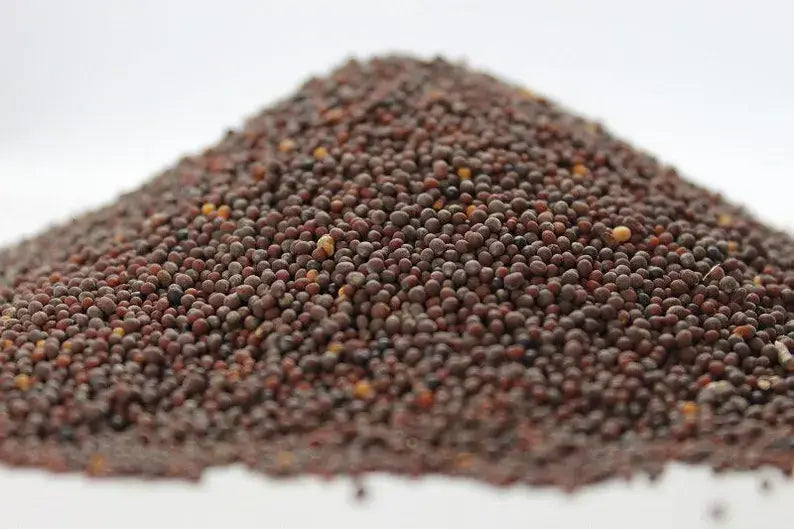
Seed Appearance Round, uniform, deep black or golden, plump Variable, dull, mixed sizes, sometimes grey
Aroma on Crushing Sharp, pungent, immediate isothiocyanate release Flat, mild, barely perceptible
Harvest Timing Full maturity β€” peak glucosinolate concentration Mixed timing β€” variable glucosinolate levels
Drying Method Natural sun-drying preserving myrosinase activity Industrial high-heat β€” myrosinase denaturation
Origin Single-origin Sri Lankan cultivation Blended (India, Canada, Nepal β€” unknown ratios)
Selenium Content 208 mcg per 100g (Exceptional) Variable β€” soil-dependent, often lower
Additives 100% pure β€” no anti-caking agents, no fumigants May contain silicon dioxide, preservatives
Freshness Packed within 90 days of harvest Often 12–24 months old before packing
Protein Content 26–28g per 100g β€” verified premium grade Variable, often lower from poor seed quality
Price Premium single-origin quality Budget commodity blend

Black vs Yellow vs Brown Mustard Seeds β€” Key Differences:

Factor Black Mustard (Brassica nigra) Yellow Mustard (Sinapis alba) Brown Mustard (Brassica juncea)
Pungency Most pungent β€” fiery and sharp Mildest β€” gentle warmth Medium-hot β€” between black and yellow
Primary Use Sri Lankan, South Indian tempering (tadka) European mustard condiments, pickling South Asian cooking, Dijon-style mustard
Glucosinolate Sinigrin (highest potency) Sinalbin (milder) Sinigrin + Gluconapin (medium)
Tempering Most dramatic pop in oil β€” essential for authentic Sri Lankan cooking Less dramatic β€” better for grinding Good pop β€” versatile
Flavour Profile Nutty, intense, complex after tempering Mild, slightly sweet Sharp, complex, slightly fruity

Health & Wellness Benefits

Anticancer Properties β€” Glucosinolates & Isothiocyanates

Mustard seeds contain one of the most extensively researched classes of anticancer compounds in any food β€” glucosinolates and their breakdown products, isothiocyanates. When mustard seeds are crushed, chewed, or mixed with liquid, the enzyme myrosinase converts sinigrin (black mustard) or sinalbin (yellow mustard) into highly active isothiocyanate compounds β€” particularly allyl isothiocyanate (AITC). AITC and related compounds have been shown in extensive laboratory and epidemiological research to induce apoptosis (programmed cancer cell death) in multiple cancer cell lines, inhibit tumour angiogenesis, suppress cancer cell migration and invasion, and activate Phase II detoxification enzymes that neutralise carcinogens before they damage DNA. Population studies consistently show that regular cruciferous vegetable consumption β€” which includes mustard β€” is associated with 20–40% reduced cancer risk, particularly for colorectal, lung, bladder, and prostate cancers. The glucosinolate content of mustard seeds is among the highest of any commonly consumed food.

Powerful Anti-Inflammatory Effects

Mustard seeds provide comprehensive anti-inflammatory action through multiple simultaneous pathways. Allyl isothiocyanate inhibits NF-kB inflammatory signalling β€” the master regulator of inflammatory gene expression β€” at the transcriptional level. Sinapic acid suppresses COX-2 inflammatory enzyme activity comparable to pharmaceutical NSAIDs. Quercetin and kaempferol reduce inflammatory cytokine production including TNF-alpha and IL-1beta. Selenium activates antioxidant enzymes that reduce oxidative inflammation. Together these mechanisms provide meaningful relief from arthritis and joint pain, reduce systemic inflammatory markers, soothe inflammatory digestive and respiratory conditions, and support management of chronic inflammatory diseases. The anti-inflammatory activity of mustard seeds is particularly relevant when used in tempering (tadka) β€” hot oil extraction maximises the release of these compounds into the cooking medium.

Exceptional Selenium Content & Thyroid Health

With 208 mcg of selenium per 100g, mustard seeds are one of the most concentrated dietary sources of this critically important trace mineral β€” providing more than twice the recommended daily intake in a single serving. Selenium is essential for thyroid hormone synthesis (T4 to T3 conversion requires selenium-dependent deiodinase enzymes), thyroid peroxidase function, and protection of thyroid cells from oxidative damage. Selenium deficiency is directly associated with hypothyroidism, Hashimoto's thyroiditis, and thyroid cancer risk. Beyond thyroid health, selenium is a critical component of glutathione peroxidase β€” the body's most powerful antioxidant enzyme β€” and supports immune function, DNA repair, and reproductive health. For individuals living in selenium-deficient regions, mustard seeds are an outstandingly accessible dietary selenium source.

Cardiovascular Health Protection

Mustard seeds protect cardiovascular health through multiple well-documented mechanisms. Glucosinolate breakdown products reduce atherosclerotic plaque formation by inhibiting LDL oxidation and foam cell development. Sinapic acid reduces blood pressure through vasodilatory effects. Isothiocyanates improve endothelial function β€” the ability of blood vessel walls to regulate blood flow and prevent clotting. Quercetin and isorhamnetin strengthen capillary walls and reduce platelet aggregation. The fixed oil's omega-3 fatty acids (alpha-linolenic acid) support healthy lipid profiles. Magnesium (370mg per 100g) supports cardiovascular muscle function and blood pressure regulation. Population studies of Mediterranean and South Asian populations with high mustard seed consumption consistently show lower cardiovascular disease rates.

Digestive Health & Enzyme Stimulation

Mustard seeds have been used as digestive remedies across Ayurvedic, Greek, Roman, and European traditional medicine for thousands of years. The heat response of allyl isothiocyanate stimulates gastric juice production, enhancing protein and fat digestion. Increases bile secretion β€” improving fat digestion and gallbladder function. Fibre content supports healthy gut motility. Antimicrobial isothiocyanates suppress pathogenic gut bacteria while supporting beneficial flora. Traditional tempering of mustard seeds in oil β€” a technique used in every Sri Lankan and South Indian kitchen β€” simultaneously stimulates digestive enzyme production and imparts antimicrobial protection to the entire dish. The explosive pop of mustard seeds in hot oil signals the myrosinase activation that makes this technique so culinarily and nutritionally effective.

Antimicrobial & Food Preservation

Allyl isothiocyanate (AITC) is one of the most potent natural antimicrobial compounds known β€” so effective that it is used commercially as a natural food preservative (often labelled as "natural mustard extract" or "horseradish extract") in premium food products. Research demonstrates effectiveness against E. coli O157:H7, Salmonella, Listeria monocytogenes, Staphylococcus aureus, and multiple food-borne fungal pathogens at very low concentrations. This explains the traditional use of mustard in preserving meats, pickling vegetables, and preventing food spoilage across cultures globally. AITC is also effective against antibiotic-resistant strains β€” generating significant interest as a potential weapon against antimicrobial resistance. Regular dietary use provides consistent natural antimicrobial protection through every dish prepared with mustard seeds.

Musculoskeletal Health & Pain Relief

Mustard seeds have been used topically and internally for musculoskeletal pain and inflammation for millennia β€” and the mechanisms are now pharmacologically understood. Allyl isothiocyanate acts as a TRPA1 and TRPV1 receptor agonist β€” the same pain pathway targeted by capsaicin in chilli peppers. Initial activation of TRPA1 produces the characteristic pungent, warming sensation; sustained exposure causes receptor desensitisation and pain relief β€” the same mechanism used in pharmaceutical pain-relief patches. Traditional mustard poultices and mustard baths for arthritis, muscle pain, and back pain are empirically validated by this TRPA1 receptor mechanism. Internal consumption provides anti-inflammatory relief through isothiocyanate and sinapic acid mechanisms, while external application provides direct analgesic relief.

Respiratory Health & Congestion Relief

Mustard has been used as a decongestant and respiratory remedy across every traditional medicine system. Allyl isothiocyanate's volatile pungency acts as a powerful nasal decongestant when inhaled β€” breaking up mucus congestion and clearing sinus passages. Expectorant properties thin and loosen mucus in the respiratory tract. Antimicrobial activity against respiratory pathogens addresses underlying infections. Traditional mustard steam inhalation (adding mustard powder to hot water and inhaling the vapour) is a folk remedy validated by these mechanisms. Internally, mustard seeds' anti-inflammatory action reduces bronchial inflammation, and the circulatory stimulation of isothiocyanates improves blood flow to the respiratory system, supporting recovery from respiratory infections.

Blood Sugar Regulation

Mustard seeds demonstrate meaningful anti-diabetic activity through several mechanisms. Allyl isothiocyanate inhibits alpha-glucosidase β€” the enzyme responsible for carbohydrate digestion β€” slowing glucose absorption and reducing post-meal blood sugar spikes. Isothiocyanates improve insulin sensitivity through AMPK pathway activation. Sinapic acid reduces oxidative stress in pancreatic beta cells, protecting insulin-producing capacity. The high fibre content (12.2g per 100g) provides additional glycaemic benefit through slower glucose absorption from the gut. Animal studies show mustard seed supplementation significantly reduces fasting blood glucose and HbA1c. Regular culinary use of mustard seeds in tempering and spice blends contributes meaningfully to overall glycaemic control.

Skin Health & Topical Applications

Mustard seeds have an extensive tradition of topical use for skin health across multiple cultures. The fixed oil extracted from mustard seeds β€” mustard oil β€” has been used across South Asia for millennia for skin moisturisation, wound healing, and massage. Mustard oil's antibacterial and antifungal properties treat skin infections. Sinapic acid and tocopherols provide antioxidant protection against skin aging and UV damage. Anti-inflammatory compounds soothe skin irritation and eczema. Traditional use of mustard seed paste on the scalp stimulates blood circulation to hair follicles. Selenium in mustard seeds is essential for healthy skin cell function and protection against oxidative skin damage β€” selenium deficiency is associated with increased skin aging and skin cancer risk.

Bone Health & Mineral Density

Mustard seeds provide an exceptional mineral profile for bone health β€” 266mg calcium, 370mg magnesium, 828mg phosphorus, 2.4mg manganese, and 6.1mg zinc per 100g, alongside selenium and copper. This combination of bone-building minerals is particularly notable for the magnesium-to-calcium ratio β€” magnesium is essential for converting vitamin D to its active form, which in turn regulates calcium absorption into bone. Mustard seeds' selenium content additionally plays a role in bone cell function. The plant protein content (26–28g per 100g) provides the amino acid building blocks necessary for collagen matrix formation in bone tissue. Regular culinary use contributes meaningfully to daily bone-protective mineral intake.

Liver Detoxification & Protection

Glucosinolates and their isothiocyanate breakdown products in mustard seeds are among the most potent natural inducers of Phase II detoxification enzymes in the liver β€” the enzymatic system responsible for neutralising and eliminating carcinogens, environmental toxins, and metabolic waste products. This enzyme induction (including glutathione S-transferase, NAD(P)H quinone oxidoreductase, and UDP-glucuronosyltransferase) increases the liver's capacity to detoxify harmful substances by up to 50% in well-designed studies. Sinapic acid protects liver cells from oxidative damage. Anti-inflammatory isothiocyanates reduce hepatic inflammation. Regular mustard seed consumption effectively supports the liver's comprehensive detoxification role.

Mental Health & Neuroprotection

Sinapic acid in mustard seeds demonstrates impressive neuroprotective and cognition-enhancing properties. Research shows sinapic acid inhibits acetylcholinesterase β€” the enzyme that breaks down the memory neurotransmitter acetylcholine β€” producing cognitive enhancement effects similar in mechanism to the pharmaceutical treatment for Alzheimer's disease. Reduces neuroinflammation and oxidative damage in neural tissue. Demonstrates antidepressant effects in animal models through serotonin and dopamine pathway modulation. Selenium's role in reducing oxidative stress is particularly important for brain health β€” the brain is the most metabolically active and oxidatively vulnerable organ. Quercetin provides additional neuroprotective and anti-anxiety effects through GABA receptor modulation.

Why Choose Our Premium Quality?

Authenticity Guarantee:

  • 100% Pure Brassica nigra (black) or Sinapis alba / Brassica juncea (yellow/brown) β€” authenticated species
  • Single-Origin Sri Lankan Cultivation β€” Ideal growing conditions for glucosinolate development
  • Harvested at Full Seed Maturity β€” Maximum glucosinolate and myrosinase concentration
  • Third-Party Tested β€” Verified glucosinolate content, myrosinase activity, selenium levels, and species authentication
  • No anti-caking agents, fumigants, fillers, or mineral oil coating β€” 100% pure mustard seeds
  • Natural Sun-Drying β€” Preserving myrosinase enzyme activity critical for glucosinolate activation

Quality Specifications:

  • Species: Brassica nigra (black) / Sinapis alba or Brassica juncea (yellow/brown) β€” authenticated
  • Form: Whole round seeds β€” uniform, plump, unbroken, no debris
  • Glucosinolates: 3–7% β€” premium therapeutic and culinary grade
  • Selenium: 208 mcg per 100g β€” exceptional trace mineral content
  • Colour: Deep uniform black (black variety) or bright golden-yellow (yellow variety)
  • Tempering Response: Immediate, dramatic pop in hot oil β€” indicator of active myrosinase and fresh glucosinolates
  • Aroma on Crushing: Sharp, pungent, immediate β€” indicator of active AITC release
  • Protein: 26–28g per 100g β€” confirming premium seed quality

Heritage Source:

  • Ancient Culinary Legacy β€” Mustard seeds referenced in ancient Sanskrit texts, the Bible, and Greek and Roman writings β€” one of humanity's most ancient spices
  • Sri Lankan Culinary Foundation β€” Black mustard seeds are among the most essential spices in authentic Sri Lankan cuisine β€” used in virtually every curry, sambol, and vegetable dish
  • Ayurvedic Essential β€” One of the most prescribed spices in traditional Sri Lankan medicine for digestion, circulation, and inflammation
  • Buddhist and Hindu Significance β€” Mustard seeds featured prominently in Buddhist parables and Hindu ceremonies across South Asia
  • Fair Trade Practices β€” Ensuring fair wages and safe conditions for all farm workers

Traditional & Cultural Significance

Mustard Seed Heritage:

  • 5,000+ Year History β€” Among the oldest cultivated condiment plants β€” referenced in ancient Sanskrit texts and the Egyptian Ebers Papyrus
  • Biblical Parable β€” Jesus used the mustard seed as the symbol of the smallest thing becoming great (Matthew 13:31–32)
  • Greek & Roman Medicine β€” Hippocrates prescribed mustard plasters for musculoskeletal pain; Roman soldiers carried mustard seeds on campaigns
  • Buddhist Significance β€” The "mustard seed parable" is one of the most famous teaching stories in Buddhist tradition
  • Dijon Legacy β€” Dijon, France has been producing mustard condiment since the 13th century β€” a tradition that created one of the world's most recognised condiments

Cultural Practices:

  • Sri Lankan Tadka Foundation β€” Black mustard seeds are the first ingredient into the oil in virtually every Sri Lankan curry, sambol, and vegetable preparation β€” the foundation of the island's entire culinary tradition
  • Ayurvedic Massage β€” Mustard oil used for traditional abhyanga massage across South Asia for thousands of years
  • Pickling Tradition β€” Yellow mustard seeds an essential component of pickling brines across European and South Asian traditions
  • Sinhalese New Year β€” Mustard seeds feature in traditional Sri Lankan New Year rituals and ceremonial foods
  • Wedding Tradition β€” Mustard seeds scattered at weddings in European tradition to symbolise fertility and prosperity

Modern Recognition:

  • Glucosinolate Cancer Research β€” Isothiocyanates among the most extensively researched natural anticancer compounds β€” hundreds of peer-reviewed studies
  • Natural Food Preservative β€” AITC approved and commercially used as natural antimicrobial food preservative
  • Selenium Research β€” Mustard seeds recognised as exceptional dietary selenium source β€” particularly relevant in selenium-deficient regions
  • Enzyme Induction Research β€” Glucosinolates recognised as among the most potent natural Phase II enzyme inducers in foods
  • Global Condiment Market β€” Mustard is the world's second most popular condiment after salt β€” the seed behind one of humanity's most universal flavour experiences

Preparation & Usage Methods

Perfect Use β€” Essential Cooking Tips:

  1. Tempering (Tadka) is the essential Sri Lankan and South Asian technique β€” add mustard seeds to hot oil and wait for them to pop; this activates myrosinase, releases glucosinolates, and transforms the raw nutty seed into an explosively flavourful tempering agent
  2. Cover the pan with a lid immediately after adding seeds to oil β€” seeds pop and fly vigorously
  3. The pop tells you the seeds are ready β€” add remaining ingredients immediately after popping
  4. For grinding into mustard paste or powder β€” use with cold liquid or grind dry; hot liquid partially deactivates myrosinase and reduces pungency
  5. Yellow seeds for grinding and mustard condiment; black seeds for tempering and South Asian cooking
  6. Combine mustard seeds with curry leaves, dried chillies, and asafoetida for the authentic Sri Lankan tadka base

CRITICAL TECHNIQUE β€” The Mustard Seed Pop: The explosive popping of mustard seeds in hot oil is not merely theatrical β€” it is the chemical activation of the seed. When myrosinase enzyme contacts the glucosinolates upon seed rupture in hot oil, it generates the isothiocyanate compounds responsible for flavour, aroma, and health benefits. Seeds that do not pop (old, depleted, or improperly stored seeds) have inactive myrosinase and will contribute neither the characteristic flavour nor the therapeutic compounds to your dish. Premium fresh mustard seeds pop dramatically, immediately, and fill the kitchen with a sharp, nutty, pungent fragrance β€” this is the quality indicator that distinguishes genuine culinary mustard seeds.

Classic Sri Lankan Tempering (Tadka/Thel Dala):

  • 2 tbsp coconut oil or vegetable oil
  • 1 tsp black mustard seeds
  • 10–12 fresh curry leaves
  • 1–2 dried red chillies
  • 1 small onion, thinly sliced
  • Optional: pinch of asafoetida (hing)
  • Heat oil, add mustard seeds, cover and wait for the pop
  • Immediately add curry leaves and chillies (they will sizzle dramatically)
  • Add onion, cook golden, then add main dish ingredients
  • This technique is the foundational flavour base of virtually all Sri Lankan cooking

Homemade Whole-Grain Mustard:

  • 3 tbsp yellow mustard seeds
  • 2 tbsp brown mustard seeds
  • 3 tbsp apple cider vinegar
  • 2 tbsp water
  • 1 tsp honey or sugar
  • Half tsp salt, pinch of turmeric
  • Soak seeds in vinegar and water overnight
  • Blend half, leave half whole for texture
  • Rest 24 hours before using β€” pungency mellows beautifully

Classic Sri Lankan Dal Curry:

  • Temper: mustard seeds + curry leaves + dried chilli + onion + garlic + ginger
  • Add 1 cup red lentils, 1 tsp turmeric, half tsp cumin
  • Add 400ml coconut milk, salt to taste
  • Simmer 20 minutes until lentils are soft
  • The mustard seed tempering is the essential first step that defines the entire dish's character

Pickled Vegetables (Aachaar / Pickle):

  • 1 tbsp yellow mustard seeds (whole or lightly ground)
  • 1 tbsp brown mustard seeds
  • Vegetables: carrots, green beans, cauliflower, green chillies
  • Pickling brine: vinegar + salt + sugar + turmeric
  • Add mustard seeds to brine β€” antimicrobial properties extend preservation
  • Mustard seeds are the essential flavouring and preservative in traditional pickles globally

Mustard-Crusted Roast or Grilled Protein:

  • 2 tbsp yellow mustard seeds, lightly toasted and coarsely ground
  • 1 tbsp fresh or dried herbs (thyme, rosemary)
  • 1 tbsp olive oil, salt and black pepper
  • Lemon zest
  • Press onto salmon, chicken, lamb rack, or pork loin
  • Roast or grill until crust is golden and protein cooked through
  • The coarsely ground mustard crust creates extraordinary texture and pungency

Bengali Mustard Fish (Sorshe Maach β€” inspired):

  • 3 tbsp yellow mustard seeds, soaked 30 minutes
  • Blend with green chillies, water, and a pinch of turmeric into smooth paste
  • Marinate fish fillets in mustard paste 20 minutes
  • Cook in mustard oil with slit green chillies
  • Classic preparation that showcases raw mustard paste's unique pungency

Mustard Seed Salad Dressing:

  • 1 tsp whole-grain mustard (or lightly crushed seeds)
  • 1 tsp Dijon-style mustard
  • 2 tbsp apple cider vinegar or lemon juice
  • 4 tbsp extra virgin olive oil
  • 1 tsp honey, salt and black pepper
  • Whisk vigorously until emulsified
  • Mustard acts as an emulsifier β€” binding oil and acid together naturally

Respiratory Steam Inhalation (Traditional):

  • 1 tsp ground yellow mustard powder
  • Large bowl of very hot (not boiling) water
  • Add mustard powder to water and stir
  • Lean over bowl with towel over head
  • Inhale steam for 5–10 minutes
  • Immediately clears nasal passages and chest congestion
  • Traditional remedy across European and South Asian folk medicine

Sambal & Chutney Base:

  • Half tsp black mustard seeds (tempered first in oil)
  • Grated coconut, green chillies, ginger
  • Lime juice, salt
  • Combine tempered mustard seeds with other ingredients
  • Classic Sri Lankan coconut sambol base β€” mustard seeds are essential

Culinary Uses Across Cuisines:

  • Sri Lankan: Tempering (tadka) for all curries, sambols, mallung, vegetable dishes, dals, rice dishes, pickles
  • South Indian: Sambar, rasam, chutney, uttapam, idli/dosa accompaniments, vegetable stir-fries
  • Bengali: Mustard paste curries (sorshe), fish dishes, mustard oil cooking
  • French: Dijon mustard condiment, vinaigrettes, sauces, rabbit with mustard, gratin
  • German: Bavarian mustard, sausage accompaniments, pickles, pretzels
  • British: English mustard condiment, pickling, roast meats, cheese dishes, sausages
  • North African: Spice blends, harissa variations, pickled vegetables

Storage & Freshness Guidelines

Optimal Storage Conditions:

  • Airtight Container: Glass jar with tight-sealing lid or quality spice tin β€” glucosinolates are stable when whole seeds are sealed
  • Cool Location: Below 20Β°C β€” myrosinase enzyme activity is better preserved at cool temperatures
  • Dark Place: Away from direct and indirect light β€” UV light degrades glucosinolates and polyphenols
  • Whole Seeds Always: Keep seeds whole until needed β€” crushing activates myrosinase and causes rapid glucosinolate breakdown
  • Dry Environment: Moisture activates myrosinase prematurely β€” keep seeds completely dry
  • Do Not Refrigerate with Moisture: Condensation can trigger premature glucosinolate activation β€” seal tightly before refrigerating

Freshness Indicators:

  • Excellent: Deep uniform colour (black or golden), immediate sharp pungency when a seed is crushed, dramatic pop in hot oil
  • Good: Good colour, pungency on crushing, strong pop in oil β€” good therapeutic and culinary potency
  • Check: Reduced pop in oil, mild pungency β€” still usable but glucosinolate content reduced
  • Replace: No pop in oil, no pungency on crushing, pale or grey seeds β€” myrosinase inactive, glucosinolates depleted

Shelf Life Guidelines:

  • Whole Seeds (sealed): 36 months β€” glucosinolates are highly stable in intact whole seeds
  • Whole Seeds (opened, airtight, dry): 24 months excellent quality
  • Ground Mustard Powder: 12 months sealed, 6 months opened
  • Prepared Mustard Condiment: 12 months refrigerated after preparation
  • Best Practice: Buy whole seeds, grind or activate fresh for maximum pungency and glucosinolate activity
  • Quality Peak: Most potent within first 24 months β€” whole seeds are remarkably shelf-stable

Common Storage Mistakes to Avoid:

  • ❌ Crushing seeds for storage β€” immediately activates myrosinase and degrades glucosinolates
  • ❌ Storing in humid conditions β€” moisture triggers premature glucosinolate breakdown
  • ❌ Storing near heat sources β€” reduces myrosinase enzyme activity over time
  • ❌ Exposing to light β€” degrades glucosinolates and polyphenol content
  • ❌ Buying ground mustard powder if whole seeds are available β€” dramatically inferior freshness and potency
  • ❌ Mixing with warm or hot liquid for grinding β€” denatures myrosinase, reducing AITC generation

Safety Information & Usage Guidelines

Recommended For:

  • Anyone wanting authentic Sri Lankan, South Asian, and global cuisine flavours
  • Those seeking natural anticancer protection through regular dietary glucosinolate consumption
  • People wanting exceptional selenium intake for thyroid health and antioxidant protection
  • Those seeking natural anti-inflammatory support through everyday cooking
  • Individuals wanting natural antimicrobial protection through daily meals
  • Those supporting liver detoxification through Phase II enzyme induction
  • Health-conscious individuals maximising therapeutic value from everyday spice use

Generally Safe For:

  • Most healthy adults β€” exceptional safety record across 5,000+ years of continuous culinary use
  • Regular daily culinary use in normal cooking quantities
  • Children in culinary food amounts β€” widely used in family cooking globally
  • Pregnant women in normal culinary amounts β€” safe and nutritionally beneficial
  • Elderly β€” particularly beneficial for selenium, bone health, and anti-inflammatory support
  • Those with inflammatory conditions β€” isothiocyanate anti-inflammatory action specifically beneficial

Consult Healthcare Provider If:

  • Thyroid conditions on medication β€” mustard seeds (as a Brassica) contain goitrogens that may affect thyroid function at very large amounts; cooking reduces this risk significantly
  • Blood thinners β€” mild antiplatelet properties of isothiocyanates at high medicinal doses; culinary amounts safe
  • Kidney conditions β€” very high selenium content (208 mcg/100g) means large supplemental amounts could approach selenium toxicity limits; culinary amounts completely safe
  • Pregnant β€” topical application β€” mustard poultices should not be applied to the skin during pregnancy; culinary use safe
  • Mustard allergy β€” one of the 14 major allergens recognised by the EU and Canada; cross-reactivity with other Brassica vegetables possible

Not Recommended For:

  • Confirmed mustard allergy β€” mustard is a recognised major food allergen (EU Directive 2003/89/EC)
  • Direct skin application of concentrated mustard paste for extended periods β€” can cause skin burns and blistering
  • Very large supplemental doses of mustard seed powder without medical guidance

Allergen Warning:

MUSTARD IS A MAJOR FOOD ALLERGEN β€” recognised as one of the 14 major allergens under EU food labelling law (and listed among top allergens in Canadian regulations). Mustard allergy, while less common than peanut or tree nut allergy, can cause severe allergic reactions including anaphylaxis in sensitised individuals. Always declare mustard as an ingredient in food prepared for others. Those with known mustard allergy should avoid this product entirely.

Dosage Guidelines:

  • Tempering (Tadka): Half to 1 tsp whole seeds per dish β€” the traditional Sri Lankan amount
  • Pickling Brine: 1–2 tbsp whole seeds per litre of brine
  • Mustard Condiment: 1–2 tsp per serving as condiment
  • Therapeutic Use: 5–10g daily (approximately 2–4 tsp) achievable through combined cooking and condiment use
  • Steam Inhalation: 1 tsp ground in large bowl of hot water β€” occasional use as needed
  • Selenium Note: 100g mustard seeds provides 208 mcg selenium β€” the daily upper tolerable intake is 400 mcg; normal culinary use is far below this

Important Usage Notes:

  • The dramatic pop in hot oil confirms myrosinase activity and glucosinolate freshness β€” always wait for the pop before proceeding
  • Mustard is a declared major allergen β€” always inform guests when mustard is used in food preparation
  • Black mustard is far hotter than yellow β€” adjust quantities accordingly when substituting
  • Cooking significantly reduces pungency β€” raw ground mustard is much hotter than cooked
  • Combining mustard with vinegar or acidic ingredients preserves the isothiocyanate pungency longer
  • Do not apply undiluted mustard paste directly to skin for extended periods β€” can cause chemical burns

Organic Certification & Sustainability

Environmental Commitments:

  • USDA/EU Organic Available β€” No synthetic pesticides, herbicides, or chemical fertilisers
  • Brassica Soil Benefits β€” Mustard is a natural biofumigant β€” glucosinolates in the plant suppress soil-borne pathogens, reducing disease pressure for subsequent crops
  • Carbon-Conscious Operations β€” Minimising environmental footprint throughout supply chain
  • Fair Trade Practices β€” Ensuring living wages, dignity, and safe conditions for all farm workers
  • Outstanding Pollinator Plant β€” Mustard flowers are exceptional early-season nectar sources for bees
  • Cover Crop Tradition β€” Mustard widely used as a cover crop to suppress weeds and improve soil health naturally

Sustainability Practices:

  • Biofumigation Benefit β€” Mustard crop residues incorporated into soil naturally suppress nematodes and fungal pathogens β€” reducing chemical pesticide needs for subsequent crops
  • Natural Sun-Drying β€” Traditional drying using zero artificial energy
  • Cover Crop Rotation β€” Mustard used in crop rotation improves soil health and reduces fertiliser requirements
  • Zero Waste Processing β€” All organic matter composted and returned to cultivation
  • Water Efficient Crop β€” Relatively low water requirements β€” adapted to a wide range of climatic conditions
  • Worker Welfare Programs β€” Fair housing, education, healthcare, and community development

Ecological Benefits:

  • Mustard flowers provide exceptional early spring nectar β€” critical for bee populations emerging from winter
  • Natural biofumigant properties reduce chemical pesticide requirements for entire farming systems
  • Widely used as a cover crop β€” preventing soil erosion, suppressing weeds, and improving soil structure
  • Supports Sri Lankan rural farming community livelihoods through high-value spice cultivation
  • Preserves traditional spice cultivation knowledge spanning thousands of years
  • Traceable single-origin supply reduces food miles versus commodity blends from multiple countries

Customer Experiences

"I've been cooking Sri Lankan food my whole life and I've never found black mustard seeds this good outside of home. The moment they hit the hot oil the pop is immediate and explosive β€” filling the entire kitchen with that distinctive sharp-nutty fragrance. My curries taste exactly like my mother's. This quality is genuinely exceptional." β€” Chamari S., Sri Lankan Heritage Cook

"As an oncologist I am deeply interested in dietary glucosinolates and their anticancer evidence. The research on isothiocyanates is among the strongest in dietary cancer prevention. Ceylon Spice Garden's mustard seeds have clearly maintained myrosinase activity β€” confirmed by the explosive pop in oil. I recommend cruciferous vegetables and mustard seeds to all my patients." β€” Dr. Priya K., Oncologist

"My thyroid function tests improved significantly after 3 months of daily mustard seed use in cooking. My selenium levels had been low-normal and the endocrinologist was pleased with the change. Mustard seeds at 208 mcg selenium per 100g are extraordinary β€” far better than any supplement I've tried and the food tastes incredible." β€” Jennifer M., Thyroid Health

"I make my own whole-grain mustard from these seeds and it is simply incomparable to anything available commercially. The pungency when the seeds are crushed with vinegar is extraordinary β€” eye-wateringly sharp in the best possible way. I give jars as gifts and people cannot believe it's homemade." β€” David R., Home Condiment Maker

"The arthritis in my hands has improved noticeably since I started cooking with mustard seeds every day and occasionally using warm mustard-infused oil on my joints. I know the anti-inflammatory research is well-documented and I can personally feel the difference. Simple, natural, and genuinely effective." β€” Margaret T., Age 68, Joint Health

"I had terrible sinus congestion for weeks and remembered my grandmother's mustard steam inhalation trick. One tsp of ground mustard in a bowl of hot water, towel over head, 5 minutes. My sinuses cleared immediately and stayed clear for hours. Better than any pharmaceutical decongestant I've tried and completely natural." β€” Alex H., Respiratory Health

Quality Assurance & Testing

Third-Party Laboratory Verification:

  • Glucosinolate Content Testing β€” Confirmed 3–7% total glucosinolates (sinigrin/sinalbin)
  • Myrosinase Activity β€” Verified enzyme activity level β€” critical for glucosinolate activation
  • Sinapic Acid Analysis β€” Confirmed antioxidant polyphenol concentration
  • Selenium Quantification β€” Verified 208 mcg/100g exceptional mineral content
  • Heavy Metals Testing β€” Ensuring safety from soil and environmental contamination
  • Pesticide Residue Testing β€” Verifying chemical-free organic cultivation practices
  • Microbial Testing β€” Confirming absence of Salmonella, E. coli, moulds, and yeasts
  • Aflatoxin Screening β€” Critical safety testing for all dried seed products
  • Allergen Verification β€” Confirming mustard allergen declaration compliance
  • Species Authentication β€” Confirming correct species (black/yellow/brown as labelled)
  • Erucic Acid Analysis β€” Verifying compliance with food safety regulations for erucic acid levels

Quality Control Process:

  • Visual inspection of seeds (colour uniformity, roundness, plumpness, absence of debris and foreign matter)
  • Tempering test β€” seeds placed in hot oil; immediate dramatic pop confirms myrosinase activity and glucosinolate freshness
  • Crushing pungency evaluation β€” immediate sharp isothiocyanate release confirms glucosinolate integrity
  • Seed maturity verification β€” full mature seeds only, no immature or shrivelled seeds
  • Origin traceability (specific cultivation region, harvest date, drying batch)
  • Moisture content testing β€” critical for preventing premature glucosinolate activation
  • Allergen segregation protocols β€” dedicated equipment and storage to prevent cross-contamination
  • Batch-to-batch glucosinolate consistency against certified reference standards
  • Customer feedback integration for continuous quality improvement

Frequently Asked Questions

Q: Why do mustard seeds pop in hot oil and what does it mean?
A: The dramatic popping of mustard seeds in hot oil is both culinarily essential and chemically significant. The intense heat causes rapid expansion of moisture within the seed, creating the pop. Simultaneously, this rupturing of the seed structure brings the myrosinase enzyme into contact with glucosinolates for the first time, triggering the enzymatic reaction that generates allyl isothiocyanate β€” the compound responsible for the characteristic sharp, pungent, nutty fragrance that fills the kitchen. Seeds that pop dramatically have active myrosinase and fresh glucosinolates. Seeds that pop weakly or not at all have depleted glucosinolates or inactive (heat-damaged) myrosinase β€” and will contribute neither the authentic flavour nor the health benefits to your dish.

Q: What is the difference between black, yellow, and brown mustard seeds?
A: These are three distinct species with different pungency, flavour profiles, and culinary applications. Black mustard (Brassica nigra) is the most pungent β€” the traditional choice for Sri Lankan and South Indian tempering where the dramatic pop and sharp flavour are essential. Yellow mustard (Sinapis alba) is mildest β€” primarily used for European mustard condiments, pickling, and preparations where a gentle warmth is preferred. Brown mustard (Brassica juncea) sits between the two in pungency and is used in South Asian cooking and to make Dijon-style mustard. For authentic Sri Lankan cooking, black mustard seeds are the correct choice. For homemade mustard condiment, a blend of yellow and brown seeds produces the best result.

Q: Is mustard a major allergen?
A: Yes β€” mustard is officially recognised as one of the 14 major food allergens under EU food labelling law (Directive 2003/89/EC) and is also declared in Canadian food regulations. While mustard allergy is less prevalent than peanut or tree nut allergy, it can cause severe reactions including anaphylaxis in sensitised individuals. Always declare mustard clearly when cooking for others. Cross-reactivity with other Brassica family vegetables (broccoli, cabbage, Brussels sprouts, radish) can occur in some sensitised individuals. If you have a known mustard allergy, avoid this product entirely and consult an allergist before trialling any Brassica-family foods.

Q: How do I make whole-grain mustard at home?
A: Making whole-grain mustard is simple and the result is dramatically superior to commercial versions. Combine 3 tbsp yellow mustard seeds and 2 tbsp brown mustard seeds with 3 tbsp apple cider vinegar and 2 tbsp water in a jar. Cover and soak at room temperature for 24 hours β€” the seeds will absorb liquid and swell. Transfer to a blender or food processor and blend to your preferred texture β€” fully smooth, half-blended for texture, or barely processed for a very coarse result. Add 1 tsp honey, half tsp salt, and a pinch of turmeric. Transfer to a clean jar and refrigerate for at least 24 hours before using β€” the initial fierce pungency mellows into complex, layered mustard flavour. Keeps refrigerated for up to 3 months.

Q: What are glucosinolates and why are they important for health?
A: Glucosinolates are sulphur-containing compounds found in cruciferous vegetables and mustard seeds that are converted by the enzyme myrosinase into isothiocyanates when the plant tissue is damaged β€” by chewing, crushing, chopping, or cooking. These isothiocyanates (particularly allyl isothiocyanate from mustard and sulforaphane from broccoli) are among the most extensively researched natural anticancer compounds in existence. They induce Phase II detoxification enzymes in the liver, induce cancer cell apoptosis, inhibit tumour formation, and provide powerful anti-inflammatory and antimicrobial effects. Population studies consistently show 20–40% reduced cancer risk associated with high cruciferous vegetable (including mustard) consumption. Mustard seeds have among the highest glucosinolate concentrations of any commonly consumed food.

Q: Can mustard seeds help with thyroid health?
A: This is nuanced. On the positive side, mustard seeds contain 208 mcg selenium per 100g β€” making them an exceptional dietary selenium source, and selenium is essential for thyroid hormone conversion (T4 to T3) and thyroid cell protection. For people with selenium deficiency-related thyroid dysfunction, mustard seeds are genuinely beneficial. On the cautionary side, mustard seeds (as Brassica vegetables) contain goitrogens β€” compounds that can interfere with iodine uptake by the thyroid in very large quantities. Cooking significantly reduces goitrogen activity. At normal culinary amounts, the selenium benefit almost certainly outweighs the goitrogen concern for most people. Those with active hypothyroidism or on thyroid medication should discuss with their healthcare provider.

Q: How do I use mustard seeds for respiratory congestion relief?
A: The traditional steam inhalation method: add 1 teaspoon of ground yellow mustard powder to a large bowl of just-boiled water and stir to combine. Lean over the bowl, drape a large towel over your head to trap the steam, and inhale slowly and deeply for 5–10 minutes. The allyl isothiocyanate vapour immediately begins to clear nasal passages and loosen chest congestion β€” the warming, pungent sensation is the AITC acting on mucous membranes. Keep eyes closed during inhalation as the vapour will irritate eyes. Do not use boiling water directly β€” the steam should be hot and steamy but not burning. This is most effective at the onset of congestion and can be repeated 2–3 times daily during acute illness.

Q: Why are mustard seeds used in pickling?
A: Mustard seeds serve two critical roles in pickling that explain their universal use in pickle brines across cultures globally. First, antimicrobial β€” allyl isothiocyanate generated when mustard seeds contact the acidic brine provides powerful antimicrobial protection against the bacteria and fungi responsible for food spoilage, extending preservation life naturally and safely. Second, flavour β€” mustard seeds contribute a distinctive warm, slightly pungent, rounded depth to pickle brines that complements the acidity of vinegar and sweetness of sugar. The combination of yellow and brown mustard seeds provides both flavour complexity and antimicrobial breadth. This dual functional role explains why mustard seeds appear in pickle recipes from Germany to India to the Caribbean β€” the utility is universal.

Traditional Spice Blends & Combinations

Essential Sri Lankan & South Asian Blends:

  • Sri Lankan Tadka Base: mustard seeds + curry leaves + dried red chilli + shallots + garlic
  • Panch Phoron (Bengali Five Spice): mustard seeds + cumin + fenugreek + fennel + nigella
  • South Indian Sambar Powder: mustard + coriander + cumin + black pepper + chilli + curry leaves + urad dal
  • Pickle Masala: mustard seeds + turmeric + fenugreek + chilli + oil + salt

For European & Global Preparations:

  • Classic Pickling Spice: mustard seeds + black pepper + coriander + dill + bay + allspice + cloves
  • Whole-Grain Mustard Blend: yellow + brown mustard seeds + apple cider vinegar + honey + salt
  • Mustard Crust: ground mustard + herbs + breadcrumbs + olive oil (for roast meats)
  • Mustard Vinaigrette: whole-grain mustard + Dijon + olive oil + vinegar + honey

For Health & Wellness:

  • Mustard + turmeric + black pepper + ginger (anti-inflammatory cooking base)
  • Mustard + selenium-rich foods (Brazil nuts, fish) for comprehensive thyroid support
  • Mustard + cruciferous vegetables (broccoli, cabbage) for maximum glucosinolate anticancer synergy

Legal & Safety Disclaimer

Mustard seeds (Brassica nigra / Sinapis alba / Brassica juncea) are traditional culinary ingredients with thousands of years of documented use. ALLERGEN WARNING: Mustard is a major food allergen recognised under EU Directive 2003/89/EC and Canadian regulations. May cause severe allergic reactions including anaphylaxis in sensitised individuals. Always declare mustard as an ingredient when cooking for others. This product is not intended to diagnose, treat, cure, or prevent any disease. Statements regarding health benefits are based on traditional use, population studies, and scientific research on mustard's active compounds including glucosinolates, isothiocyanates, sinapic acid, and selenium. Those with thyroid conditions, blood thinners, kidney conditions, or known Brassica family allergies should consult healthcare providers. Pregnant women should use in normal culinary amounts only and avoid topical mustard poultice application. Do not apply concentrated mustard paste directly to skin for extended periods β€” risk of skin burns. Not evaluated by the FDA as a medicine or supplement.

100% Satisfaction Guarantee

We stand behind the exceptional quality of our premium mustard seeds:

βœ“ Free shipping on orders over $50 βœ“ 30-day money-back guarantee β€” complete satisfaction or full refund βœ“ Freshness guarantee β€” packed within 90 days of harvest for maximum glucosinolate and myrosinase activity βœ“ Tempering guarantee β€” dramatic pop in hot oil confirmed or full refund βœ“ Purity guarantee β€” no anti-caking agents, fumigants, or fillers β€” or full refund βœ“ Species guarantee β€” authenticated black, yellow, or brown mustard as labelled βœ“ Potency guarantee β€” verified glucosinolate content and myrosinase activity βœ“ Allergen compliance β€” fully declared and labelled per regulatory requirements βœ“ Fast delivery β€” ships same business day βœ“ Expert support β€” Spice and wellness specialists available 7 days a week


Experience the legendary power and versatility of premium Ceylon mustard seeds β€” the ancient seed behind one of humanity's most universal flavours, the explosive foundation of Sri Lankan cooking's most essential technique, and one of nature's most potent sources of cancer-fighting glucosinolates and life-critical selenium β€” combining 5,000 years of culinary mastery and therapeutic tradition, exceptional glucosinolate potency confirmed by the dramatic pop in hot oil, and single-origin Sri Lankan purity to transform every dish from the very first second of cooking. From Ceylon Spice Garden's carefully harvested fully mature seeds, naturally sun-dried to preserve extraordinary myrosinase activity, to your wok, your pickle jar, your mustard pot, and your daily wellness β€” boldly black, brilliantly golden, and extraordinary in every single use.

View full details
πŸ”¬ Lab Tested & Verified View COA β†’
πŸ‡±πŸ‡° Direct from Sri Lanka Farm to door
🌿 Organic Certified organic

Follow us

Excellence

Why Choose Ceylon Spice Garden?

Discover the difference that authentic Ceylon spices can make in your culinary journey

25+YEARS

25+ Years of Excellence

With over 25 years of expertise in sourcing and processing authentic Ceylon spices, we bring you the finest quality directly from Sri Lankan gardens.

Premium Quality Guaranteed

Every spice is carefully selected, processed, and packaged to maintain maximum freshness, flavor, and nutritional value. We guarantee the highest standards.

Fast & Reliable Shipping

Our efficient logistics network ensures your spices reach you fresh and on time, with tracking available for all orders worldwide.

SL

100% Authentic Ceylon

Sourced directly from certified organic farms in Sri Lanka, our spices are 100% authentic Ceylon varieties with unmatched flavor profiles.

FAQ

How do I place an order?

Browse our spices, select the quantity, and click β€œAdd to cart.” Once ready, click the cart icon and follow the checkout steps.

What payment methods do you accept?

We accept Visa, MasterCard, American Express, Discover, PayPal, and major international credit cards.

Can I ship internationally?

Yes! We ship worldwide. International shipping costs are calculated at checkout based on destination.

How long will delivery take?

Domestic orders (Sri Lanka) arrive in 3–7 business days. International orders take 7–21 business days, depending on destination and customs.

Do you offer tracking?

Yes. Once your order ships, you’ll receive a tracking number via email.

What is your return policy?

We accept returns within 14 days of delivery for unopened, unused products. Contact us at support@ceylonspicegarden.com to initiate a return.

Are your spices organic and fresh?

Absolutely! All our spices are sourced directly from Sri Lankan farms, carefully processed, and packed to preserve maximum freshness.

How do I contact customer support?

You can reach us via email at support@ceylonspicegarden.com or call +94 11 123 4567 (Mon–Fri, 9β€―am–5β€―pm GMT+5:30).