Ceylon vs Cassia: Real Lab Results on Coumarin (100× Less)
Ceylon Cinnamon vs Cassia: Lab Test Results Prove the Coumarin Difference
Ceylon cinnamon and Cassia cinnamon are not the same. They may both be sold as “cinnamon,” but lab testing shows the difference that matters most: coumarin. Ceylon cinnamon is naturally low in coumarin, while Cassia cinnamon is known for much higher coumarin levels.
If you use cinnamon every day in coffee, tea, oatmeal, smoothies, golden milk, desserts, or recipes, this difference matters. Cassia is cheap and strong. Ceylon is true cinnamon from Sri Lanka, milder, sweeter, more delicate, and better suited for regular daily use.
TL;DR - Quick Answer
- Ceylon cinnamon is true cinnamon, botanically known as Cinnamomum verum.
- Cassia cinnamon is the cheaper, darker, stronger cinnamon commonly sold in supermarkets.
- The biggest difference is coumarin: Ceylon cinnamon is naturally low; Cassia cinnamon is naturally much higher.
- Our Ceylon cinnamon COA shows: species confirmed as Cinnamomum verum and coumarin at <40 mg/kg.
- For daily use: choose C5 Grade Ceylon Cinnamon Powder & Sticks.
- For premium quills: choose Premium Alba Grade Ceylon Cinnamon.
- For cinnamon powder: do not trust only color or label claims. Look for species name, Sri Lankan origin, and lab reports.
Shop Lab-Tested C5 Grade Ceylon Cinnamon from Sri Lanka
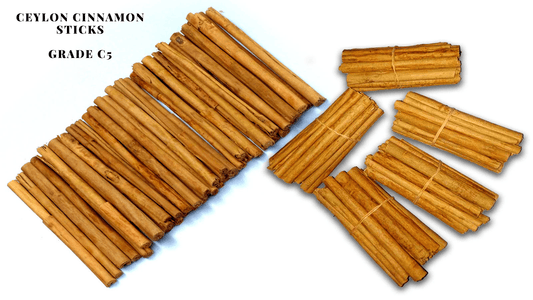
Our C5 Grade Ceylon Cinnamon Powder & Sticks are sourced from Sri Lanka and supported by published lab testing for species identity, coumarin, and heavy metals. If cinnamon is part of your daily routine, this is the cinnamon you should be buying.
C5 Grade Ceylon Cinnamon
Cinnamomum verum
Powder and sticks for coffee, tea, oatmeal, smoothies, baking, desserts, and everyday cooking.
The Lab Result That Matters
Marketing words are cheap. “Pure,” “premium,” and “organic” do not prove a cinnamon powder is real Ceylon cinnamon. The number that matters is coumarin.
Our Ceylon cinnamon Certificate of Analysis shows coumarin at <40 mg/kg. Cassia cinnamon is commonly reported at much higher coumarin levels, often around 1,200-6,500 mg/kg.
That means Cassia can contain dozens of times more coumarin than Ceylon cinnamon. This is why daily cinnamon users should care about the difference.
| Cinnamon Type | Coumarin Level | What It Means |
|---|---|---|
|
Ceylon Cinnamon Cinnamomum verum |
<40 mg/kg | Low-coumarin cinnamon, better suited for regular daily use. |
| Cassia Cinnamon | 1,200-6,500 mg/kg | Much higher coumarin, better limited to occasional use. |
Table of Contents
- Ceylon Cinnamon vs Cassia: Main Difference
- What Is Coumarin?
- Lab Test Results: Ceylon vs Cassia Coumarin
- Which Cinnamon Is Better for Daily Use?
- How Much Coumarin Is Too Much?
- How to Identify Ceylon Cinnamon vs Cassia
- Why Cinnamon Powder Needs Lab Testing
- Which Ceylon Cinnamon Should You Buy?
- Why Ceylon Cinnamon Costs More
- Red Flags When Buying Cinnamon Online
- Frequently Asked Questions
Ceylon Cinnamon vs Cassia: Main Difference
The main difference between Ceylon cinnamon and Cassia cinnamon is species. Ceylon cinnamon is Cinnamomum verum, also called true cinnamon. Cassia comes from related cinnamon species such as Cinnamomum cassia, Cinnamomum burmannii, and Cinnamomum loureiroi.
They are both called cinnamon, but they are not the same product. The flavor, appearance, price, and coumarin levels are different.
| Feature | Ceylon Cinnamon | Cassia Cinnamon |
|---|---|---|
| Botanical name | Cinnamomum verum | Cassia-type cinnamon species |
| Common name | True cinnamon | Regular supermarket cinnamon |
| Main origin | Sri Lanka | China, Indonesia, Vietnam, and other regions |
| Flavor | Mild, sweet, delicate, warm | Strong, sharp, spicy, sometimes harsh |
| Color | Lighter tan-brown | Darker reddish-brown |
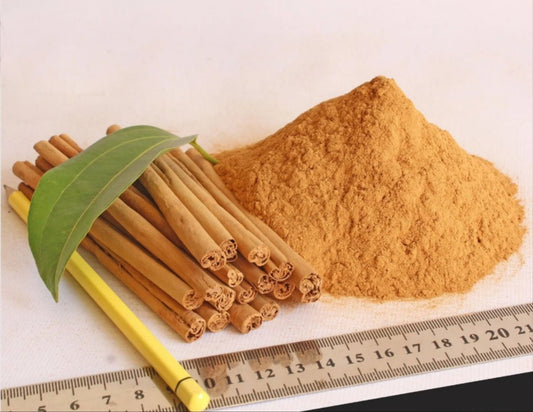
| Stick structure | Thin, soft, many paper-like layers | Hard, thick, usually one scroll-like layer |
| Coumarin | Naturally low | Naturally much higher |
| Best for | Daily use, tea, coffee, oatmeal, smoothies, premium recipes | Occasional baking when strong cinnamon flavor is wanted |
The flavor difference is useful to know, but the coumarin difference is the real reason daily cinnamon users switch to Ceylon.
What Is Coumarin?
Coumarin is a natural aromatic compound found in several plants, including cinnamon. It is not an artificial chemical added to cinnamon. It occurs naturally, especially in Cassia cinnamon.
The concern is not one small pinch of cinnamon once in a while. The concern is regular high intake from high-coumarin cinnamon, especially when people take cinnamon every day by the teaspoon or use cinnamon supplements without knowing which type of cinnamon they are consuming.
The European Food Safety Authority established a tolerable daily intake for coumarin of 0.1 mg per kilogram of body weight per day. For a 70 kg adult, that equals about 7 mg of coumarin per day.
Simple Explanation
If you only use cinnamon occasionally, coumarin is usually less of a concern. If you use cinnamon every day, especially in larger amounts, the type of cinnamon matters. Ceylon cinnamon gives you cinnamon flavor with naturally low coumarin.
Lab Test Results: Ceylon vs Cassia Coumarin
This is where the difference becomes obvious. Our Ceylon cinnamon COA shows <40 mg/kg coumarin. Cassia cinnamon is commonly reported around 1,200-6,500 mg/kg.
That is not a small difference. It is the difference between a cinnamon suited for daily routines and a cinnamon better saved for occasional strong-flavor baking.
What the Numbers Mean Per Gram
| Cinnamon Type | Coumarin per kg | Approx. coumarin per gram | Daily-use takeaway |
|---|---|---|---|
| Ceylon Cinnamon | <40 mg/kg | <0.04 mg/g | Low-coumarin choice for regular use. |
| Cassia Cinnamon, lower range | 1,200 mg/kg | 1.2 mg/g | Coumarin adds up quickly with daily use. |
| Cassia Cinnamon, higher range | 6,500 mg/kg | 6.5 mg/g | A small daily amount can approach coumarin limits. |
This is coumarin math, not a recommended serving size. The point is simple: Cassia reaches coumarin limits far faster than Ceylon cinnamon.
Which Cinnamon Is Better for Daily Use?
Ceylon cinnamon is the better choice for daily use. If cinnamon is something you use every morning, every week, or as part of a wellness routine, Ceylon is the smarter buy.
Daily cinnamon users usually add cinnamon to:
- Morning coffee
- Tea
- Oatmeal
- Smoothies
- Yogurt
- Golden milk
- Protein shakes
- Baking recipes
- Rice pudding and desserts
- Spice blends
If you only bake once a month and want a strong cinnamon punch, Cassia can do the job. But if you are using cinnamon often, choosing Ceylon cinnamon is the cleaner long-term decision.
Once you have chosen Ceylon, the next question is how much to use. Our Ceylon cinnamon dosage guide covers daily amounts, teaspoon-to-gram conversions, timing, and the sensible daily maximum.
C5 Grade Ceylon Cinnamon Powder & Sticks
Choose C5 Grade Ceylon Cinnamon Powder for coffee, oatmeal, smoothies, desserts, and baking. Choose C5 Grade Ceylon Cinnamon Sticks for tea, slow infusions, mulled drinks, rice dishes, and premium cooking.
Daily Use Buyer Tip
For most customers, C5 Grade Ceylon Cinnamon Powder is the easiest everyday choice. For premium quills and gifting, choose Premium Alba Grade Ceylon Cinnamon.
How Much Coumarin Is Too Much?
The European Food Safety Authority’s tolerable daily intake for coumarin is 0.1 mg per kg of body weight per day. That means body weight matters.
| Body Weight | Approx. Coumarin TDI | What It Means |
|---|---|---|
| 50 kg | 5 mg/day | Lower body weight means a lower daily coumarin limit. |
| 70 kg | 7 mg/day | Common example used for adult calculations. |
| 90 kg | 9 mg/day | Higher body weight means a higher coumarin limit. |
With low-coumarin Ceylon cinnamon, regular culinary use is much easier to fit within this limit. With Cassia cinnamon, coumarin adds up quickly, especially when someone uses cinnamon every day by the gram or teaspoon. To see your own number, try our free safe cinnamon calculator — it works out a daily amount based on your body weight for both Ceylon and Cassia.
If you have liver disease, take medication, are pregnant, are breastfeeding, or use cinnamon supplements, talk to a qualified healthcare professional before using large amounts of cinnamon daily. Cinnamon is food, not a treatment for a medical condition.
How to Identify Ceylon Cinnamon vs Cassia
Cinnamon sticks are easier to identify than cinnamon powder. Once cinnamon is ground, visual identification becomes much harder.
Ceylon Cinnamon Sticks
- Thin and delicate
- Many paper-like layers rolled together
- Light tan-brown color
- Soft enough to break more easily
- Mild, sweet, refined aroma
- Premium appearance with fine quills
Cassia Cinnamon Sticks
- Thick and hard bark
- Usually one heavy scroll-like roll
- Darker reddish-brown color
- Hard to break by hand
- Strong, sharp, spicy aroma
- Cheaper bulk appearance
Fast Stick Test
If the stick looks like many thin layers rolled together, it is more likely Ceylon. If it looks like one thick hard scroll, it is more likely Cassia. But for powder, do not trust your eyes — use lab testing.
Why Cinnamon Powder Needs Lab Testing
Cinnamon powder is where customers get fooled. Once cinnamon is ground, Cassia and Ceylon can look similar. A seller can write “Ceylon cinnamon” on a label, but the powder itself does not prove the claim.
For powder, the strongest proof is a Certificate of Analysis.
A Good Cinnamon COA Should Show:
- Species identity: confirmation that the product is Cinnamomum verum
- Coumarin content: the number that separates Ceylon from Cassia
- Heavy metals: lead, arsenic, cadmium, and mercury screening
- Microbiological safety: screening for pathogens such as E. coli and Salmonella
- Batch details: so the report matches the actual product batch
Our Lab Testing Promise
We test and document what buyers actually care about: species identity, coumarin level, and heavy metals.
- Not just “premium” on the label.
- Not just “pure cinnamon” marketing.
- Not just a nice product photo.
- Actual documentation buyers can check.
Which Ceylon Cinnamon Should You Buy?
The best Ceylon cinnamon product depends on how you use cinnamon. Most customers do not need the most expensive grade for every use. Choose based on your routine.
| Use Case | Best Product | Why |
|---|---|---|
| Daily coffee, oatmeal, smoothies | C5 Grade Ceylon Cinnamon Powder | Easy to measure, easy to mix, best for daily routine use. |
| Tea and slow infusions | C5 Grade Ceylon Cinnamon Sticks | Cleaner flavor for brewing, simmering, mulled drinks, and repeated infusions. |
| Premium quills and gifting | Premium Alba Grade Ceylon Cinnamon | Finest premium quills with delicate appearance, refined flavor, and gifting appeal. |
| Bulk daily use | Larger C5 Grade Ceylon Cinnamon Packs | Better value for repeat users, families, small food brands, and serious cinnamon buyers. |
Why Ceylon Cinnamon Costs More Than Cassia
Ceylon cinnamon costs more because it is more delicate to grow, harvest, peel, roll, dry, grade, and pack. True Ceylon cinnamon quills are made from thin inner bark layers. The process is labor-intensive and requires skill.
The higher price reflects:
- Sri Lankan origin
- True cinnamon species: Cinnamomum verum
- More delicate harvesting and rolling
- Lower natural coumarin
- Milder premium flavor
- Better daily-use suitability
- Lab testing and quality control
- Cleaner product identity compared with generic supermarket cinnamon
Cassia is cheaper because it is thicker, harder, easier to mass-produce, and more common. That does not make it better. It makes it cheaper.
Simple Buyer Rule
If you use cinnamon daily, buy Ceylon. Choose C5 Grade Ceylon Cinnamon Powder & Sticks for everyday use. Choose Premium Alba Grade Ceylon Cinnamon when you want the finest quills. Use Cassia only if you want a strong cinnamon punch for occasional baking.
Red Flags When Buying Ceylon Cinnamon Online
The cinnamon market is full of vague labels. If you want real Ceylon cinnamon, check the details before buying.
- No botanical name: Look for Cinnamomum verum, not just “cinnamon.”
- No Sri Lankan origin: Real Ceylon cinnamon is strongly associated with Sri Lanka.
- No coumarin result: For powder, this is a major red flag.
- No COA: A serious seller should show or provide test documentation.
- Very cheap price: True Ceylon cinnamon usually costs more than Cassia.
- Only lifestyle photos: Pretty photos do not prove species identity.
- No batch details: Lab reports should connect to real product batches.
Choose Ceylon Cinnamon with Lab Reports
Do not buy daily-use cinnamon based only on a label. Choose Sri Lankan Ceylon cinnamon with coumarin testing, proper documentation, and clear product identity.
What You’re Paying For
Not branding. Not hype. You are paying for real Ceylon cinnamon, Sri Lankan sourcing, low coumarin, and documentation.
Frequently Asked Questions
What is the main difference between Ceylon cinnamon and Cassia cinnamon?
The main difference is species and coumarin content. Ceylon cinnamon is Cinnamomum verum, also called true cinnamon. It is milder, sweeter, lighter, and naturally low in coumarin. Cassia cinnamon is stronger, darker, cheaper, and naturally much higher in coumarin.
Which cinnamon is better for daily use?
Ceylon cinnamon is the better choice for daily use because it naturally contains far less coumarin than Cassia. If you add cinnamon to coffee, tea, oatmeal, smoothies, or recipes every day, choose Ceylon. For how much to use, see our Ceylon cinnamon dosage guide.
What does the Ceylon Spice Garden lab result show?
Our current Ceylon cinnamon Certificate of Analysis confirms Cinnamomum verum and shows coumarin at <40 mg/kg. This is consistent with low-coumarin Ceylon cinnamon and very different from high-coumarin Cassia cinnamon.
How much coumarin is in Cassia cinnamon?
Cassia cinnamon is commonly reported around 1,200-6,500 mg/kg coumarin. That is much higher than Ceylon cinnamon, which is why Cassia is not the best choice for heavy daily use.
How much coumarin is considered tolerable per day?
The European Food Safety Authority established a tolerable daily intake of 0.1 mg coumarin per kg body weight per day. For a 70 kg adult, that equals about 7 mg per day.
Can Cassia cinnamon affect the liver?
Cassia cinnamon naturally contains higher coumarin. Regular high intake of coumarin may raise liver-safety concerns, especially for sensitive people or people already managing liver issues. This is why many daily cinnamon users choose Ceylon cinnamon instead.
Can I identify Ceylon cinnamon powder by looking at it?
No. Cinnamon powder is difficult to identify by appearance alone. Ceylon and Cassia powders can look similar once ground. For powder, lab testing is the strongest proof.
How can I identify Ceylon cinnamon sticks?
Ceylon cinnamon sticks usually have many thin, paper-like layers rolled together. They are lighter, softer, and more delicate. Cassia sticks are usually thick, hard, darker, and shaped like one heavy scroll.
Is Ceylon cinnamon worth the higher price?
Yes, especially for daily users. Ceylon cinnamon costs more because it is true cinnamon from Sri Lanka, has a milder premium flavor, is more labor-intensive to produce, and naturally contains much lower coumarin than Cassia.
Should I buy C5 Grade or Alba Grade Ceylon cinnamon?
Choose C5 Grade Ceylon Cinnamon Powder or C5 Grade Ceylon Cinnamon Sticks for everyday use, coffee, tea, oatmeal, smoothies, and regular cooking. Choose Premium Alba Grade Ceylon Cinnamon if you want the finest premium quills, gifting quality, or a more delicate high-grade cinnamon experience.
Does Ceylon cinnamon treat diabetes or blood sugar problems?
Cinnamon is a food and spice, not a medical treatment. Some people use cinnamon as part of a wellness routine, but Ceylon cinnamon is not intended to diagnose, treat, cure, or prevent diabetes or any disease. Speak with a healthcare professional for medical advice.
Where can I buy real Ceylon cinnamon?
Buy from a seller that clearly labels the product as Cinnamomum verum, states Sri Lankan origin, provides lab testing, and offers a Certificate of Analysis. Ceylon Spice Garden sells lab-tested C5 Grade Ceylon Cinnamon Powder & Sticks and Premium Alba Grade Ceylon Cinnamon.
The Bottom Line
Ceylon cinnamon and Cassia cinnamon are not equal. Cassia is common, strong, cheap, and high in coumarin. Ceylon cinnamon is true cinnamon from Sri Lanka, milder in flavor, more delicate, and naturally low in coumarin.
The lab result makes the decision simple: our Ceylon cinnamon COA confirms Cinnamomum verum and shows <40 mg/kg coumarin, while Cassia cinnamon commonly contains 1,200-6,500 mg/kg. That is the difference daily users should care about.
If cinnamon is part of your daily routine, choose real Ceylon cinnamon. Choose C5 Grade for daily use and Alba Grade when you want the most premium quills. And once you have the right cinnamon, our dosage guide shows exactly how much to use each day.
Shop Real Ceylon Cinnamon from Sri Lanka
Choose lab-tested C5 Grade Ceylon Cinnamon Powder & Sticks for daily use, or Premium Alba Grade Ceylon Cinnamon for the finest premium Ceylon cinnamon quills.
Real Ceylon Cinnamon
Cinnamomum verum
Low-coumarin true cinnamon from Sri Lanka, packed for everyday kitchens and serious cinnamon users.