Best Place to Buy Ceylon Cinnamon Online: Complete 2026 Guide
Where to Buy Real Ceylon Cinnamon Online (2026 Buyer's Guide)
⚡ TL;DR
- The problem: Most online "Ceylon cinnamon" is actually Cassia (250× more coumarin, liver toxicity risk at therapeutic doses). Even some products labeled "Ceylon" are adulterated or low-grade.
- Buy from direct importers who source from Sri Lanka, provide certificates of origin, and can tell you the specific growing region. General marketplace sellers (Amazon, eBay) are high-risk for counterfeits.
- Price benchmark: Real Ceylon cinnamon costs $15–35/oz. Under $10/oz = almost certainly fake. The production economics don't allow for less.
- Verify with the stick test: Real Ceylon = multiple thin papery layers (cigar-like), crumbles in your fingers. Cassia = single thick bark, hard to break.
- Grade matters: Alba is the highest grade (thinnest quills, mildest flavor, lowest coumarin). C5 is the lowest commercial grade.
- For health use: You need genuine Ceylon cinnamon — there is no safe substitute at therapeutic doses (1–6g/day).
Table of Contents
- Why You Can't Buy Real Ceylon Cinnamon at the Grocery Store
- The Fake Ceylon Cinnamon Problem
- What to Look For in an Online Seller
- Ceylon Cinnamon Grades Explained
- Which Product Type Do You Need?
- The 7-Point Authentication Test
- Pricing Guide: What Real Ceylon Cinnamon Costs
- Red Flags That Scream "Fake"
- Amazon, eBay & Marketplace Risks
- Storage & Shelf Life After Purchase
- Certifications That Actually Matter
- Frequently Asked Questions
Why You Can't Buy Real Ceylon Cinnamon at the Grocery Store
Walk into any supermarket, pick up the jar labeled "cinnamon," and check the ingredients. It will say "cinnamon." That's it. No species. No origin. No coumarin level.
That "cinnamon" is Cassia — Cinnamomum cassia from China, Indonesia, or Vietnam. It's 90% of the global cinnamon market because it's cheap to produce, strong in flavor, and most consumers don't know the difference.
Real Ceylon cinnamon (Cinnamomum verum) represents only 5–10% of global production, grown almost exclusively in Sri Lanka. It's more expensive to produce, requires skilled hand-peeling, and is processed in smaller batches. Grocery stores don't stock it because the margins are lower and "cinnamon" isn't required to specify which species.
Why this matters for your health
If you're using cinnamon medicinally — for blood sugar, cholesterol, inflammation — the dose that works is 1–6 grams daily for 8–12 weeks. At those doses, Cassia delivers 6–15× the European Food Safety Authority's safe daily coumarin limit. You literally cannot use Cassia at therapeutic doses without risking liver damage. Ceylon cinnamon at the same doses stays 350× below the safety limit. Buying the right species isn't a preference — it's a safety requirement. Read more in our Ceylon cinnamon vs Cassia comparison guide.
The Fake Ceylon Cinnamon Problem
The price premium on Ceylon cinnamon (3–5× more than Cassia) has created a significant fraud problem. Common scams include:
| Scam Type | What They Do | How to Spot It |
|---|---|---|
| Straight substitution | Sell Cassia labeled as "Ceylon cinnamon" | Dark color, thick bark, harsh spicy taste, price under $10/oz |
| Adulteration | Mix small amounts of Ceylon with cheaper Cassia | Inconsistent color/texture in powder, uneven quill thickness |
| "Ceylon-style" labeling | Use misleading terms that imply Ceylon without guaranteeing it | Label says "Ceylon style," "Ceylon blend," or "Vietnamese Ceylon" |
| Fake certificates | Provide forged or outdated certificates of origin | Certificate doesn't match batch numbers, can't be independently verified |
| Grade misrepresentation | Sell low-grade (C5) as premium (Alba) at premium prices | Thick, uneven quills sold as "premium" or "Alba grade" |
What to Look For in an Online Seller
The best online Ceylon cinnamon sellers share specific characteristics that separate them from fraudulent or low-quality operators:
Trusted Seller Checklist
- Direct Sri Lankan sourcing — they can tell you the specific growing region (Galle, Matara, Ratnapura, etc.)
- Certificate of Origin available on request — issued by the Sri Lanka Customs or Export Development Board
- Species clearly stated — "Cinnamomum verum" on the label, not just "cinnamon"
- Grade specified — Alba, C4, C5, etc. (sellers who know their product use specific grading)
- Lab testing available — coumarin content, essential oil content, microbiological testing
- Detailed product photos — showing actual product color, texture, and quill structure
- Transparent company information — physical address, contact details, business history
- Educational content — articles about cinnamon grades, health benefits, usage. Shows expertise, not just sales.
- Clear return policy — willing to refund if product doesn't meet authenticity standards
- Realistic health claims — presents benefits with evidence, not miracle cure language
Ceylon Cinnamon Grades Explained
Not all Ceylon cinnamon is equal. Sri Lanka uses a specific grading system based on quill diameter, thickness, and quality. Understanding grades prevents you from paying premium prices for standard product.
| Grade | Quill Diameter | Quality | Best For |
|---|---|---|---|
| Alba | 6mm or less | Highest — thinnest quills, lightest color, most delicate flavor, lowest coumarin | Premium health use, fine cuisine, gifts |
| C4 Special | 6–14mm | Very high — thin quills, excellent flavor and potency | Daily health supplementation, cooking |
| C4 | 14–16mm | High — good all-around quality | General cooking, tea infusions |
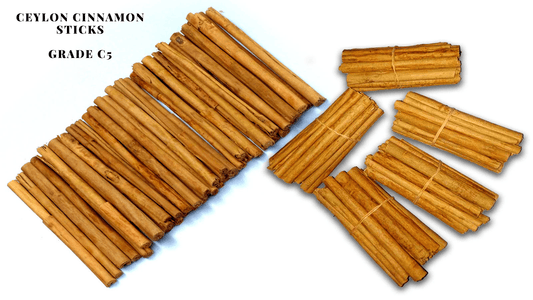
| C5 | 16–19mm | Standard — thicker quills, stronger flavor | Bulk cooking, food manufacturing |
| C5 Special | 19–22mm | Basic — thickest commercial grade | Industrial food production |
| Quillings | Broken pieces | Variable — broken quills from processing | Grinding into powder, tea blending |
Which grade should you buy?
For health benefits: Alba grade is the gold standard — thinnest quills with the highest concentration of beneficial compounds and the lowest coumarin. But C4 Special and C4 are excellent choices at a lower price point.
For daily use and cooking: C4/C4 Special powder offers the best value-to-quality ratio. Pre-ground from fresh quills, it's the most practical option for adding cinnamon to food daily.
Which Product Type Do You Need?
| Product Type | Best For | Shelf Life | Our Pick |
|---|---|---|---|
| Cinnamon Sticks (Quills) | Golden milk, tea infusions, cooking, curries, visual verification of authenticity | 3–4 years | Alba Grade Sticks |
| Cinnamon Powder | Smoothies, oatmeal, baking, precise dosing, daily supplementation | 2–3 years | Organic Powder & Sticks |
| Cinnamon Herbal Tea | Easiest daily habit, after-meal blood sugar support, caffeine-free | 2 years | Cinnamon Herbal Tea (30 bags) |
| Cinnamon Leaf Tea | Milder flavor, higher eugenol content, different compound profile | 2 years | Cinnamon Leaf Tea (30 sachets) |
| Cinnamon in Blends | Multi-spice benefits, warming drinks, synergistic health effects | 2 years | Masala Chai Blend |
Pro tip: If you're new to Ceylon cinnamon, start with cinnamon herbal tea bags — it's the lowest-effort way to build a daily habit while you learn what authentic Ceylon cinnamon tastes like. Then add powder to food when you want higher doses.
The 7-Point Authentication Test
Use these tests when your order arrives to verify you received authentic Ceylon cinnamon:
1 The Layer Test (Sticks Only)
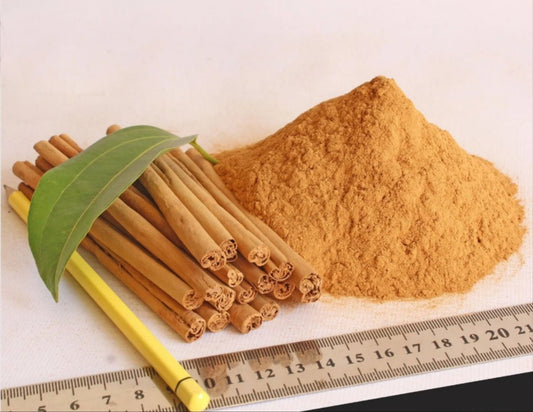
Break a stick open. Ceylon: Multiple thin papery layers visible, like a rolled cigar. Cassia: One single thick layer of bark. This is the most reliable visual test.
2 The Snap Test (Sticks Only)
Ceylon: Crumbles easily between your fingers — thin and fragile. Cassia: Hard and dense — you need force to break it. If it feels like breaking a twig, it's Cassia.
3 The Color Test
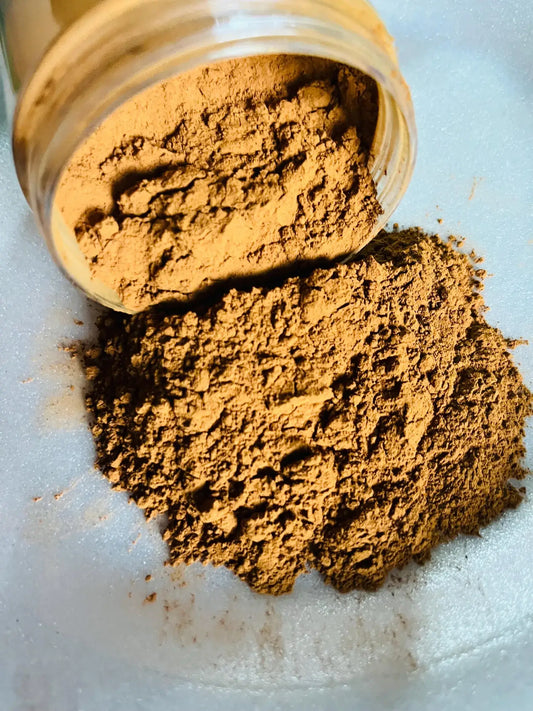
Ceylon: Light tan-brown, uniform color. Cassia: Dark reddish-brown, sometimes with a reddish tint. If the powder is very dark, it's likely Cassia or adulterated.
4 The Taste Test
Ceylon: Complex, subtly sweet, warm with hints of citrus. No "burn." Cassia: Strong, spicy, one-dimensional "hot cinnamon" sensation. If it's the flavor you associate with Big Red gum, it's Cassia.
5 The Aroma Test
Ceylon: Delicate, warm, sweet fragrance with complexity. Cassia: Intense, sharply spicy, less nuanced. Fresh Ceylon smells like "sophisticated bakery," not "cinnamon air freshener."
6 The Label Test
Check for: "Cinnamomum verum" (not just "cinnamon"), origin "Sri Lanka" (not China, Indonesia, or Vietnam), specific grade (Alba, C4, C5), and coumarin content if listed (<0.01%).
7 The Price Test
If you paid under $10 per ounce, it's almost certainly not real Ceylon cinnamon. The production costs, import logistics, and quality control for authentic product make pricing below this threshold economically impossible for legitimate sellers.
Pricing Guide: What Real Ceylon Cinnamon Costs (And Why)
| Price Range (per oz) | What You're Getting | Verdict |
|---|---|---|
| $25–40 | Premium: Alba grade, organic certified, single-origin, lab-tested, direct import | ✅ Best quality for health use and fine cuisine |
| $15–25 | High quality: C4/C4 Special grade, verified origin, good potency, reputable seller | ✅ Best value for daily use — what most people should buy |
| $10–15 | Standard: Authentic but possibly lower grade (C5), older stock, or mixed grades | ⚠️ Acceptable for cooking — verify carefully |
| Under $10 | Almost certainly Cassia mislabeled as Ceylon, or heavily adulterated | ❌ Avoid — the math doesn't work for authentic product at this price |
Why real Ceylon cinnamon costs more
Three cost factors that cannot be reduced:
- Scarcity: Only 5–10% of global cinnamon production. Growing conditions specific to Sri Lanka's coastal regions.
- Labor intensity: The thin bark must be hand-peeled from branches by skilled workers, then carefully layered and rolled. This process can't be mechanized without destroying the delicate quill structure.
- Import logistics: Shipping from Sri Lanka, customs duties, quality testing at origin and destination, cold chain considerations.
A seller claiming to offer "authentic Ceylon cinnamon" at $5/oz would need to be either operating at a loss or lying about the product. The supply chain doesn't allow it.
Red Flags That Scream "Fake"
| Red Flag | What It Usually Means |
|---|---|
| Price under $10/oz | Cassia sold as Ceylon, or heavily adulterated |
| "Ceylon-style" or "Ceylon blend" | Deliberately vague — not actual Ceylon cinnamon |
| No species listed | If they don't say Cinnamomum verum, it's Cassia |
| Origin not listed or says "Product of USA" | Real Ceylon comes from Sri Lanka — period |
| Dark reddish-brown in photos | Cassia or very low-quality Ceylon |
| Miracle health claims | "Cures diabetes," "reverses aging" — no legitimate seller makes these claims |
| No return or quality guarantee | Sellers confident in their product offer guarantees |
| Stock photography | Using generic spice images instead of actual product photos |
| Reviews mention "strong" or "spicy" | Real Ceylon is mild and sweet — "strong" and "spicy" = Cassia |
| Seller has no other Ceylon products | Legitimate Ceylon importers usually carry multiple Ceylon spice products |
Amazon, eBay & Marketplace Risks
General marketplaces present unique risks for Ceylon cinnamon buyers:
- Commingled inventory (Amazon FBA): Amazon sometimes stores identical products from different sellers in the same bin. Even if you buy from a reputable seller, you might receive a counterfeit product commingled from another seller's inventory.
- Self-reported product information: Sellers write their own descriptions. There's no third-party verification that a product labeled "Ceylon" is actually Ceylon.
- Review manipulation: Fake reviews are widespread. Look for reviews that mention specific sensory details (flavor, texture, color) rather than generic praise.
- Constantly changing sellers: A listing that was legitimate last month may have been taken over by a different, less trustworthy seller.
Safer alternative: Buy directly from the importer's website. Direct-to-consumer sellers like Ceylon Spice Garden control their entire supply chain from Sri Lankan farms to your door — there's no commingling, no third-party sellers, and the company reputation is directly tied to product quality.
Storage & Shelf Life After Purchase
| Form | Shelf Life (Properly Stored) | Storage Method |
|---|---|---|
| Whole sticks (quills) | 3–4 years | Airtight glass or metal container, cool dark place |
| Ground powder | 2–3 years | Airtight container, away from heat and humidity |
| Tea bags | 2 years | Original packaging or airtight container, cool dry place |
Storage rules
- Never store above the stove — heat and steam degrade essential oils rapidly
- Don't refrigerate — condensation damages the cinnamon more than the cold helps
- Keep away from strong-smelling spices — cinnamon absorbs other flavors
- Freshness test: If your cinnamon has lost its sweet fragrance, it's lost potency. Replace it.
- Buy sticks for longevity: Whole sticks maintain potency 40–60% longer than pre-ground powder
Certifications That Actually Matter
| Certification | What It Verifies | Importance |
|---|---|---|
| Sri Lanka Certificate of Origin | Product was exported from Sri Lanka (where 95% of real Ceylon is grown) | ⭐⭐⭐⭐⭐ Essential |
| SLSI (Sri Lankan Standards Institution) | Meets Sri Lankan quality standards for Ceylon cinnamon | ⭐⭐⭐⭐⭐ Most reliable authenticity marker |
| USDA Organic | Grown without synthetic pesticides and chemicals | ⭐⭐⭐⭐ Important for health users |
| ISO 22000 (Food Safety) | Supply chain follows international food safety standards | ⭐⭐⭐ Good indicator of professionalism |
| Fair Trade | Farmers receive fair compensation, ethical sourcing | ⭐⭐⭐ Good for ethical buyers |
| Lab testing reports | Coumarin, heavy metals, pesticide residues, microbiology verified | ⭐⭐⭐⭐ Request these — legitimate sellers provide them |
Not every good seller has every certification — the cost of maintaining multiple certifications is significant for small importers. But at minimum, they should have a Certificate of Origin and be willing to provide lab testing results on request. Ceylon Spice Garden provides sourcing documentation and lab testing verification for all cinnamon products.
Frequently Asked Questions
The most reliable option is to buy directly from a Sri Lankan importer who controls the supply chain from farm to door. Ceylon Spice Garden sources directly from Sri Lankan growers, provides certificates of origin, and offers lab-tested products across multiple formats — powder and sticks, premium Alba grade quills, and ready-to-brew herbal tea. Direct importers are safer than general marketplaces because there's no risk of commingled inventory or third-party substitution.
Use 7 verification checkpoints: (1) Label says "Cinnamomum verum" and/or "Ceylon" — not just "cinnamon." (2) Origin says "Sri Lanka." (3) Price is $15–35/oz — under $10 is almost certainly fake. (4) Sticks have multiple thin papery layers (not one thick bark curl). (5) Color is light tan-brown (not dark reddish). (6) Taste is mild, sweet, and complex (not "hot cinnamon" burn). (7) Seller can provide Certificate of Origin and/or lab testing. If a product fails any of these, treat it with suspicion.
$15–35 per ounce for genuine, high-quality Ceylon cinnamon. Premium organic Alba grade runs $25–40/oz. Standard C4/C5 grades range $15–25/oz. Anything under $10/oz is almost certainly counterfeit or heavily adulterated — the production costs, Sri Lankan export duties, international shipping, and quality control make lower pricing economically impossible for legitimate product. You can compare product options at ceylonspicegarden.com.
Some listings are authentic; many are not. Amazon's marketplace model allows any seller to create a listing with any description — there's no third-party verification that "Ceylon cinnamon" is actually Cinnamomum verum. Additionally, Amazon's FBA commingling system can mix products from different sellers in shared bins. If you buy on Amazon, choose sellers with: very specific product information (grade, origin region), realistic pricing ($15+/oz), reviews mentioning "mild," "sweet," "delicate" flavor (not "strong" or "spicy"), and a history of selling spice products.
Sticks for verification and longevity; powder for convenience and precise dosing. Ceylon cinnamon sticks are easier to authenticate visually (you can see the multi-layer structure) and last 3–4 years vs 2–3 years for powder. However, powder is far more practical for daily supplementation — you can measure precise doses and add it to food immediately. Many serious users buy both: sticks for tea infusions and golden milk, powder for smoothies and oatmeal.
Sri Lankan cinnamon is graded by quill diameter: Alba (≤6mm, highest quality, thinnest quills, mildest flavor), C4 Special (6–14mm, very good), C4 (14–16mm, good all-purpose), C5 (16–19mm, standard), and C5 Special (19–22mm, basic). Alba is the gold standard for health use — thinnest quills mean the youngest bark was harvested from the tree's innermost layers, which contain the highest concentration of beneficial compounds and the lowest coumarin.
Yes, but only from highly trusted sources. Bulk orders amplify both savings and risk — if you buy a pound of counterfeit product, you've wasted significantly more money. Only buy bulk from sellers with verified Sri Lankan sourcing and a track record you trust. Ensure proper storage: airtight containers, cool dark location, moderate humidity. Calculate your monthly usage and buy accordingly — better to order fresh every 3–6 months than stockpile a year's supply that loses potency.
Transfer to an airtight glass or metal container and store in a cool (60–70°F), dark, dry location — a pantry shelf works perfectly. Never store above the stove (heat + steam destroy essential oils). Don't refrigerate (condensation damages quality). Keep away from strong-smelling spices (cinnamon absorbs flavors). Whole sticks maintain potency for 3–4 years; ground powder for 2–3 years. The freshness test: if it's lost its sweet, warm fragrance, it's lost potency — time to replace.
The Buyer's Bottom Line
Buy from a direct Sri Lankan importer. Verify the species (Cinnamomum verum), the origin (Sri Lanka), and the grade. Pay $15–35/oz for genuine product. Use the 7-point authentication test when your order arrives. If anything fails — return it.
For daily health use, cooking, or just knowing what real cinnamon tastes like — authentic Ceylon cinnamon is an entirely different experience from the Cassia in your grocery store.
Shop Organic Ceylon Cinnamon Powder & Sticks →